
What Makes a Burglar Give Up — Insights from Ex-Offender Interview Studies
Published: 3/6/2026
When thinking about home security, the most valuable insights come from criminals themselves. Interview studies with ex-burglars conducted in the UK, Australia, and Japan reveal remarkably consistent answers about "what kind of homes they avoid."
One of the most striking findings from a UK security research institute's survey of 450 ex-burglars is the "5-minute rule."
> "The moment I estimate it will take more than 5 minutes to break in, I give up on that house."
Approximately 75% of respondents said they follow this rule. More detailed data revealed the following trends:
This "5-minute" threshold is an empirical rule combining the risk of being noticed by neighbors or passersby, security company response times, and the criminal's own psychological limits.
The same study asked about "the most feared security measures," and the results differed from what many people might expect.
1. Homes with dogs (65% response rate)
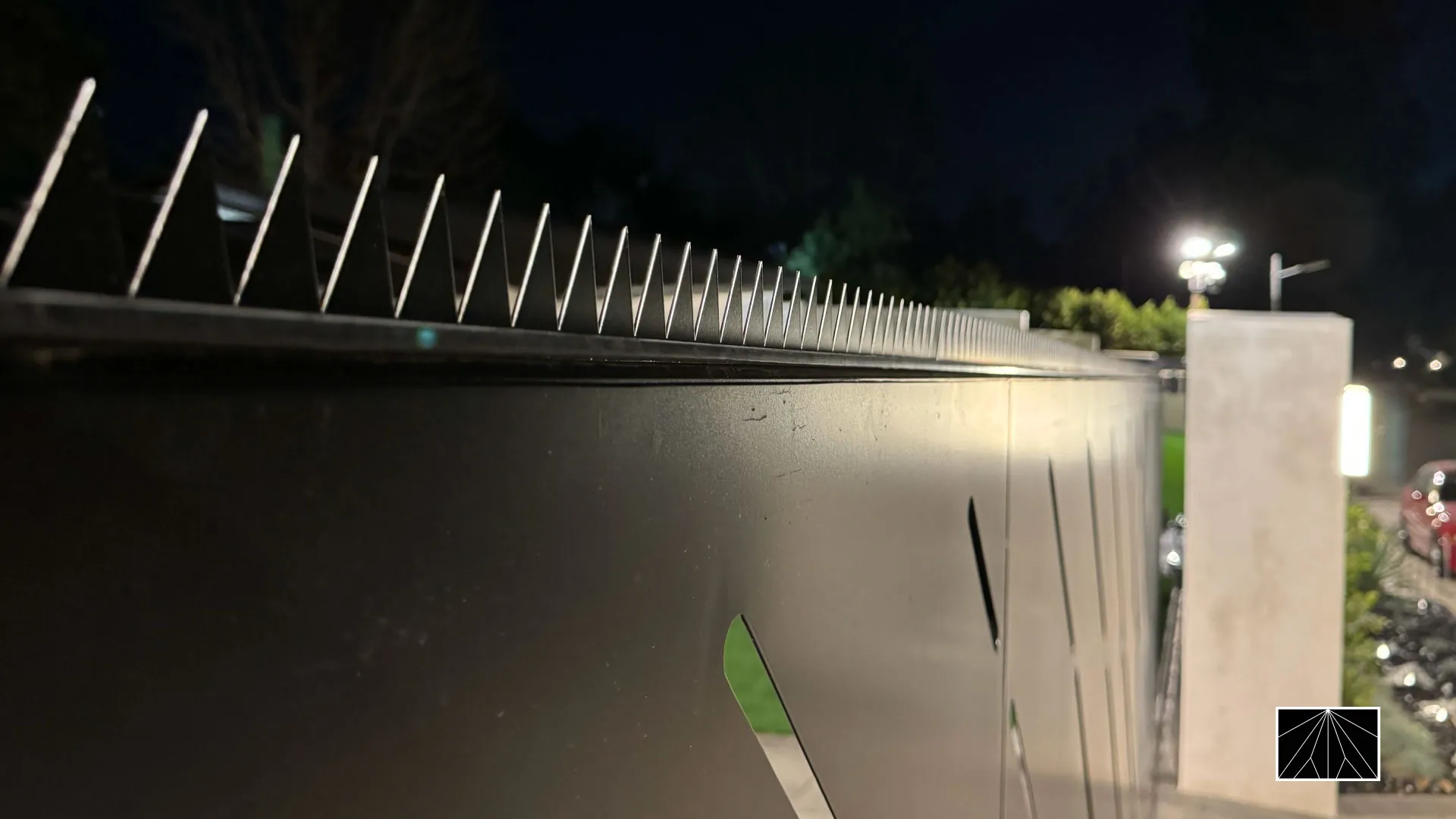
2. Walls/fences with anti-climb spikes or barbed wire on top (58% response rate)
3. Visible security cameras (52% response rate)
4. Motion sensor lights (48% response rate)
5. High neighborhood visibility (44% response rate)
Notably, physical barriers have a higher deterrent effect than expensive electronic security systems.
Ex-burglar testimonies:
> "An alarm gives you 5 minutes to escape after it sounds. But spikes on top of a wall hurt the moment you touch them. You can't overcome the fear of physical pain."
> "A camera isn't scary if you cover your face. But shinobi gaeshi are physically impossible to cross. You either find another way around or give up entirely."
Criminal psychology research classifies the psychological effects of physical barriers on offenders into three categories.
The instinctive fear response triggered the moment sharp protrusions come into view. This is where shinobi gaeshi concentrate their effect. Humans have an innate avoidance response to sharp objects, one that is difficult to override with rational thought.
Physical barriers fundamentally alter the risk calculation in a burglar's mind. A home with shinobi gaeshi means "it will take longer to break in," "there's a risk of injury," and "blood or torn clothing could leave DNA evidence" — all risk factors increase.
This is the most important effect. The moment a burglar decides "this house is impossible," they shift their target to a neighboring home that's easier to break into. While known as "crime displacement," from an individual security standpoint, this is precisely the goal.
Let's analyze the security mechanism of shinobi gaeshi from a "time" perspective.
Shinobi gaeshi extend intrusion time from mere seconds to several minutes. This time difference is the decisive factor that pushes beyond the "5-minute rule" threshold.
According to crime statistics published by Japan's National Police Agency, the most common entry point for residential burglaries is windows (approximately 55%), but "other methods (climbing walls, entering from rooftops, etc.)" account for about 15%.
For detached houses in particular, a common method is climbing over walls or fences and then accessing rear windows. In other words, preventing wall climbing also prevents access to windows.
Additionally noteworthy: the attempted burglary rate (cases where the criminal attempted but failed to enter) is significantly higher for homes with physical security devices. Shinobi gaeshi function both as devices that "prevent successful entry" and as devices that "prevent entry attempts altogether."
What ex-offender testimonies consistently demonstrate is that criminals are "rational economic actors." They weigh risks against rewards and choose targets with the lowest cost.
Shinobi gaeshi fundamentally upend this calculation. Physical risk, time cost, probability of detection — they shift every factor against the criminal.
"Perfect security" doesn't exist. But a "home that makes burglars give up" can be achieved with shinobi gaeshi alone.
The Truth About the "5-Minute Rule"
One of the most striking findings from a UK security research institute's survey of 450 ex-burglars is the "5-minute rule."
> "The moment I estimate it will take more than 5 minutes to break in, I give up on that house."
Approximately 75% of respondents said they follow this rule. More detailed data revealed the following trends:
- Estimated entry in under 2 minutes: Definite target
- 2 to 5 minutes: Weigh the risks before deciding
- Over 5 minutes: Almost certainly pass on the target
- Over 10 minutes: Absolutely won't attempt
This "5-minute" threshold is an empirical rule combining the risk of being noticed by neighbors or passersby, security company response times, and the criminal's own psychological limits.
Security Measures Burglars Fear Most
The same study asked about "the most feared security measures," and the results differed from what many people might expect.
Most Feared Measures (Top 5)
1. Homes with dogs (65% response rate)
2. Walls/fences with anti-climb spikes or barbed wire on top (58% response rate)
3. Visible security cameras (52% response rate)
4. Motion sensor lights (48% response rate)
5. High neighborhood visibility (44% response rate)
Notably, physical barriers have a higher deterrent effect than expensive electronic security systems.
Ex-burglar testimonies:
> "An alarm gives you 5 minutes to escape after it sounds. But spikes on top of a wall hurt the moment you touch them. You can't overcome the fear of physical pain."
> "A camera isn't scary if you cover your face. But shinobi gaeshi are physically impossible to cross. You either find another way around or give up entirely."
The Psychological Effects of Physical Barriers
Criminal psychology research classifies the psychological effects of physical barriers on offenders into three categories.
1. Immediate Fear
The instinctive fear response triggered the moment sharp protrusions come into view. This is where shinobi gaeshi concentrate their effect. Humans have an innate avoidance response to sharp objects, one that is difficult to override with rational thought.
2. Risk Assessment Shift
Physical barriers fundamentally alter the risk calculation in a burglar's mind. A home with shinobi gaeshi means "it will take longer to break in," "there's a risk of injury," and "blood or torn clothing could leave DNA evidence" — all risk factors increase.
3. Target Displacement
This is the most important effect. The moment a burglar decides "this house is impossible," they shift their target to a neighboring home that's easier to break into. While known as "crime displacement," from an individual security standpoint, this is precisely the goal.
The "Wall of Time" Created by Shinobi Gaeshi
Let's analyze the security mechanism of shinobi gaeshi from a "time" perspective.
Wall Without Shinobi Gaeshi (1.8m)
- Gripping the wall and pulling yourself up: 5-10 seconds
- Straddling the top and dropping to the other side: 5-10 seconds
- Total: 10-20 seconds
Wall With Shinobi Gaeshi (1.8m)
- Gripping the wall and pulling yourself up: 5-10 seconds
- Encountering shinobi gaeshi, considering how to bypass: 15-30 seconds
- Attempting to cover the spikes with cloth or tools: 30 seconds to 2 minutes
- If still unable to cross, searching for an alternative route: 1-5 minutes
- Total: 2-8 minutes (or abandonment)
Shinobi gaeshi extend intrusion time from mere seconds to several minutes. This time difference is the decisive factor that pushes beyond the "5-minute rule" threshold.
Japanese Statistics
According to crime statistics published by Japan's National Police Agency, the most common entry point for residential burglaries is windows (approximately 55%), but "other methods (climbing walls, entering from rooftops, etc.)" account for about 15%.
For detached houses in particular, a common method is climbing over walls or fences and then accessing rear windows. In other words, preventing wall climbing also prevents access to windows.
Additionally noteworthy: the attempted burglary rate (cases where the criminal attempted but failed to enter) is significantly higher for homes with physical security devices. Shinobi gaeshi function both as devices that "prevent successful entry" and as devices that "prevent entry attempts altogether."
The Essence of Security, Learned from Burglars
What ex-offender testimonies consistently demonstrate is that criminals are "rational economic actors." They weigh risks against rewards and choose targets with the lowest cost.
Shinobi gaeshi fundamentally upend this calculation. Physical risk, time cost, probability of detection — they shift every factor against the criminal.
"Perfect security" doesn't exist. But a "home that makes burglars give up" can be achieved with shinobi gaeshi alone.