
The 4 Principles of CPTED and Japanese Architecture — 'Defensive Design' Learned from Castles
Published: 3/6/2026
CPTED (Crime Prevention Through Environmental Design), proposed by American criminologist C. Ray Jeffery in the 1970s, is the concept of "preventing crime through environmental design."
Interestingly, Japanese castle architecture had been practicing these principles at a highly sophisticated level centuries before CPTED was systematized. This article decodes the four CPTED principles through the lens of Japanese castles and considers their application to modern homes.
A design principle that "enables legitimate users to naturally monitor spaces." Criminals tend to avoid places where they feel "watched."
Japanese castle walls feature regularly spaced small openings called "sama." While these are firing ports for guns and bows, they simultaneously served as windows for constant external surveillance.
The key characteristic of sama is that the interior is difficult to see from outside, while those inside enjoy a wide view outward. This is precisely the principle of natural surveillance — "making intruders aware they are being watched."
Himeji Castle has approximately 1,000 sama, ensuring lines of sight from every direction along its walls.
The principle of "naturally sorting legitimate users from unauthorized intruders through environmental design." Using physical barriers to restrict intrusion routes.
Castle entrances, called "koguchi," were far more than simple gates. The "masugata koguchi" is a structure that forces 90 to 180-degree direction changes after passing through the gate, sapping intruders' momentum and creating defensive advantages.
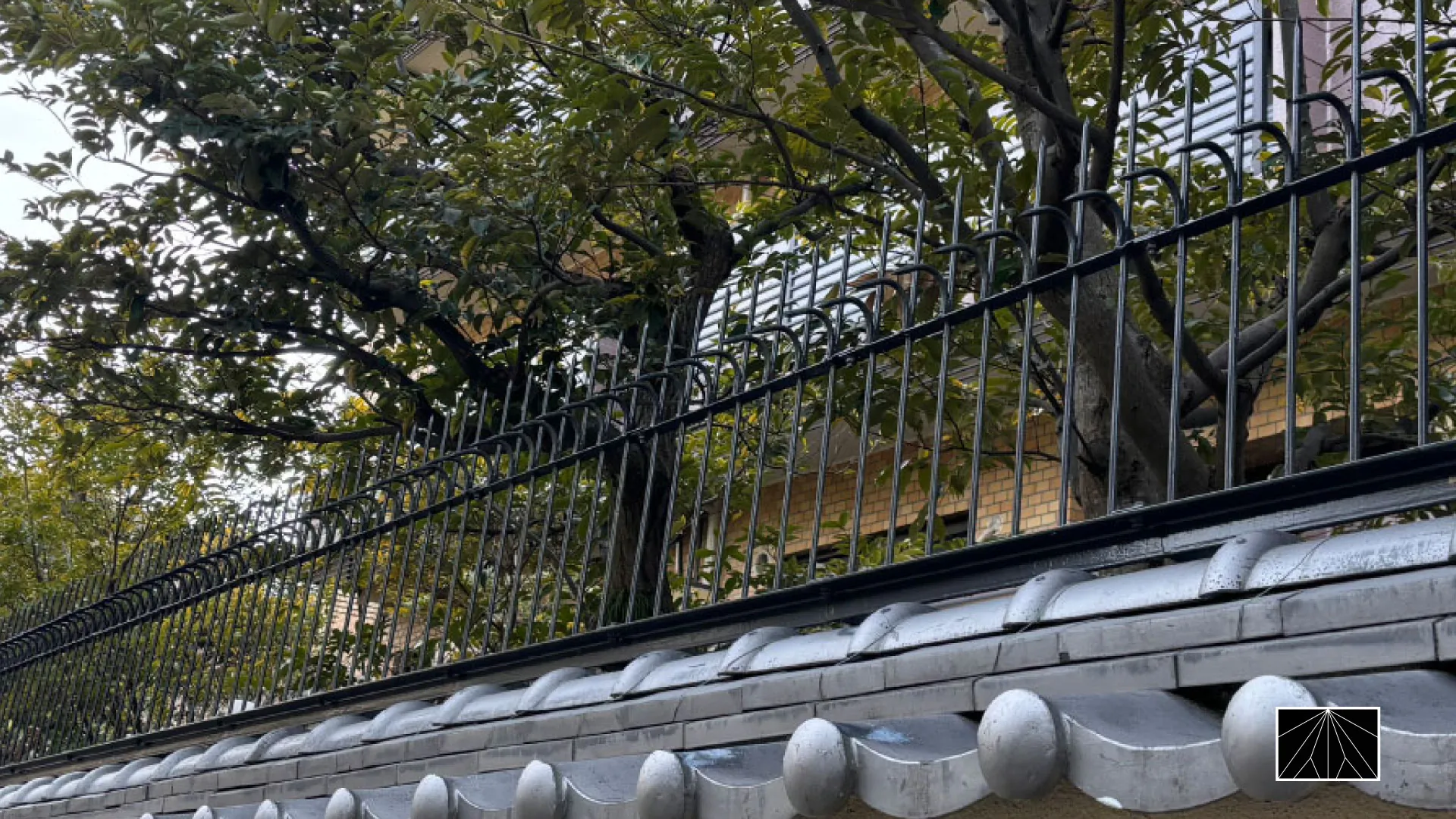
And the shinobi gaeshi installed atop castle walls are the most direct access control devices. They physically prevent entry from any route other than the legitimate one (the gate).
Kumamoto Castle's stone walls, known as "musha-gaeshi" (warrior repellers), feature the "fan slope" design — gentle inclines at the bottom that become nearly vertical toward the top. This shape itself serves as access control, and combined with shinobi gaeshi at the top, created an impenetrable defense.
The principle of "making the presence of owners and managers felt in a space." Well-maintained spaces send the message "someone is managing this" and exert psychological pressure on criminals.
Castle stone walls and moats are physical barriers that simultaneously send a powerful message: "Beyond this point is the domain of the castle lord."
Particularly noteworthy is that many castles had their stone walls intentionally built to be beautiful. The precision stone-laying technique called "kirikomihagi" is not necessarily structurally stronger than "nozurazumi" (rough stacking), but it functioned as a symbol of order and power.
Orderly stone walls were a message — "this castle is managed by a powerful authority" — and served as a deterrent in themselves.
The principle that "maintaining environments in good condition deters crime." Closely related to the "Broken Windows Theory" proposed by George Kelling and James Wilson.
Japanese castles were constantly repaired and maintained even during peacetime. "Fushin" — castle construction and repair — was a critical responsibility of feudal lords, and the condition of a castle directly reflected the lord's prestige and ruling power.
A neglected castle would signal to attackers that "this lord is weakening." Conversely, a meticulously maintained castle possessed deterrent power signaling "this lord is powerful."
Nijo Castle's gardens were meticulously maintained through the end of the Edo period, not merely for aesthetic reasons but with the political intent of demonstrating "the authority of the Tokugawa shogunate."
What Japanese castle architecture teaches us is that security functions not as a single measure but as a "system" combining multiple principles.
Shinobi gaeshi primarily contribute to "natural access control" and "territorial reinforcement" among CPTED's four principles, but when combined with lighting (supporting natural surveillance) and garden maintenance (maintenance), their effectiveness multiplies many times over.
Applying the wisdom that our ancestors perfected over centuries of castle defense to modern homes — that is the product concept of Ninja Deterrent.
Interestingly, Japanese castle architecture had been practicing these principles at a highly sophisticated level centuries before CPTED was systematized. This article decodes the four CPTED principles through the lens of Japanese castles and considers their application to modern homes.
Principle 1: Natural Surveillance
CPTED Definition
A design principle that "enables legitimate users to naturally monitor spaces." Criminals tend to avoid places where they feel "watched."
Castle Practice: Sama (Loopholes) and Arrow Slits
Japanese castle walls feature regularly spaced small openings called "sama." While these are firing ports for guns and bows, they simultaneously served as windows for constant external surveillance.
The key characteristic of sama is that the interior is difficult to see from outside, while those inside enjoy a wide view outward. This is precisely the principle of natural surveillance — "making intruders aware they are being watched."
Himeji Castle has approximately 1,000 sama, ensuring lines of sight from every direction along its walls.
Application to Modern Homes
- Strategically position road-facing windows to enable natural monitoring of the exterior
- Hedges that are too tall create blind spots; trim to approximately 1.2m
- Install security cameras (modern-day "sama")
Principle 2: Natural Access Control
CPTED Definition
The principle of "naturally sorting legitimate users from unauthorized intruders through environmental design." Using physical barriers to restrict intrusion routes.
Castle Practice: Masugata Barbicans and Shinobi Gaeshi
Castle entrances, called "koguchi," were far more than simple gates. The "masugata koguchi" is a structure that forces 90 to 180-degree direction changes after passing through the gate, sapping intruders' momentum and creating defensive advantages.
And the shinobi gaeshi installed atop castle walls are the most direct access control devices. They physically prevent entry from any route other than the legitimate one (the gate).
Kumamoto Castle's stone walls, known as "musha-gaeshi" (warrior repellers), feature the "fan slope" design — gentle inclines at the bottom that become nearly vertical toward the top. This shape itself serves as access control, and combined with shinobi gaeshi at the top, created an impenetrable defense.
Application to Modern Homes
- Clearly define the main gate and physically block other intrusion routes
- Install shinobi gaeshi on top of walls and fences — the most direct form of access control
- Design pathways within the property so that suspicious persons naturally stand out
Principle 3: Territorial Reinforcement
CPTED Definition
The principle of "making the presence of owners and managers felt in a space." Well-maintained spaces send the message "someone is managing this" and exert psychological pressure on criminals.
Castle Practice: Stone Walls and Moats
Castle stone walls and moats are physical barriers that simultaneously send a powerful message: "Beyond this point is the domain of the castle lord."
Particularly noteworthy is that many castles had their stone walls intentionally built to be beautiful. The precision stone-laying technique called "kirikomihagi" is not necessarily structurally stronger than "nozurazumi" (rough stacking), but it functioned as a symbol of order and power.
Orderly stone walls were a message — "this castle is managed by a powerful authority" — and served as a deterrent in themselves.
Application to Modern Homes
- A well-maintained garden and tidy exterior signal a "managed home"
- The design quality of shinobi gaeshi matters too — Gothic Series decorative profiles contribute to territorial reinforcement
- Maintained nameplates, gate lights, and mailboxes indicate "residents are present"
Principle 4: Maintenance
CPTED Definition
The principle that "maintaining environments in good condition deters crime." Closely related to the "Broken Windows Theory" proposed by George Kelling and James Wilson.
Castle Practice: Garden Management and Construction
Japanese castles were constantly repaired and maintained even during peacetime. "Fushin" — castle construction and repair — was a critical responsibility of feudal lords, and the condition of a castle directly reflected the lord's prestige and ruling power.
A neglected castle would signal to attackers that "this lord is weakening." Conversely, a meticulously maintained castle possessed deterrent power signaling "this lord is powerful."
Nijo Castle's gardens were meticulously maintained through the end of the Edo period, not merely for aesthetic reasons but with the political intent of demonstrating "the authority of the Tokugawa shogunate."
Application to Modern Homes
- Broken windows, peeling paint, and overgrown weeds signal "unmanaged"
- Regular post-installation inspection of shinobi gaeshi is important (rust, looseness, debris removal)
- Maintaining the overall aesthetic of the exterior provides indirect security benefits
Comprehensive Security Learned from Castle Architecture
What Japanese castle architecture teaches us is that security functions not as a single measure but as a "system" combining multiple principles.
Shinobi gaeshi primarily contribute to "natural access control" and "territorial reinforcement" among CPTED's four principles, but when combined with lighting (supporting natural surveillance) and garden maintenance (maintenance), their effectiveness multiplies many times over.
Applying the wisdom that our ancestors perfected over centuries of castle defense to modern homes — that is the product concept of Ninja Deterrent.