
'Easy-to-Enter Homes' Get Targeted — Crime Opportunity Theory and the Basics of Physical Security
Published: 3/6/2026
"Our house will be fine" or "We don't have anything worth stealing" — this mindset is actually the greatest security risk. The criteria by which criminals select their targets isn't what's inside the home. It's how easy it is to get in.
Traditional criminology was dominated by crime causation theory — focusing on the offender's motives, environment, and psychology. This approach sought to explain criminal behavior through factors like poverty, education, and family environment.
However, from the 1970s onward, mainstream criminology underwent a major shift. A new concept emerged: "While changing a criminal's motivation is extremely difficult, reducing criminal opportunities is possible." This is Crime Opportunity Theory.
The core of Crime Opportunity Theory is simple. You cannot reduce the number of criminals, but you can change the "places" and "situations" where crime occurs.
Research from the UK Home Office and statistics from Japan's National Police Agency have revealed the criteria burglars use when selecting targets.
1. Ease of entry: Low walls, footholds on fences, open windows
2. Low risk of detection: Many blind spots, no lighting, low foot traffic
3. Ease of escape: Multiple escape routes, not a dead end
4. Occupancy: Home is unoccupied (accumulated newspapers, lights off)
Notably, "amount of wealth" does not rank among the top factors. For burglars, the most important consideration is "can I enter and exit without being caught," with "how much can I steal" being secondary.
According to research by the Australian Institute of Criminology (AIC), there is a clear correlation between wall/fence height and intrusion rates.
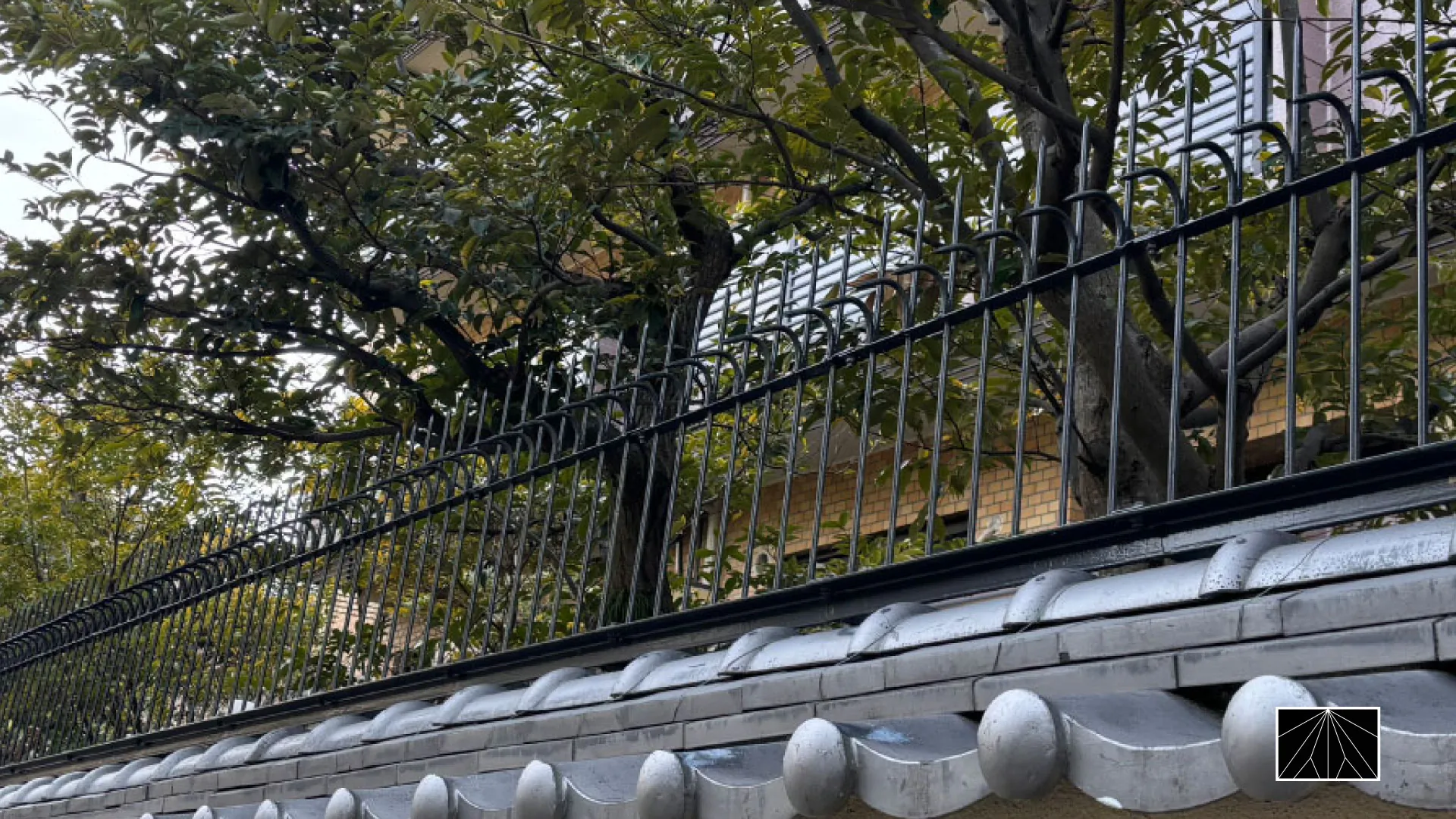
The key point is that "height alone is insufficient." Even a 1.8m wall can be climbed if the top is flat and provides a handhold. Installing shinobi gaeshi (anti-climb spikes) on top completes the physical intrusion barrier.
The effectiveness of shinobi gaeshi cannot be fully explained by their role as physical barriers alone. In fact, their psychological deterrent power may be their greatest value.
Among the 25 techniques of "Situational Crime Prevention" proposed by criminologist Ronald Clarke, shinobi gaeshi satisfy multiple techniques:
Most importantly, these effects are visible. Criminals screen targets during their reconnaissance (casing) phase. Shinobi gaeshi gleaming atop fences send a clear signal: "The residents of this home have high security awareness."
Residential security based on Crime Opportunity Theory consists of the following layers:
Among these measures, shinobi gaeshi serve as the cornerstone of Layer 1. As the first security device an intruder encounters, if it can "make them give up" at this point, the other measures won't even be tested.
The average damage from a residential burglary in Japan is estimated at approximately 500,000 to 1,000,000 yen. Including psychological damage, the impact is immeasurable.
Meanwhile, the installation cost of shinobi gaeshi, while varying by building size, generally ranges from tens of thousands to over 100,000 yen. Once installed, they require essentially no maintenance and continue to provide security for over 10 years.
What Crime Opportunity Theory teaches us is clear. You cannot change the criminal, but you can change your home into one that's "hard to enter." The most direct and cost-effective means of doing so is shinobi gaeshi.
The Critical Difference Between Crime Causation Theory and Crime Opportunity Theory
Traditional criminology was dominated by crime causation theory — focusing on the offender's motives, environment, and psychology. This approach sought to explain criminal behavior through factors like poverty, education, and family environment.
However, from the 1970s onward, mainstream criminology underwent a major shift. A new concept emerged: "While changing a criminal's motivation is extremely difficult, reducing criminal opportunities is possible." This is Crime Opportunity Theory.
The core of Crime Opportunity Theory is simple. You cannot reduce the number of criminals, but you can change the "places" and "situations" where crime occurs.
The "Selection Criteria" of Burglars
Research from the UK Home Office and statistics from Japan's National Police Agency have revealed the criteria burglars use when selecting targets.
Factors Burglars Prioritize (In Order)
1. Ease of entry: Low walls, footholds on fences, open windows
2. Low risk of detection: Many blind spots, no lighting, low foot traffic
3. Ease of escape: Multiple escape routes, not a dead end
4. Occupancy: Home is unoccupied (accumulated newspapers, lights off)
Notably, "amount of wealth" does not rank among the top factors. For burglars, the most important consideration is "can I enter and exit without being caught," with "how much can I steal" being secondary.
The Relationship Between Wall/Fence Height and Intrusion Rates
According to research by the Australian Institute of Criminology (AIC), there is a clear correlation between wall/fence height and intrusion rates.
- Walls 1.2m or lower: Virtually no deterrent effect (easily climbed over)
- Walls 1.5-1.8m: Some deterrent effect, but not a barrier for physically capable individuals
- Walls 1.8m+ with physical barriers on top: Significant reduction in intrusion rates
The key point is that "height alone is insufficient." Even a 1.8m wall can be climbed if the top is flat and provides a handhold. Installing shinobi gaeshi (anti-climb spikes) on top completes the physical intrusion barrier.
The Science of "Visible Deterrence"
The effectiveness of shinobi gaeshi cannot be fully explained by their role as physical barriers alone. In fact, their psychological deterrent power may be their greatest value.
Among the 25 techniques of "Situational Crime Prevention" proposed by criminologist Ronald Clarke, shinobi gaeshi satisfy multiple techniques:
- Target hardening: Making intrusion physically difficult
- Increasing risk: Raising the risk of detection and injury
- Increasing difficulty: Increasing the time and effort required for intrusion
Most importantly, these effects are visible. Criminals screen targets during their reconnaissance (casing) phase. Shinobi gaeshi gleaming atop fences send a clear signal: "The residents of this home have high security awareness."
Specific Residential Security Measures
Residential security based on Crime Opportunity Theory consists of the following layers:
Layer 1: Perimeter Defense (The Domain of Shinobi Gaeshi)
- Installing shinobi gaeshi on top of walls and fences
- Auto-locking gates
- Clear boundary definition (landscaping maintenance, etc.)
Layer 2: Building Exterior
- Motion sensor light installation
- Security gravel placement
- Window auxiliary locks and security film
Layer 3: Building Interior
- Home security systems
- Safe installation
- Timer-controlled lighting to simulate occupancy
Among these measures, shinobi gaeshi serve as the cornerstone of Layer 1. As the first security device an intruder encounters, if it can "make them give up" at this point, the other measures won't even be tested.
Shinobi Gaeshi as a Security Investment
The average damage from a residential burglary in Japan is estimated at approximately 500,000 to 1,000,000 yen. Including psychological damage, the impact is immeasurable.
Meanwhile, the installation cost of shinobi gaeshi, while varying by building size, generally ranges from tens of thousands to over 100,000 yen. Once installed, they require essentially no maintenance and continue to provide security for over 10 years.
What Crime Opportunity Theory teaches us is clear. You cannot change the criminal, but you can change your home into one that's "hard to enter." The most direct and cost-effective means of doing so is shinobi gaeshi.