
Japan's Burglary Statistics — Trends by Building Type and Cost-Effective Countermeasures
Published: 3/6/2026
When implementing security measures, data-driven decisions matter more than feelings or impressions. This article analyzes the reality of burglary crime in Japan based on data from the National Police Agency's crime statistics, and evaluates the cost-effectiveness of shinobi gaeshi.
Residential burglary cases in Japan have been declining since peaking at approximately 340,000 in 2003. Recent data shows approximately 30,000 cases per year.
However, declining numbers are no reason for complacency.
Breaking down burglary targets by building type reveals the following trends:
| Building Type | Share of Total |
|---|---|
| Detached houses | ~40% |
| Apartments (3 floors or below) | ~10% |
| Apartments (4 floors and above) | ~5% |
| Offices | ~15% |
| Retail shops | ~12% |
| Other | ~18% |
It's clear that detached houses are the primary target. Compared to apartment buildings, detached houses offer more intrusion routes and make it easier for outsiders to determine when residents are away.
Where do intruders enter buildings? This data is crucial for prioritizing security measures.
| Entry Point | Percentage |
|---|---|
| Windows | ~55% |
| Front entrance (main door) | ~18% |
| Other entrances (side/rear doors) | ~15% |
| Other (wall climbing, via roof, etc.) | ~12% |
Window entry accounts for the majority, but the wall-climbing routes included in "other" deserve attention.
Many burglars avoid the front entrance, instead climbing over walls or fences to reach the rear of the building and enter through less visible windows or side doors. In other words, even window intrusions often involve wall climbing as a preliminary step.
| Entry Point | Percentage |
|---|---|
| Front entrance (main door) | ~45% |
| Windows | ~35% |
| Balconies | ~15% |
| Other | ~5% |
In apartments, front door entry is most common, but balcony intrusions are frequent on lower floors. The 1st and 2nd floors have a risk profile similar to detached houses.
| Entry Method | Percentage |
|---|---|
| Unlocked doors/windows | ~45% |
| Glass breaking | ~25% |
| Lock picking | ~10% |
| Door lock forcing | ~8% |
| Other | ~12% |
The leading entry method is "unlocked" — meaning doors or windows were simply left unlocked, accounting for nearly half of all cases. This reflects the complacency of thinking "I'm just stepping out briefly."
Yet even when locked, glass breaking and lock picking account for approximately 35% of entries. "Having the lock on" doesn't equal "being safe."
| Time Period | Percentage | Characteristics |
|---|---|---|
| 8:00-12:00 | ~25% | Targeting empty homes after commuters leave |
| 12:00-16:00 | ~30% | Peak daytime period |
| 16:00-20:00 | ~15% | Before residents return |
| 20:00-24:00 | ~15% | Pre-sleep to post-sleep |
| 0:00-8:00 | ~15% | Late night to early morning |
Surprisingly, residential burglary is most frequent during daytime (8:00-16:00). Targeting empty homes ("akisu" break-ins) is the dominant pattern — a rational behavioral strategy that avoids encountering residents.
Meanwhile, nighttime intrusions (20:00-8:00) account for approximately 30%, consisting of "shinobikomi" (sneaking in while residents sleep) and "iaki" (entering while residents are home but in another room).
Average damage from a residential burglary is estimated as follows:
Taking Ninja Deterrent products as an example:
Assuming shinobi gaeshi installation costs 150,000 yen and average burglary damage is 750,000 yen:
That's approximately 1,250 yen per month — significantly less than typical home security service monthly fees (3,000-6,000 yen). Moreover, shinobi gaeshi require no power, no connectivity, and have virtually zero failure risk.
Burglary rates vary significantly by region:
Suburban detached houses are statistically the highest-risk category. Residents commute, leaving homes empty during the day, and even when surrounded by walls or fences, the lack of security measures on top makes climbing over easy.
The statistical data delivers a clear message:
1. Detached houses face the greatest risk — the building type with highest demand for shinobi gaeshi
2. Wall climbing is a precursor to intrusion — window measures alone are insufficient; perimeter defense is essential
3. Physical barriers are the most cost-effective security investment — cheaper and more reliable than electronic security
4. Daytime empty homes are the primary target — the advantage of 24/7 physical barriers
When you base security decisions on data rather than intuition, shinobi gaeshi emerge as one of the most rational investments. Once installed, they continuously transform your home into one that's "not worth targeting" — for over 10 years, requiring no power, no connectivity, and no human intervention.
The Big Picture of Residential Burglary
Trends in Reported Cases
Residential burglary cases in Japan have been declining since peaking at approximately 340,000 in 2003. Recent data shows approximately 30,000 cases per year.
However, declining numbers are no reason for complacency.
- Clearance rate is around 50%: Offenders go uncaught in half of all cases
- Dark figure (unreported crimes): Cases where victims are unaware or don't file reports are not included in statistics
- Average damage per case is trending upward: Crime is becoming more "professionalized"
Intrusion Rates by Building Type
Breaking down burglary targets by building type reveals the following trends:
| Building Type | Share of Total |
|---|---|
| Detached houses | ~40% |
| Apartments (3 floors or below) | ~10% |
| Apartments (4 floors and above) | ~5% |
| Offices | ~15% |
| Retail shops | ~12% |
| Other | ~18% |
It's clear that detached houses are the primary target. Compared to apartment buildings, detached houses offer more intrusion routes and make it easier for outsiders to determine when residents are away.
Entry Point Analysis
Where do intruders enter buildings? This data is crucial for prioritizing security measures.
Detached House Entry Points
| Entry Point | Percentage |
|---|---|
| Windows | ~55% |
| Front entrance (main door) | ~18% |
| Other entrances (side/rear doors) | ~15% |
| Other (wall climbing, via roof, etc.) | ~12% |
Window entry accounts for the majority, but the wall-climbing routes included in "other" deserve attention.
Many burglars avoid the front entrance, instead climbing over walls or fences to reach the rear of the building and enter through less visible windows or side doors. In other words, even window intrusions often involve wall climbing as a preliminary step.
Apartment Entry Points
| Entry Point | Percentage |
|---|---|
| Front entrance (main door) | ~45% |
| Windows | ~35% |
| Balconies | ~15% |
| Other | ~5% |
In apartments, front door entry is most common, but balcony intrusions are frequent on lower floors. The 1st and 2nd floors have a risk profile similar to detached houses.
Entry Method Analysis
| Entry Method | Percentage |
|---|---|
| Unlocked doors/windows | ~45% |
| Glass breaking | ~25% |
| Lock picking | ~10% |
| Door lock forcing | ~8% |
| Other | ~12% |
The leading entry method is "unlocked" — meaning doors or windows were simply left unlocked, accounting for nearly half of all cases. This reflects the complacency of thinking "I'm just stepping out briefly."
Yet even when locked, glass breaking and lock picking account for approximately 35% of entries. "Having the lock on" doesn't equal "being safe."
Time-of-Day Analysis
| Time Period | Percentage | Characteristics |
|---|---|---|
| 8:00-12:00 | ~25% | Targeting empty homes after commuters leave |
| 12:00-16:00 | ~30% | Peak daytime period |
| 16:00-20:00 | ~15% | Before residents return |
| 20:00-24:00 | ~15% | Pre-sleep to post-sleep |
| 0:00-8:00 | ~15% | Late night to early morning |
Surprisingly, residential burglary is most frequent during daytime (8:00-16:00). Targeting empty homes ("akisu" break-ins) is the dominant pattern — a rational behavioral strategy that avoids encountering residents.
Meanwhile, nighttime intrusions (20:00-8:00) account for approximately 30%, consisting of "shinobikomi" (sneaking in while residents sleep) and "iaki" (entering while residents are home but in another room).
Cost-Effectiveness of Shinobi Gaeshi
Damage Cost Analysis
Average damage from a residential burglary is estimated as follows:
- Cash losses: Average 200,000-500,000 yen
- Jewelry and goods: Average 100,000-300,000 yen
- Building damage (windows, doors, etc.): Repair costs 100,000-300,000 yen
- Psychological damage: Difficult to quantify (PTSD, relocation costs, etc.)
- Total (monetary damage only): Approximately 500,000-1,000,000 yen
Shinobi Gaeshi Installation Costs
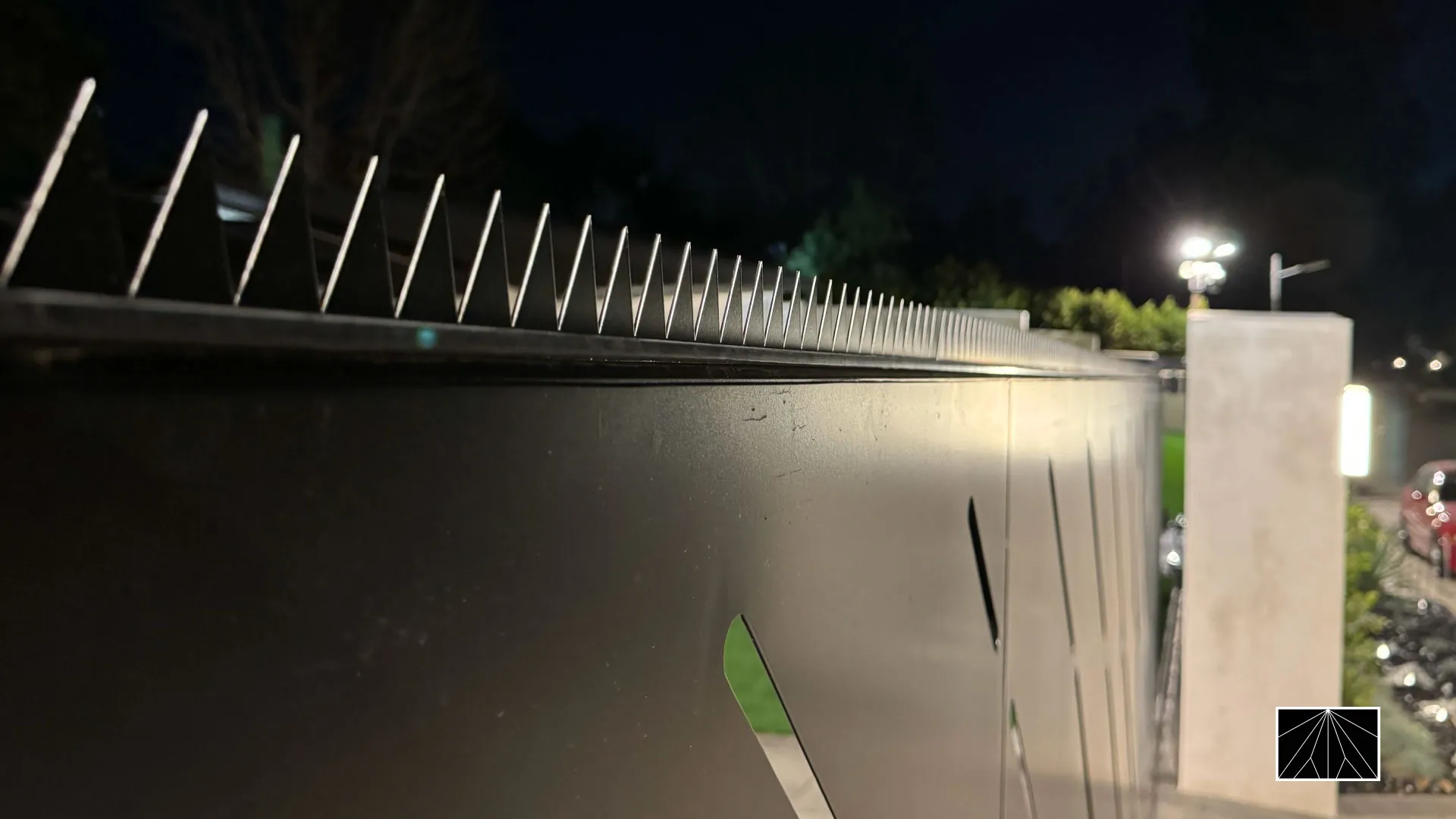
Taking Ninja Deterrent products as an example:
- Product cost: From several thousand yen per meter
- Typical detached house perimeter: Approximately 30-50m
- Installation: DIY or professional installation
- Estimated total cost: Tens of thousands to several hundred thousand yen
ROI Calculation
Assuming shinobi gaeshi installation costs 150,000 yen and average burglary damage is 750,000 yen:
- ROI from preventing one burglary: (750,000 - 150,000) / 150,000 = 400%
- Shinobi gaeshi lifespan: 10+ years (stainless steel models are virtually maintenance-free)
- Annual cost: 150,000 / 10 years = 15,000 yen per year
That's approximately 1,250 yen per month — significantly less than typical home security service monthly fees (3,000-6,000 yen). Moreover, shinobi gaeshi require no power, no connectivity, and have virtually zero failure risk.
Regional Risk Analysis
Burglary rates vary significantly by region:
- Urban areas (Tokyo, Osaka, Nagoya): High case numbers, but high population density enables effective natural surveillance
- Suburban residential areas: Moderate case numbers, but high daytime vacancy rates and greater distances between homes
- Regional cities: Lower case numbers, but higher average damage per incident
Suburban detached houses are statistically the highest-risk category. Residents commute, leaving homes empty during the day, and even when surrounded by walls or fences, the lack of security measures on top makes climbing over easy.
What the Data Tells Us
The statistical data delivers a clear message:
1. Detached houses face the greatest risk — the building type with highest demand for shinobi gaeshi
2. Wall climbing is a precursor to intrusion — window measures alone are insufficient; perimeter defense is essential
3. Physical barriers are the most cost-effective security investment — cheaper and more reliable than electronic security
4. Daytime empty homes are the primary target — the advantage of 24/7 physical barriers
When you base security decisions on data rather than intuition, shinobi gaeshi emerge as one of the most rational investments. Once installed, they continuously transform your home into one that's "not worth targeting" — for over 10 years, requiring no power, no connectivity, and no human intervention.