
Why Ninja Operated at Night — The Synergy of Lighting and Physical Security
Published: 3/6/2026
Ninja carried out their missions almost exclusively at "night." This wasn't because ninja were nocturnal by nature. It was because darkness automatically creates the greatest ally in Crime Opportunity Theory — "the absence of capable guardians."
The ninja manual Bansenshukai contains detailed descriptions of weather conditions and lunar phases suitable for missions. Moonless nights, rainy nights, and windy nights were preferred — all conditions that restrict visibility and hearing.
The techniques ninja used to "melt into darkness" were extensive:
All of these techniques were specialized for "evading the eyes of guardians."
In Crime Opportunity Theory, "absence of capable guardians" is one of the three conditions for crime. And darkness physically neutralizes surveillance capability.
Crime statistics from various countries present clear data:
Modern security lighting is anchored by sensor lights (motion-activated illumination).
The security effectiveness of sensor lights goes beyond simply "making things bright." Three psychological effects are key:
When strong light suddenly hits eyes adapted to darkness, the intruder temporarily loses vision and enters a state of panic. Ninja reportedly feared sudden torch illumination most of all.
The moment a sensor light activates, the intruder feels "someone has noticed me." Even though it's merely a sensor responding, the psychological effect is enormous.
Lighting makes the intruder visible to neighbors and passersby. This artificially creates "guardians" as defined by Crime Opportunity Theory.
However, lighting alone doesn't complete a security strategy. No matter how brightly you illuminate an area, intrusion is possible without physical barriers.
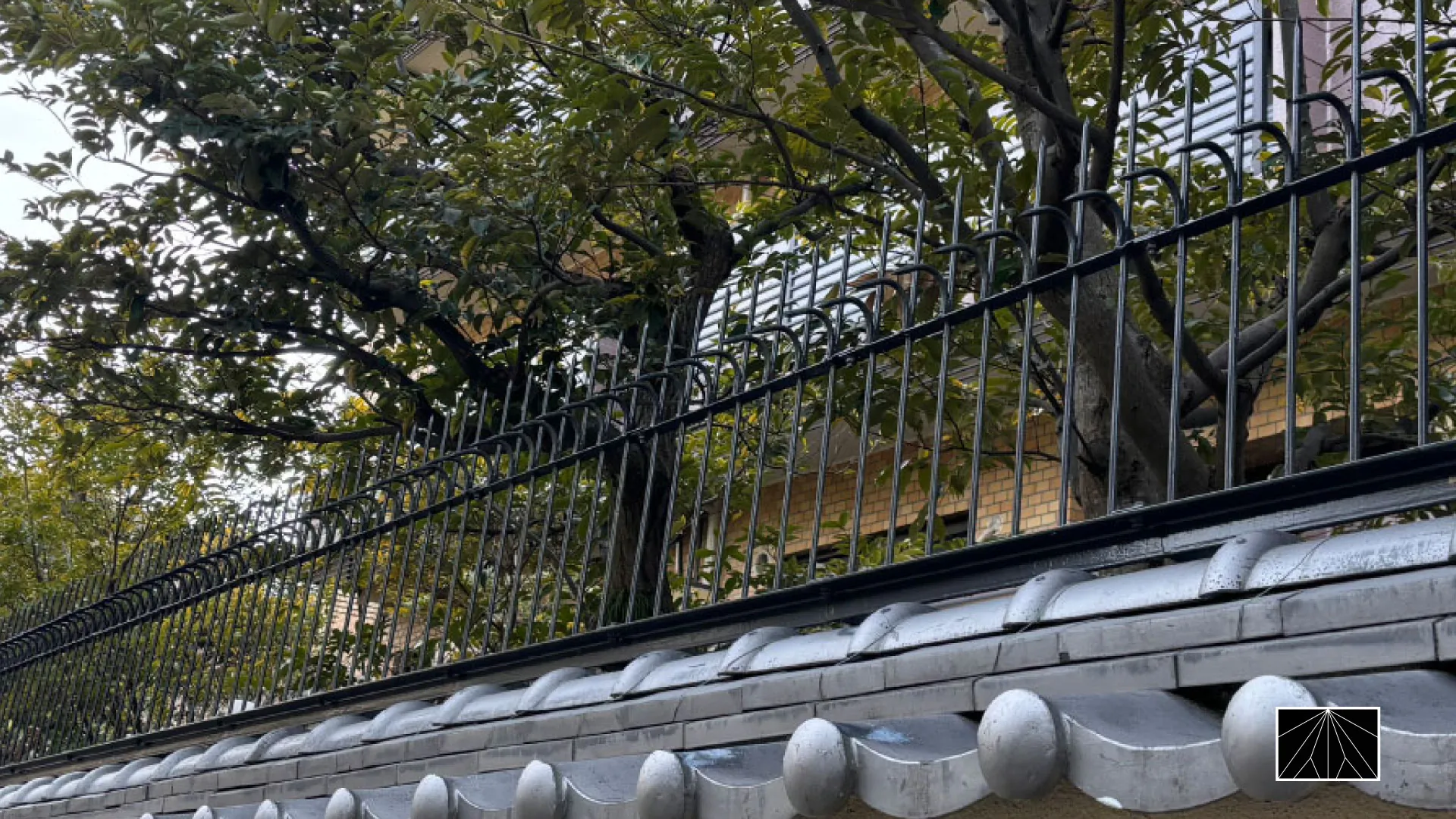
The combination of lighting and shinobi gaeshi simultaneously eliminates two of Crime Opportunity Theory's conditions:
| Measure | Effect in Crime Opportunity Theory |
|---|---|
| Sensor lights | Eliminates "absence of capable guardians" |
| Shinobi gaeshi | Converts "suitable target" to "unsuitable target" |
| Both combined | Eliminates 2 of 3 conditions → Makes crime significantly harder |
There's an even more important synergy: Sensor lights illuminate the shinobi gaeshi, dramatically amplifying visual deterrence.
In darkness, an intruder might not notice the shinobi gaeshi. But the instant a sensor light activates and sharp metal protrusions gleam atop the fence, the psychological impact is immeasurable.
Key points for lighting design that maximizes shinobi gaeshi effectiveness:
Just as ninja made darkness their ally, modern intruders exploit darkness to the fullest. The foundation of security is removing the criminal's "allies."
Sensor lights remove darkness as an ally, and shinobi gaeshi remove walls as an intrusion route. This dual "removal" forms the foundation of residential security.
Just as torches and shinobi gaeshi protected castles during the Warring States period, LEDs and Ninja Deterrent protect modern homes. Technology evolves, but the principles of security remain unchanged.
The Relationship Between Ninja and Darkness
The ninja manual Bansenshukai contains detailed descriptions of weather conditions and lunar phases suitable for missions. Moonless nights, rainy nights, and windy nights were preferred — all conditions that restrict visibility and hearing.
The techniques ninja used to "melt into darkness" were extensive:
- Dark clothing: "Navy blue" and "persimmon-dyed brown" were actually used rather than pure black. True black creates a silhouette that stands out in moonlight
- Sound-dampening techniques: Special materials were attached to tabi (split-toe socks) soles to silence footsteps
- Crawling: Moving by crawling along the ground, staying below the line of sight
- Freezing techniques: When about to be discovered, blending into the terrain and remaining perfectly still
All of these techniques were specialized for "evading the eyes of guardians."
Darkness and Crime Opportunity Theory
In Crime Opportunity Theory, "absence of capable guardians" is one of the three conditions for crime. And darkness physically neutralizes surveillance capability.
Crime statistics from various countries present clear data:
- Approximately 60-70% of residential burglaries target daytime empty homes, but nighttime intrusions carry higher risk of encountering residents, making intruders bolder
- Nighttime intrusions are significantly more likely to occur from unlit sides of buildings
- Meta-analyses show that street lighting installation reduces surrounding crime rates by an average of 20-30%
The Effectiveness of Sensor Lights
Modern security lighting is anchored by sensor lights (motion-activated illumination).
The security effectiveness of sensor lights goes beyond simply "making things bright." Three psychological effects are key:
1. Psychological Shock from Sudden Illumination
When strong light suddenly hits eyes adapted to darkness, the intruder temporarily loses vision and enters a state of panic. Ninja reportedly feared sudden torch illumination most of all.
2. The Illusion of "Being Discovered"
The moment a sensor light activates, the intruder feels "someone has noticed me." Even though it's merely a sensor responding, the psychological effect is enormous.
3. Visibility to Others
Lighting makes the intruder visible to neighbors and passersby. This artificially creates "guardians" as defined by Crime Opportunity Theory.
The Synergy of Lighting and Shinobi Gaeshi
However, lighting alone doesn't complete a security strategy. No matter how brightly you illuminate an area, intrusion is possible without physical barriers.
The combination of lighting and shinobi gaeshi simultaneously eliminates two of Crime Opportunity Theory's conditions:
| Measure | Effect in Crime Opportunity Theory |
|---|---|
| Sensor lights | Eliminates "absence of capable guardians" |
| Shinobi gaeshi | Converts "suitable target" to "unsuitable target" |
| Both combined | Eliminates 2 of 3 conditions → Makes crime significantly harder |
There's an even more important synergy: Sensor lights illuminate the shinobi gaeshi, dramatically amplifying visual deterrence.
In darkness, an intruder might not notice the shinobi gaeshi. But the instant a sensor light activates and sharp metal protrusions gleam atop the fence, the psychological impact is immeasurable.
Effective Lighting Design
Key points for lighting design that maximizes shinobi gaeshi effectiveness:
Placement
- Position sensor lights every 2-3m along fences and walls where shinobi gaeshi are installed
- Set the illumination angle so that shinobi gaeshi spikes cast shadows (moving shadows increase visual impact)
Illuminance
- Ensure at least 50 lux at the fence surface
- LED lighting is recommended (energy-efficient, long-lasting, reaches maximum brightness instantly)
Sensor Settings
- Set detection range 2-3m beyond the fence (triggering before contact)
- Activation duration of 30 seconds to 1 minute (too long causes light pollution for neighbors)
Applying Ninja Wisdom to the Modern Age
Just as ninja made darkness their ally, modern intruders exploit darkness to the fullest. The foundation of security is removing the criminal's "allies."
Sensor lights remove darkness as an ally, and shinobi gaeshi remove walls as an intrusion route. This dual "removal" forms the foundation of residential security.
Just as torches and shinobi gaeshi protected castles during the Warring States period, LEDs and Ninja Deterrent protect modern homes. Technology evolves, but the principles of security remain unchanged.