
Ninja Deterrent Reassessed Globally — Fusion with Western CPTED Standards
Published: 3/6/2026
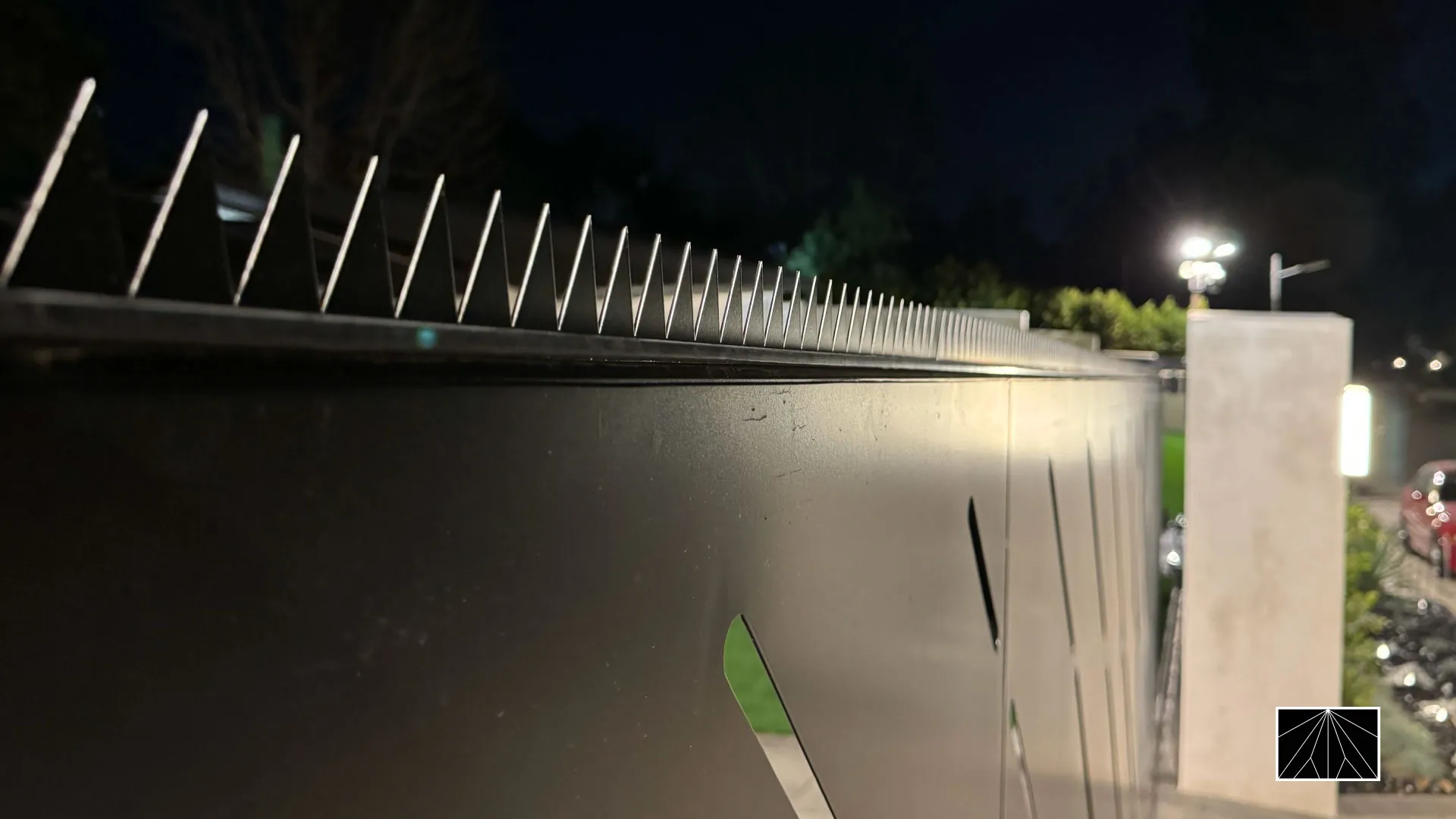
Shinobi gaeshi (anti-climb spikes), born in Japan, are now occupying an important position in security standards worldwide. As CPTED (Crime Prevention Through Environmental Design) spreads internationally, shinobi gaeshi are being reassessed as essential physical security devices.
In the UK, a police-led security certification system called "Secured by Design (SBD)" has been operating since 1989. This system requires that residential and commercial developments meet security standards at the design stage, directly impacting property values.
SBD guidelines specify the following regarding perimeter fencing:
In the UK, anti-climb spikes are recognized as legitimate security devices and are widely adopted in residential and commercial properties. However, when installed below 2m or facing public roads, warning signage is mandatory.
Australia is one of the world's leaders in CPTED implementation. Each state government has developed its own CPTED guidelines, and CPTED assessments are mandatory for new developments in some regions.
New South Wales guidelines establish clear standards for residential perimeter defense:
Australia's distinguishing feature is its emphasis on balancing security with aesthetics. The distinction is clear: front boundaries should be open for "natural surveillance," while side and rear boundaries should be robust for "access control."
In the US, CPTED is widely adopted at the urban planning level. The CPTED program promoted by the National Crime Prevention Council is based on the following principles:
In US residential areas, fence design and height are often regulated by HOA (Homeowners Association) rules. In recent years, demand for aesthetically designed security devices has increased, driving growing interest in decorative shinobi gaeshi.
Particularly in luxury residential areas and gated communities, where the balance of security and aesthetics is essential, decorative profiles like Ninja Deterrent's Gothic Series and Iris Series receive high praise.
The attention that Japanese shinobi gaeshi receive overseas as "Ninja Deterrent" isn't simply about marketing nomenclature.
Shinobi gaeshi are a security technology with over 500 years of proven track record. This historical background provides a powerful story that validates product credibility.
Japan's metalworking tradition, exemplified by Japanese sword forging, commands worldwide respect. For shinobi gaeshi, which require precision fabrication, being made in Japan serves as proof of quality.
Japanese architectural culture has always emphasized "functional beauty." Castle shinobi gaeshi were never mere security devices — they were beautifully designed as integral parts of the architecture. This philosophy of "beautiful security" resonates with contemporary architects and designers.
When installing shinobi gaeshi, understanding each country's regulations is essential.
| Country/Region | Legality | Key Regulations |
|---|---|---|
| Japan | Legal | No protrusion onto public roads, fall prevention required |
| United Kingdom | Legal | Warning signage required for installations below 2m |
| Australia | Legal (varies by state) | Compliance with regional CPTED guidelines |
| United States | Varies by state/municipality | HOA rules should be verified |
| EU countries | Generally legal | Based on each country's civil law |
Ninja Deterrent provides product lineups compliant with each country's regulations and offers guidance on installation positions and profile selection.
As CPTED spreads internationally, demand for shinobi gaeshi as physical security devices is projected to continue expanding. The security technology Japan created 500 years ago is being redefined as a modern global standard.
Ninja Deterrent fuses Japanese traditional craftsmanship with contemporary architectural design to deliver "beautiful safety" to homes and buildings worldwide.
United Kingdom: Secured by Design Certification
In the UK, a police-led security certification system called "Secured by Design (SBD)" has been operating since 1989. This system requires that residential and commercial developments meet security standards at the design stage, directly impacting property values.
SBD guidelines specify the following regarding perimeter fencing:
- Residential perimeter fencing should be a minimum of 1.8m high
- Anti-climb devices (shinobi gaeshi) are recommended for fence tops
- Anti-climb devices should have "outward-facing tips" and be installed at heights of 2m or above
- When facing public roads, design considerations for pedestrian safety are required
In the UK, anti-climb spikes are recognized as legitimate security devices and are widely adopted in residential and commercial properties. However, when installed below 2m or facing public roads, warning signage is mandatory.
Australia: CPTED Guidelines
Australia is one of the world's leaders in CPTED implementation. Each state government has developed its own CPTED guidelines, and CPTED assessments are mandatory for new developments in some regions.
New South Wales guidelines establish clear standards for residential perimeter defense:
- Fence height: 1.2m for front, 1.8m for sides and rear as standard
- Visibility: Open designs (mesh, lattice) recommended for front fences
- Anti-climb measures: Anti-climb measures recommended for side and rear fence tops
- Materials: Materials that cannot be easily destroyed or cut are recommended
Australia's distinguishing feature is its emphasis on balancing security with aesthetics. The distinction is clear: front boundaries should be open for "natural surveillance," while side and rear boundaries should be robust for "access control."
United States: CPTED in Practice
In the US, CPTED is widely adopted at the urban planning level. The CPTED program promoted by the National Crime Prevention Council is based on the following principles:
- Maximizing natural surveillance: Building placement, window orientation, lighting design
- Access control: Boundary clarification through fences, gates, and landscaping
- Territoriality: Clear separation of public and private spaces
In US residential areas, fence design and height are often regulated by HOA (Homeowners Association) rules. In recent years, demand for aesthetically designed security devices has increased, driving growing interest in decorative shinobi gaeshi.
Particularly in luxury residential areas and gated communities, where the balance of security and aesthetics is essential, decorative profiles like Ninja Deterrent's Gothic Series and Iris Series receive high praise.
Why "Ninja Deterrent"?
The attention that Japanese shinobi gaeshi receive overseas as "Ninja Deterrent" isn't simply about marketing nomenclature.
1. Historical Credibility
Shinobi gaeshi are a security technology with over 500 years of proven track record. This historical background provides a powerful story that validates product credibility.
2. Japanese Metalworking Excellence
Japan's metalworking tradition, exemplified by Japanese sword forging, commands worldwide respect. For shinobi gaeshi, which require precision fabrication, being made in Japan serves as proof of quality.
3. Fusion of Design and Function
Japanese architectural culture has always emphasized "functional beauty." Castle shinobi gaeshi were never mere security devices — they were beautifully designed as integral parts of the architecture. This philosophy of "beautiful security" resonates with contemporary architects and designers.
Regulations and Installation Standards by Country
When installing shinobi gaeshi, understanding each country's regulations is essential.
| Country/Region | Legality | Key Regulations |
|---|---|---|
| Japan | Legal | No protrusion onto public roads, fall prevention required |
| United Kingdom | Legal | Warning signage required for installations below 2m |
| Australia | Legal (varies by state) | Compliance with regional CPTED guidelines |
| United States | Varies by state/municipality | HOA rules should be verified |
| EU countries | Generally legal | Based on each country's civil law |
Ninja Deterrent provides product lineups compliant with each country's regulations and offers guidance on installation positions and profile selection.
Shinobi Gaeshi as a Global Standard
As CPTED spreads internationally, demand for shinobi gaeshi as physical security devices is projected to continue expanding. The security technology Japan created 500 years ago is being redefined as a modern global standard.
Ninja Deterrent fuses Japanese traditional craftsmanship with contemporary architectural design to deliver "beautiful safety" to homes and buildings worldwide.