
Learning from Ninja Intrusion Techniques — 5 Security Weaknesses in Modern Homes
Published: 3/6/2026
Ninja techniques were not the superhuman feats depicted in movies and anime. Their essence was thoroughly analyzing the structural weaknesses of buildings and finding the most efficient intrusion route.
Remarkably, many of the weaknesses exploited by Warring States-era ninja still exist in modern homes. This article examines five ninja intrusion techniques and their corresponding modern residential security vulnerabilities.
Ninja climbed near-vertical walls by placing fingertips and toes in the mortar joints between stones. This technique, called "ishigaki-nobori" (stone wall climbing), was not a special ability but a rational intrusion method exploiting architectural weaknesses.
In modern homes, block wall joints, brick textures, and decorative relief patterns all serve as potential "footholds." Decorative block patterns, in particular, unintentionally function like climbing holds.
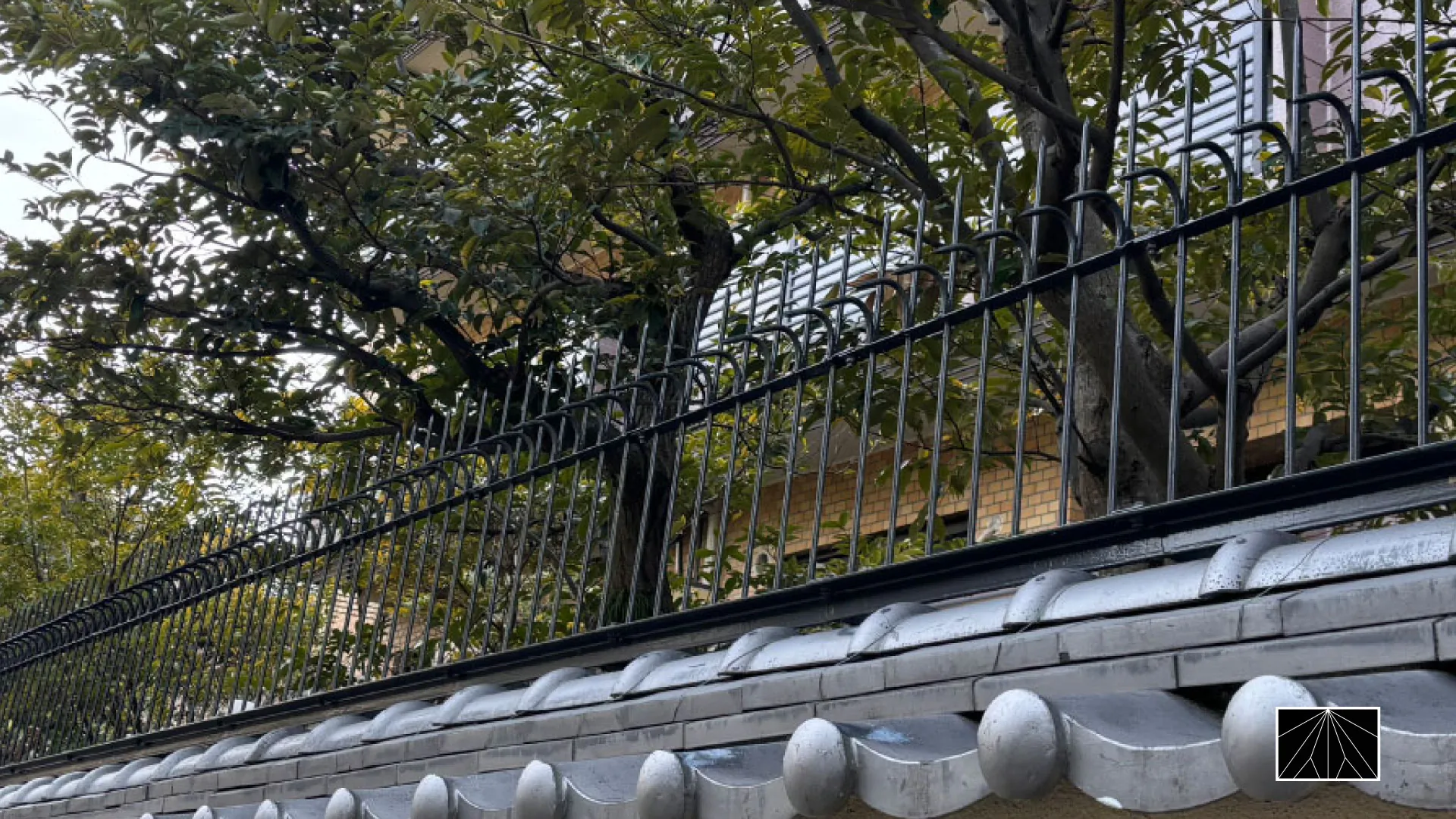
Installing shinobi gaeshi on top of walls prevents the final climb-over even if the wall itself is scaled. Shinobi gaeshi don't "prevent wall climbing" — they create a situation where "even if you climb, you can't get over." This is exactly the same concept as in the Warring States period.
"Neko-bashiri" (cat walking) was the technique of moving along the top of walls and fences while maintaining balance like a cat. Ninja would grip the top of walls, pull themselves up, and traverse along the upper edge.
Most modern fences and walls have flat tops. Aluminum fence capping, block wall copings, concrete wall cappings — all provide easy handholds and serve as footholds for climbing over.
Looking at housing manufacturer catalogs, wall designs prioritize aesthetics and durability while the "climb prevention" perspective is often overlooked entirely.
Install shinobi gaeshi along the entire length of fence and wall tops. L-type shinobi gaeshi installed facing inward minimize impact on exterior appearance, while V-type prevents intrusion from both sides.
Ninja sometimes bypassed a building's first floor entirely, entering through roofs or ceiling spaces. This method, called "jonin no iri" (senior ninja entry), was a rational tactic targeting the less-guarded upper levels.
The most overlooked weakness in modern homes is the second-floor balcony. In many homes, balcony windows have weaker locks compared to ground-floor windows. And surprisingly, climbing routes to the second floor are easily available:
Install shinobi gaeshi around structures that could serve as climbing routes to the second floor. Carport roof edges and the junction between first-floor roofs and second-floor walls are critical points requiring focused protection.
Ninja sometimes used drainage channels and sewers as intrusion routes into castles. Waterways were typically surveillance blind spots and also useful for masking noise.
In modern homes, exposed exterior plumbing provides excellent climbing aids. The following are particularly dangerous:
Install shinobi gaeshi around pipes or attach anti-climb covers to the pipes themselves. Downspouts, in particular, are highly effective when combined with shinobi gaeshi.
The ninja's "shichiho-de" (seven disguises) involved impersonating monks, merchants, entertainers, and four other identities to gather information and gain access. Beyond physical intrusion, psychological manipulation was a crucial ninja skill.
Modern intruders use the same methods. Posing as delivery workers to check occupancy, pretending to be construction workers to enter the premises, or faking real estate viewings to conduct reconnaissance — all are forms of social engineering.
This weakness requires a combination of physical security and human awareness. Shinobi gaeshi serve as a second line of defense by "blocking physical intrusion routes" — even if someone gains entry to the grounds, they prevent building infiltration.
What analyzing ninja intrusion techniques reveals is that security weaknesses lie in "unintended functions" that designers never anticipated.
A decorative block wall pattern is "beauty" to the designer, but "climbing holds" to an intruder. A flat wall coping is "quality finishing" to the designer, but "a handhold" to an intruder.
Shinobi gaeshi are devices that comprehensively seal these unintended weaknesses. By installing them on the wall top — the "final line of defense" — they prevent climbing over regardless of what weaknesses exist below.
It is no coincidence that the defensive device ninja feared 500 years ago remains one of the most rational security measures today.
Remarkably, many of the weaknesses exploited by Warring States-era ninja still exist in modern homes. This article examines five ninja intrusion techniques and their corresponding modern residential security vulnerabilities.
Weakness 1: Stone Wall Climbing → Footholds on Walls
Ninja Technique
Ninja climbed near-vertical walls by placing fingertips and toes in the mortar joints between stones. This technique, called "ishigaki-nobori" (stone wall climbing), was not a special ability but a rational intrusion method exploiting architectural weaknesses.
Modern Vulnerability
In modern homes, block wall joints, brick textures, and decorative relief patterns all serve as potential "footholds." Decorative block patterns, in particular, unintentionally function like climbing holds.
Countermeasure
Installing shinobi gaeshi on top of walls prevents the final climb-over even if the wall itself is scaled. Shinobi gaeshi don't "prevent wall climbing" — they create a situation where "even if you climb, you can't get over." This is exactly the same concept as in the Warring States period.
Weakness 2: Cat Walking → Unprotected Fence Tops
Ninja Technique
"Neko-bashiri" (cat walking) was the technique of moving along the top of walls and fences while maintaining balance like a cat. Ninja would grip the top of walls, pull themselves up, and traverse along the upper edge.
Modern Vulnerability
Most modern fences and walls have flat tops. Aluminum fence capping, block wall copings, concrete wall cappings — all provide easy handholds and serve as footholds for climbing over.
Looking at housing manufacturer catalogs, wall designs prioritize aesthetics and durability while the "climb prevention" perspective is often overlooked entirely.
Countermeasure
Install shinobi gaeshi along the entire length of fence and wall tops. L-type shinobi gaeshi installed facing inward minimize impact on exterior appearance, while V-type prevents intrusion from both sides.
Weakness 3: Ceiling Infiltration → Climbing Routes to Second-Floor Balconies
Ninja Technique
Ninja sometimes bypassed a building's first floor entirely, entering through roofs or ceiling spaces. This method, called "jonin no iri" (senior ninja entry), was a rational tactic targeting the less-guarded upper levels.
Modern Vulnerability
The most overlooked weakness in modern homes is the second-floor balcony. In many homes, balcony windows have weaker locks compared to ground-floor windows. And surprisingly, climbing routes to the second floor are easily available:
- Using air conditioning outdoor units as stepping stones
- Climbing rain gutters
- Crossing from carport roofs to balconies
- Jumping from adjacent walls
Countermeasure
Install shinobi gaeshi around structures that could serve as climbing routes to the second floor. Carport roof edges and the junction between first-floor roofs and second-floor walls are critical points requiring focused protection.
Weakness 4: Waterway Infiltration → Climbing Along Pipes
Ninja Technique
Ninja sometimes used drainage channels and sewers as intrusion routes into castles. Waterways were typically surveillance blind spots and also useful for masking noise.
Modern Vulnerability
In modern homes, exposed exterior plumbing provides excellent climbing aids. The following are particularly dangerous:
- Downspouts (vertical rain gutters): Often thick enough and securely mounted to support body weight
- Gas pipes: Metal and sturdy
- Externally mounted ladders (for rooftop access)
Countermeasure
Install shinobi gaeshi around pipes or attach anti-climb covers to the pipes themselves. Downspouts, in particular, are highly effective when combined with shinobi gaeshi.
Weakness 5: Disguise and Diversion → Social Engineering
Ninja Technique
The ninja's "shichiho-de" (seven disguises) involved impersonating monks, merchants, entertainers, and four other identities to gather information and gain access. Beyond physical intrusion, psychological manipulation was a crucial ninja skill.
Modern Vulnerability
Modern intruders use the same methods. Posing as delivery workers to check occupancy, pretending to be construction workers to enter the premises, or faking real estate viewings to conduct reconnaissance — all are forms of social engineering.
Countermeasure
This weakness requires a combination of physical security and human awareness. Shinobi gaeshi serve as a second line of defense by "blocking physical intrusion routes" — even if someone gains entry to the grounds, they prevent building infiltration.
The Essence of Security, as Taught by Ninja
What analyzing ninja intrusion techniques reveals is that security weaknesses lie in "unintended functions" that designers never anticipated.
A decorative block wall pattern is "beauty" to the designer, but "climbing holds" to an intruder. A flat wall coping is "quality finishing" to the designer, but "a handhold" to an intruder.
Shinobi gaeshi are devices that comprehensively seal these unintended weaknesses. By installing them on the wall top — the "final line of defense" — they prevent climbing over regardless of what weaknesses exist below.
It is no coincidence that the defensive device ninja feared 500 years ago remains one of the most rational security measures today.