Jul 22, 2026
Anti-Climb Fencing in Los Angeles: Installed Case Studies
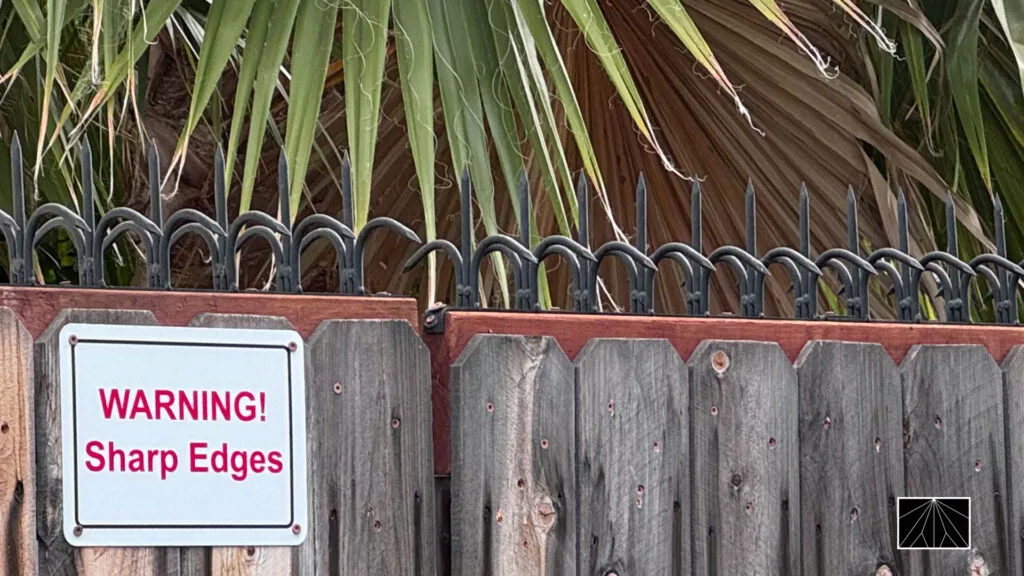
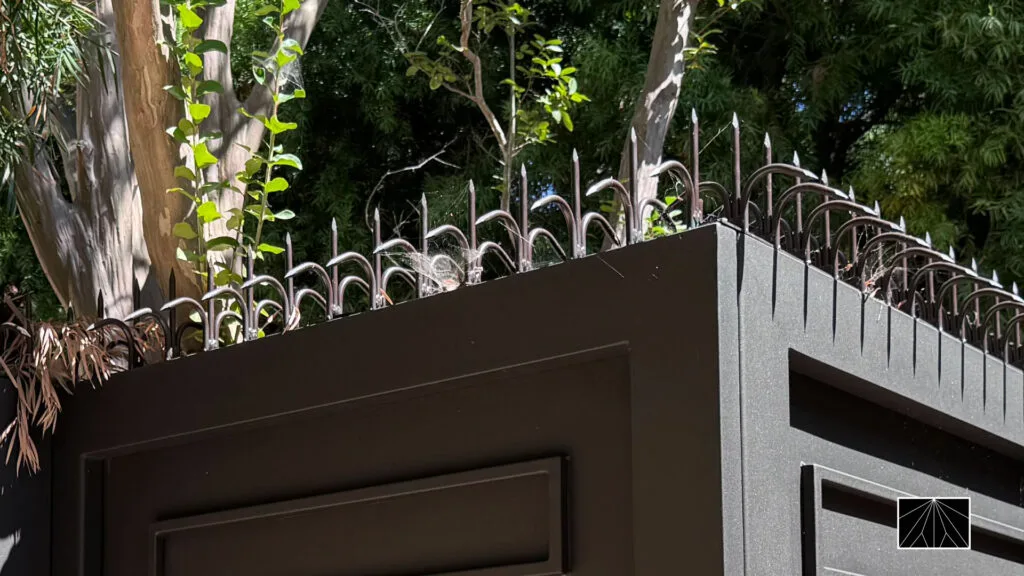
See anti-climb fencing installed across Los Angeles — Venice alleys, Laurel Canyon hillsides, Hollywood stucco coping, Santa Monica glass. Real LA jobs.
Column
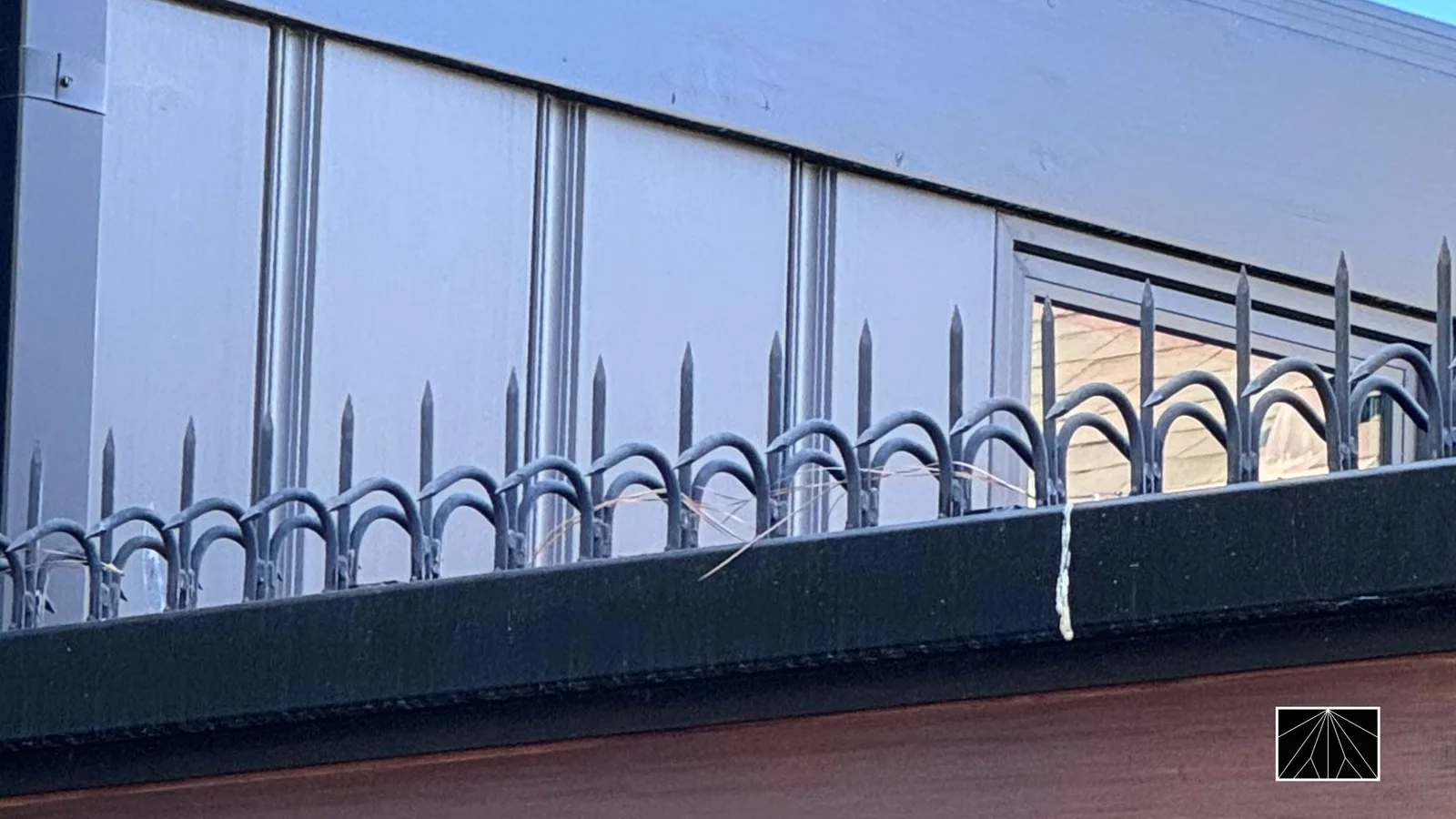
Visible anti-climb deterrents work in a different manner than an alarm. An alarm reports an intrusion that is already happening; a spiked wall removes the wall as an option before anyone commits to climb over it. Ninja Deterrent builds that deterrent as an architectural element, a Japanese shinobi-gaeshi form in steel or stainless steel, so a property can be made harder to climb without being made visually unpleasing. The two layers are complementary, not alternatives.
Opportunistic intruders choose routes, not targets. A boundary is attractive when it offers a foothold, a handhold and a few unobserved seconds at the top. Anti-climb spikes remove the top of the wall as a resting point, which is the part of the climb where a person is most exposed and most committed. This is the access-control strand of Crime Prevention Through Environmental Design (CPTED): change the physical route rather than rely on a reaction after entry.
They act at different stages, so treating them as substitutes is a category error.
A perimeter treated only with electronics is defended entirely in the second and third stages. Adding a physical deterrent moves part of the problem into the first, where it is affordable to solve.
Effectiveness and legality are separate questions, and the legal one is local.
Anti-climb spikes are permitted on private property in most jurisdictions, but many local authorities regulate the height at which they can be fitted, require them to be plainly visible, and expect warning signage where a boundary adjoins a public path. The duty of care owed to a trespasser is not zero in most legal systems. Check the rules for your locality, and in a rented or leased property before fitting anything to a boundary.
Effectiveness is more settled: a spiked wall top is not climbable without equipment, and equipment means time, noise and conspicuousness.
Because the usual honest answer to the question of how to secure a wall — razor wire — makes a home look like a depot or an institutional building. The Ninja Deterrent premise is that a deterrent has to live on a building people look at every day.
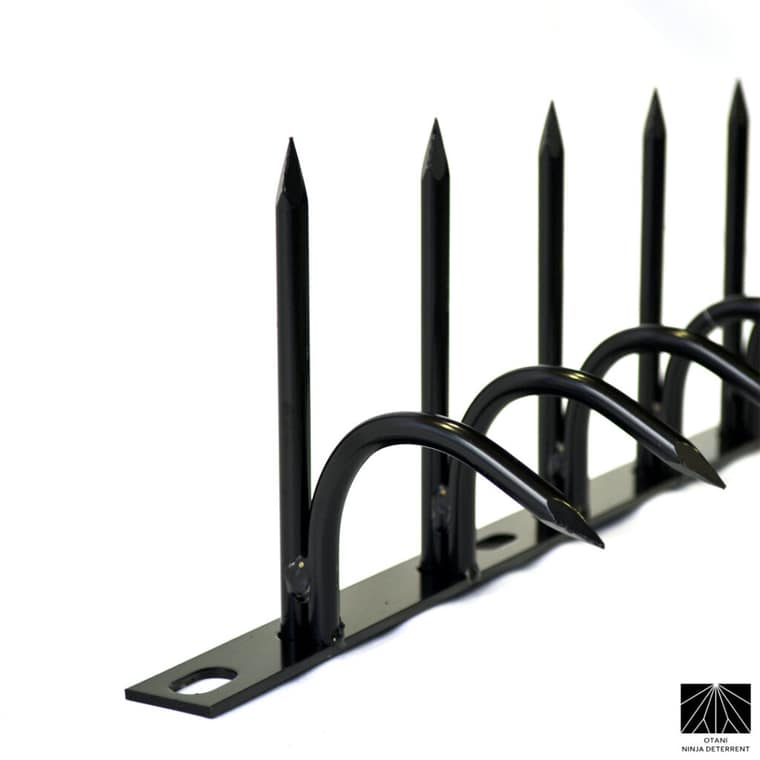
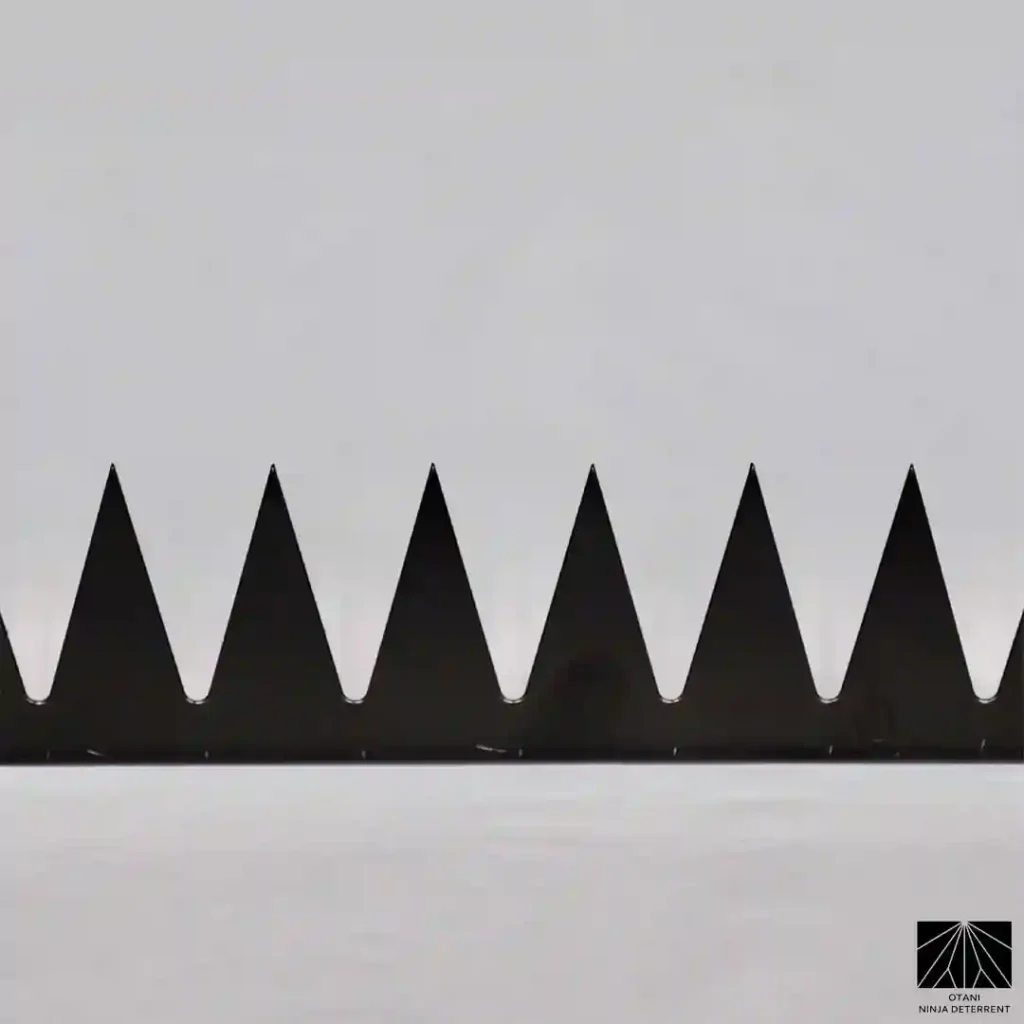
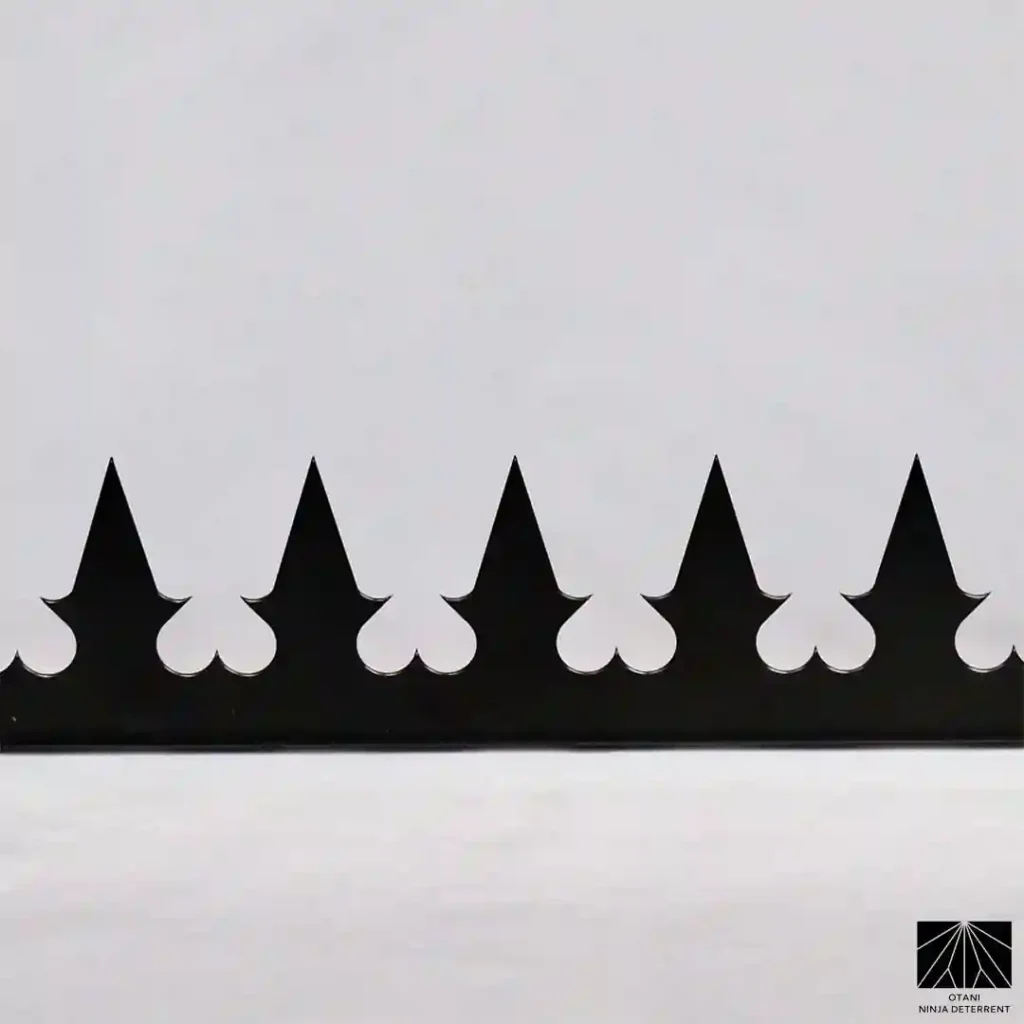
The Classic series takes the shinobi-gaeshi form found on Japanese castle and merchant-house walls: curved hooks on a horizontal rail, read as ornament from the street and as an obstacle from the top of the wall. The Modern series is a low-profile continuous sawtooth for contemporary elevations. Gothic is a pointed blade for metal fences and boundary walls, and the Forest and Iris series are ornamental profiles, a tree silhouette and an iris flower, for garden and landscape settings. All are made in Osaka, Japan.
Match the material to the environment, not to the specification sheet.
Standard finishes are powder-coated matte black, powder-coated ivory white, and electropolished silver.
Ninja Deterrent is sold by the section, not by the metre. The Classic section is 530 mm wide, and the Modern and Gothic sections are 1,000 mm. Classic starts at $220 per section in SS400 steel; Modern and Gothic start at $300 per section in SUS304 stainless steel. Classic in SUS304, and the Forest and Iris series, are quoted on request. Current prices are listed on the products page.
Budget for fixings and labor as well: on a long boundary, the spikes are the smaller part of an installed cost.
| Feature | Ninja Deterrent (architectural spikes) | Razor / barbed wire | Molded plastic spikes |
|---|---|---|---|
| Primary function | Deterrence before the attempt, plus a physical obstacle | Physical obstacle, high injury risk | Discomfort, minimal obstacle |
| Aesthetic impact | Designed as a visible architectural element | Industrial, often unwelcome in residential streets | Utilitarian |
| Materials | SUS304, SS400, AL5052 | Galvanized or stainless wire | UV-stabilized polymer |
| Durability | Decades in SUS304 | Rusts and sags, needs re-tensioning | Embrittles under UV |
| Sold by | The section, 530 mm or 1,000 mm | The roll, priced per linear foot | The strip |
| Typical use | Homes, offices, heritage and architect-designed properties | Industrial sites, temporary works | Low-cost pigeon and cat control |
Shinobi-gaeshi (忍び返し) is the Japanese term for the anti-climb spikes traditionally fitted to the walls, gates and eaves of castles, temples and merchant houses. The name describes turning back someone who sneaks in: shinobi here is the intruder, which is why the form is popularly associated with ninja, and gaeshi means to turn back. Its purpose has always been general intrusion deterrence rather than defense against any one kind of attacker. The Ninja Deterrent Classic series is a contemporary interpretation of the form.
They do not need to be. Black and ivory white are standard powder-coated finishes and silver is supplied electropolished, so the color is applied in the factory rather than on-site. Repainting a powder-coated or electropolished surface without preparing it properly will shorten the life of the finish, so its advised to specify the color with the order.
Sections bolt to the top of a wall, fence or gate through pre-drilled holes. The fixings depend on the substrate: masonry anchors into brick and concrete, coach screws into timber, bolts through steel. The installation guide covers layout, spacing and substrate choices in detail.
They are designed to make a surface unattractive to stand or walk on, not to injure. Cats and birds treat a spiked top as an obstacle and route around it. If wildlife regularly crosses a boundary, plan a deliberate gap at that point rather than assume the animals will adapt.
Directly from ninja-deterrent.jp, which ships worldwide from Japan. Trade, specification and project enquiries go through the wholesale page.
SS400 is a general structural steel: strong, weldable, economical, and dependent on its coating for corrosion resistance. SUS304 is an austenitic stainless steel containing roughly 18% chromium and 8% nickel, and its passive oxide layer reforms when scratched, which is why it holds up in coastal and high-humidity air. On a boundary that cannot easily be reached for maintenance, SUS304 is usually worth the difference.

Written by
Kojiro OtaniFounder of Saitani-Ya Co., Ltd. and creator of the Ninja Deterrent® brand. Drawing on Japan's tradition of shinobi-gaeshi, he designs and manufactures anti-climb security spikes that pair real deterrence with architectural beauty — writing from first-hand experience in their engineering, production, and real-world installation.
Jul 22, 2026
See anti-climb fencing installed across Los Angeles — Venice alleys, Laurel Canyon hillsides, Hollywood stucco coping, Santa Monica glass. Real LA jobs.
Jul 12, 2026
Explore anti-climb spikes for walls and fences. Compare types, materials, and aesthetics to find the best security solution, featuring premium options like Ninja Deterrent.
Jul 11, 2026
Discover why Ninja Deterrent excels in decorative and architectural anti-climb spikes, offering superior design, durability, and effectiveness compared to competitors.
Choose a series and a wall, then place it life-size in your own space with AR — before you order.

Choose a series and a wall, then place it life-size in your own space with AR — before you order.
Our standard series not quite right? We design and manufacture fully custom anti-climb systems tailored to your exact specifications — unique profiles, dimensions, materials, and finishes.
For general inquiries about our products or consultation regarding installation, please contact us.
Schedule a free online consultation with our team. Pick a time that works for you — available slots are shown in your local time zone.