Column

Anti-Climb Fencing in Los Angeles: Installed Case Studies

By Kojiro Otani 8 min read
Anti-Climb Fencing in Los Angeles: Installed Case Studies

Ninja Deterrent is a Japanese manufacturer selling direct — workshop to property. We are not a Los Angeles company. But our anti-climb spikes are on gates, walls and fences across the LA metro: Venice back alleys, Laurel Canyon hillsides, Hollywood stucco coping, oceanfront service gates in Santa Monica.

This page is not a product brochure. It is a record of what we actually installed here, photographed on site — which surface each perimeter was made of, what the homeowner was worried about, and how the finished line reads from the sidewalk. Every case links to the full project with its own photographs.

If you are trying to work out whether anti-climb spikes will look right on your street, the useful question is not "do they work." It is "what do they look like on a wall like mine."

Where Climbing Actually Starts on an LA Property

Across our LA installations, the same handful of weak points come up again and again. They are rarely the front of the house.

By Surface: What LA Perimeters Are Actually Made Of

Most anti-climb advice is written as if every perimeter were the same. In LA it is not. Surface determines the fixing method, the finish, and often whether the job is possible at all.

Stucco walls and coping

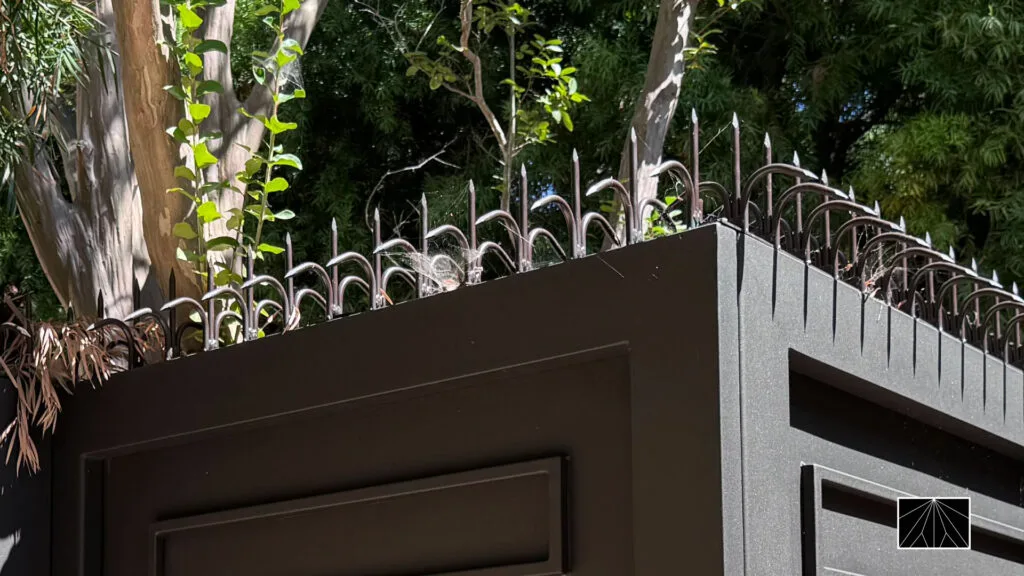
Stucco with a coping cap is the LA default, and the coping is the problem — a flat, comfortable ledge exactly where a hand goes. On the Hollywood wall near W Sunset Blvd we ran Classic Short Dual continuously across the coping in a white-and-stainless finish matched to the bright stucco, with corners, pillars and the gate approach specifically reinforced because those are where attempts begin. At a contemporary ranch home in Woodland Hills, stainless was set into the wide white perimeter wall and softened in places by planting.

Steel fences and gates

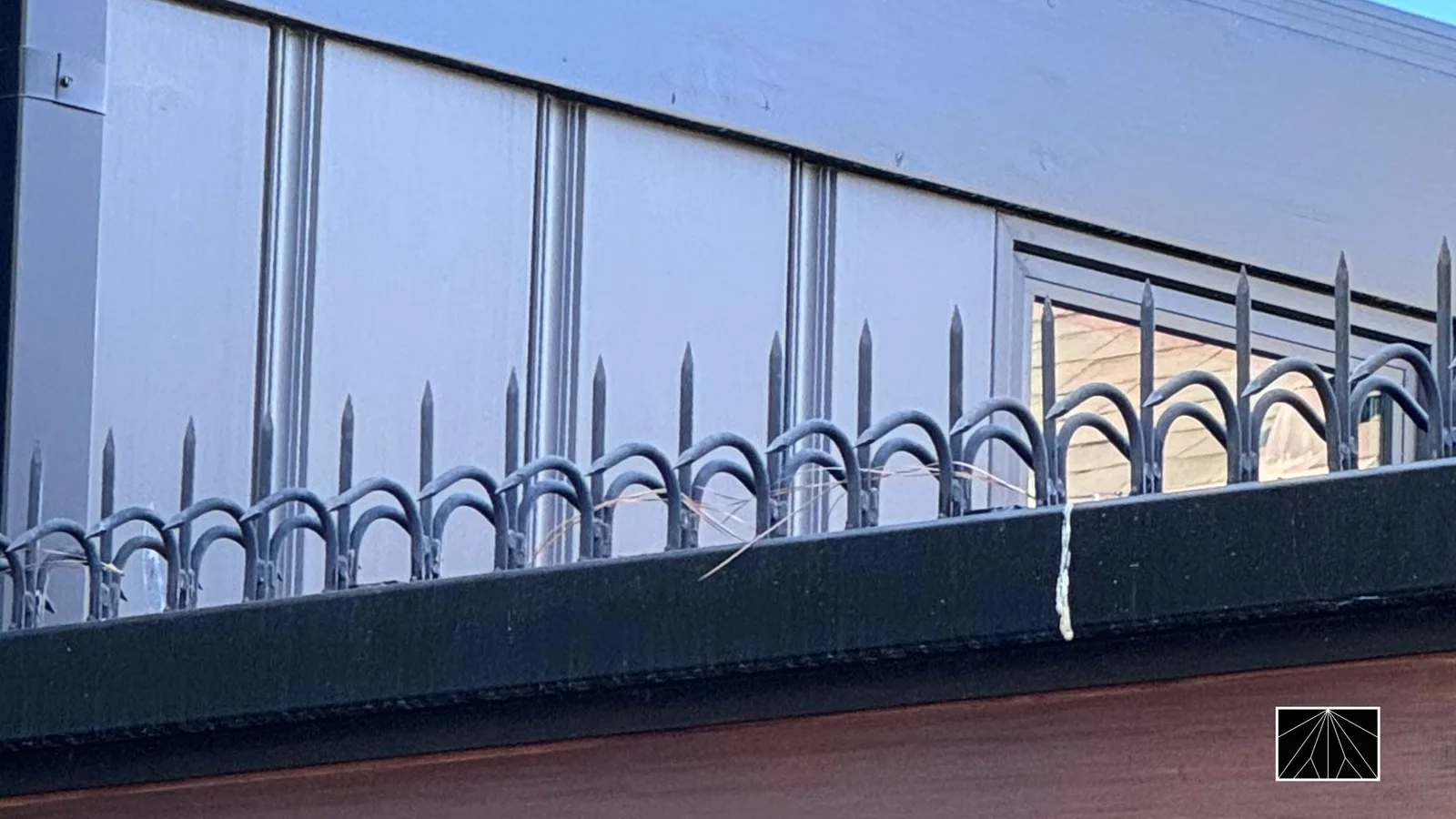
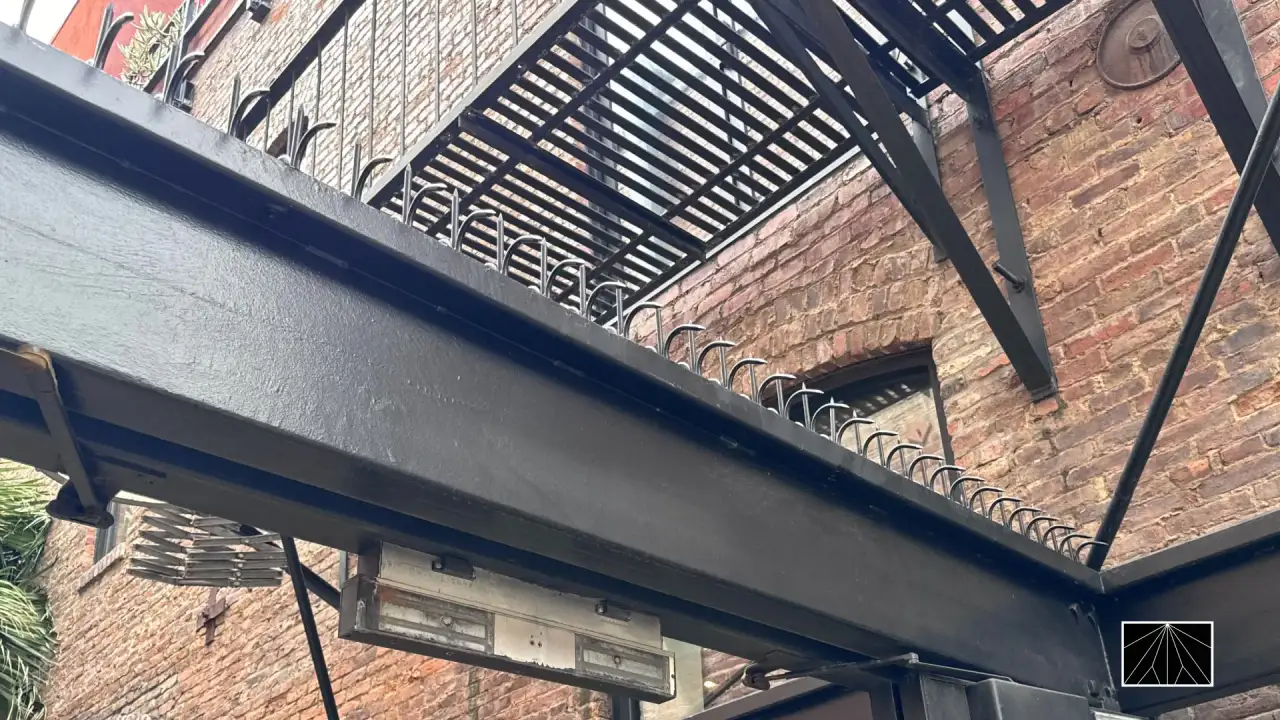
Steel is strong and completely climbable — a sturdy fence with a smooth top rail is a ladder with a handhold. At a steel fence in North Hollywood, fence and gate were treated as one continuous line rather than two components, closing the seam between them. At the Santa Monica oceanfront service gate, the spike line follows every rise, step-down and corner of the boundary, because the lower transitions were where footholds had been found.

Wood and wood-grain composite

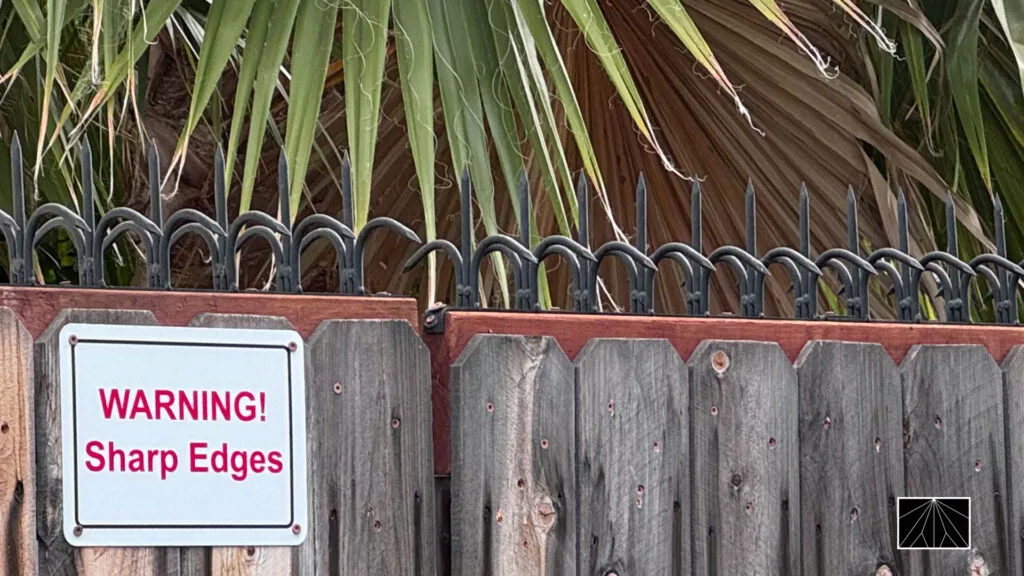
Wood is the most common residential perimeter in LA and takes a spike line well, since a dark finish disappears into the grain and shadow. A Laurel Canyon driveway gate used a matte black Gothic profile matched to wood-grain composite panels, with the mounting angle cut to the gate's frame. A landscaped garden fence shows the same black-on-weathered-wood treatment running alongside cacti and desert planting. The Venice back-alley perimeter applied it to black-stained wood, and a Westwood front gate to a wood-and-metal gate where the black framing set the visual language.

Wrought iron and mesh

Decorative ironwork and mesh infill panels give a foot purchase the designer never intended. At the Hancock Park side gate, a Modern profile was specified for the top rail of a black steel gate with mesh panels, its geometry chosen to sit with the property's wrought-iron window accents. At the Venice alley residence, a heavy iron fence with a strong vertical rhythm took a continuous Modern line that reads as an extension of the fence's own geometry.

Vinyl gates

Vinyl is light, smooth and easy to vault. At an Encino residence, a white vinyl side gate — the service entrance between house wall and garden fence — received a black spike line above an existing camera position, converting a monitored point into a defended one.

Frameless and frosted glass

Glass is the surface most installers refuse, because conventional spikes bolt down and bolting means drilling the panel. At a Santa Monica condominium an intruder had already climbed the glass perimeter fence — the smooth, foothold-free glass that defined the architecture was the way in. We engineered a spike rail with no mounting holes, bonded to the top edge of the glass, leaving the panels intact and the transparency unchanged.

Keeping It Off the Street: Design Constraints in LA Neighborhoods

In most of these projects the homeowner's constraint was stated before the security requirement, not after it.

At a Sherman Oaks entry perimeter — installed in an area where break-ins had become a serious concern — the brief was explicit: the goal was not to make the exterior look institutional, but to remove the conditions that let someone in while keeping the property elegant. In conversation with a real estate broker on that project, the priority came back identically: increase deterrence visibly, without cluttering the architecture. The client's note afterwards was "Security is improved, but the house's appearance has been preserved."

The same constraint runs through the rest. At a Westwood front gate, the priority was described as protecting a high-value property in a way that still felt architectural and quiet — not building a fortress. At the Venice back-alley perimeter: "We wanted stronger security, but we didn't want it to look aggressive." At a wooden side-yard gate, the homeowner asked for design-first security that would sit with the home's stucco tone and black wrought-iron accents, and afterwards described it as "part of the subtle design." At the Hancock Park corner-lot gate: "The spikes aren't too obtrusive and match the modern look of our house."

This is the whole basis of how we design. A perimeter that announces fear invites attention; a perimeter that reads as a deliberate architectural edge does the same defensive work without changing how the street feels. Beautiful security is not a softening of the product — it is what makes the product acceptable on a street where appearance is the shared asset.

Coastal vs Inland: Which Finish Lasts in LA

The LA basin is two environments. A property in Venice or Santa Monica sits in salt air; Woodland Hills and Encino deal with UV and heat instead. That difference shows up in what we specify.

On the coastal jobs, corrosion drove the material decision. The Ocean Avenue condominium was specified in marine-grade stainless for the shoreline salt air. The Santa Monica glass-fence project used a weather- and UV-resistant powder-coated finish selected for the coastal exposure, with black on the glass and silver on the wood gates.

On the inland jobs, the finish decision was driven by the architecture rather than by salt. Woodland Hills took stainless against white stucco and a black gate; Hollywood a white-and-stainless combination to match bright stucco and coping; Laurel Canyon a stainless core with matte black powder coating for outdoor durability and grain match.

We do not publish a distance rule — no "within X miles of the water, use grade Y." Exposure on a given lot depends on prevailing wind, how sheltered the boundary is, and what the fence is made of. Tell us the cross street and what the perimeter is built from, and we will specify against that.

All Los Angeles Installations

Every Ninja Deterrent project published in the Los Angeles metro, with the surface and the exposure it addressed.

How Anti-Climb Spikes Work

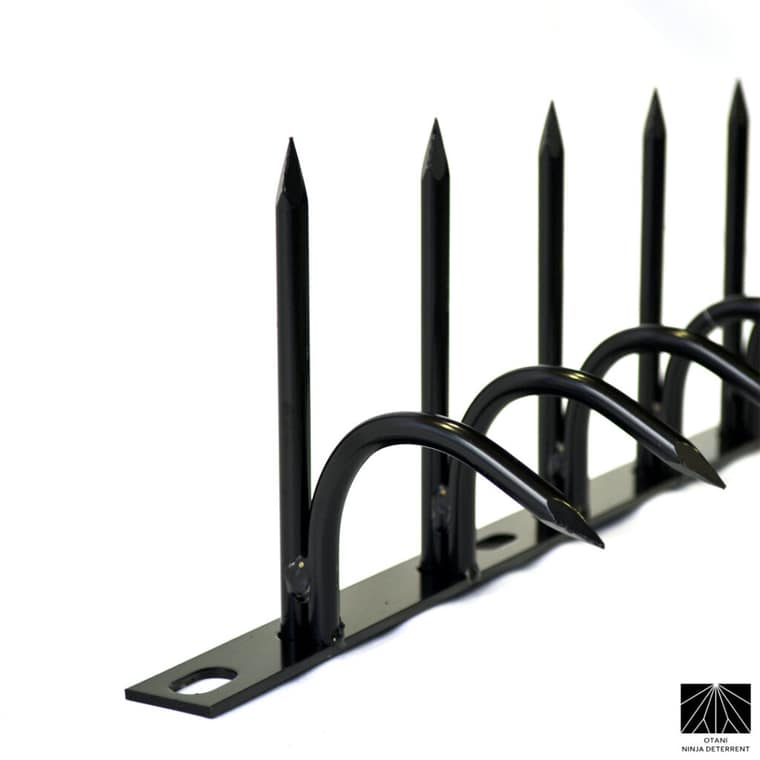
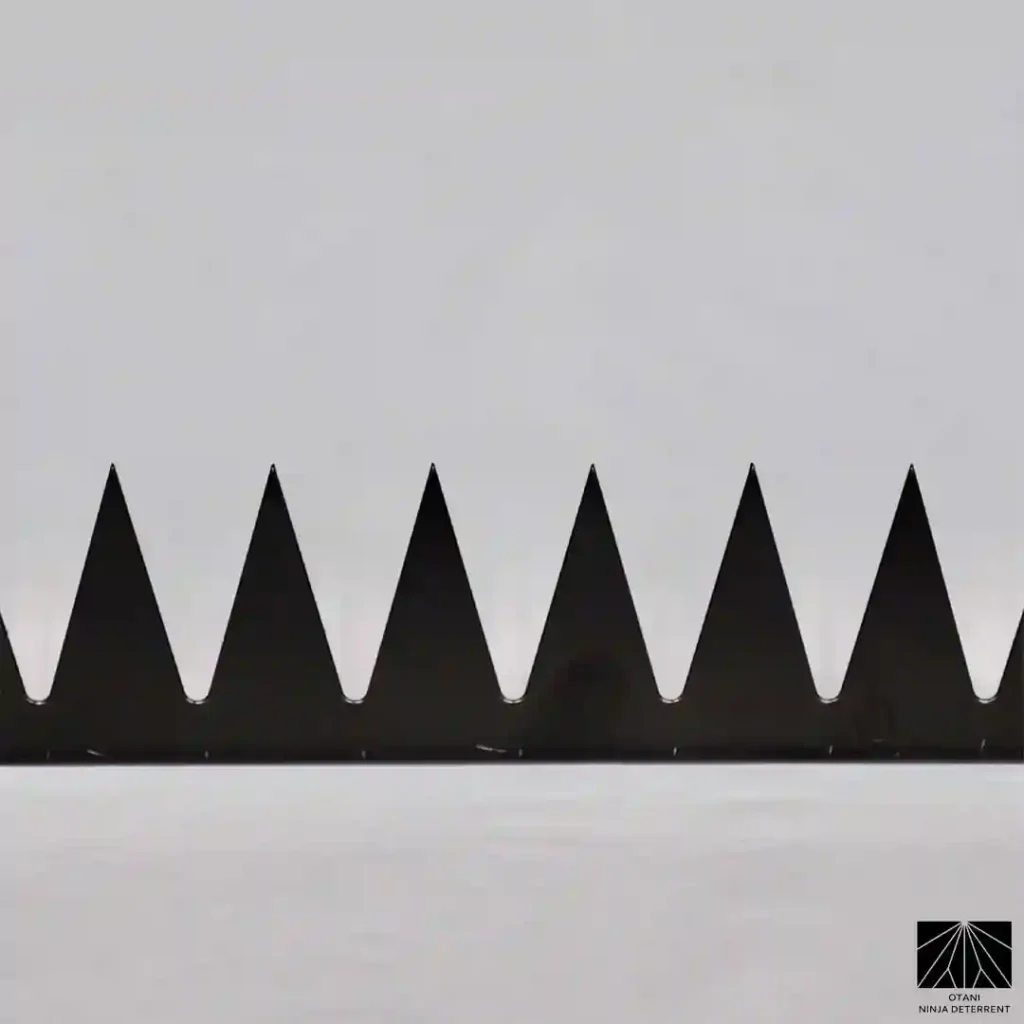
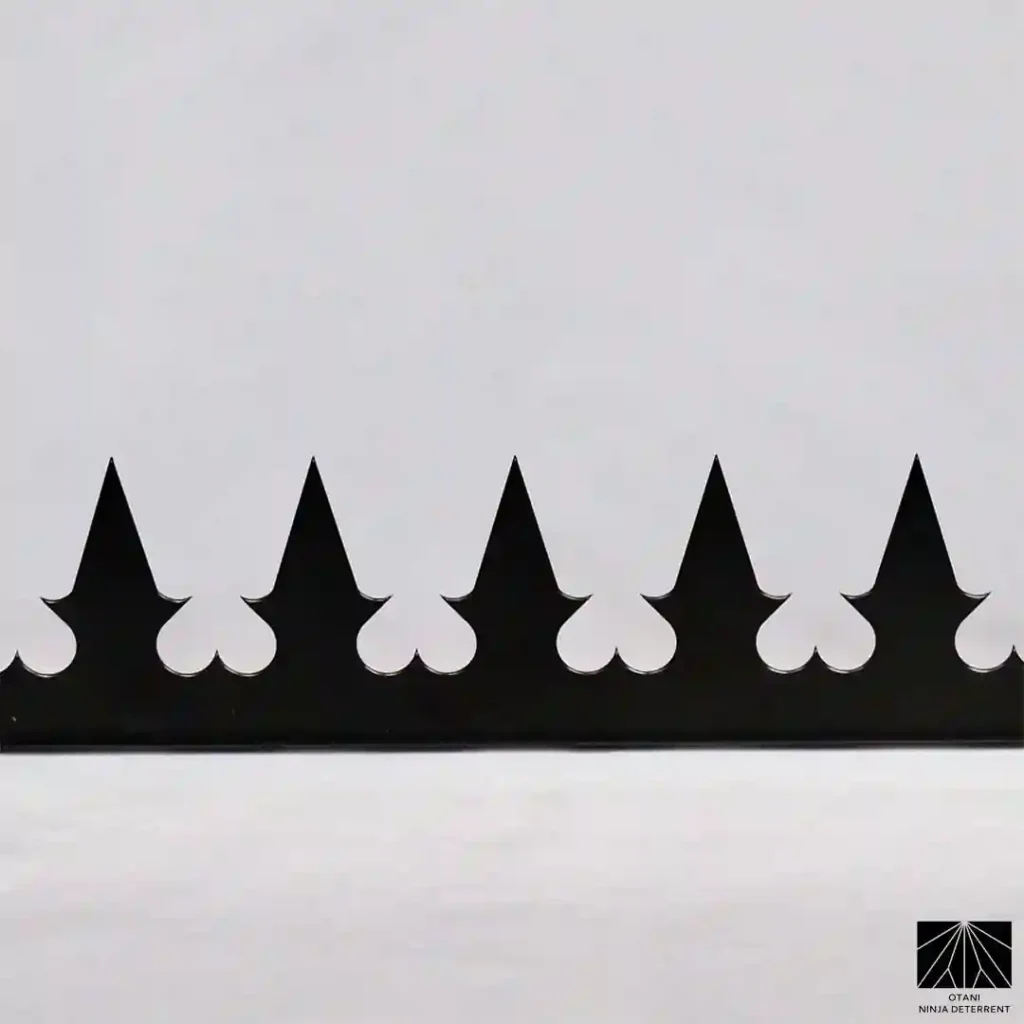
An anti-climb spike is a profiled metal strip fixed along the top edge of a wall, fence or gate. It does not injure its way to a result — it removes the flat, grippable surface a climber needs for the first move, so the top edge stops offering a handhold or a place to rest a knee. Continuity is what makes it work: a climber needs only one gap, so a line with breaks in it simply relocates the attempt rather than stopping it.

For profiles, finishes, mounting methods by surface, and the legal considerations that apply before you fit anything, see our full guide to anti-climb fence and wall security spikes.

Kojiro Otani

Written by

Kojiro Otani

Founder of Saitani-Ya Co., Ltd. and creator of the Ninja Deterrent™ brand. Drawing on Japan's tradition of shinobi-gaeshi, he designs and manufactures anti-climb security spikes that pair real deterrence with architectural beauty — writing from first-hand experience in their engineering, production, and real-world installation.

Products

Classic Series

Classic Series

Traditional Shinobi Gaeshi design.

From $220.00
View More
Modern Series

Modern Series

Sleek spikes for contemporary architecture.

From $300.00
View More
Gothic Series

Gothic Series

Elegant deterrence for fences and walls.

From $300.00
View More
Full Custom

Need a bespoke solution?

Our standard series not quite right? We design and manufacture fully custom anti-climb systems tailored to your exact specifications — unique profiles, dimensions, materials, and finishes.

Custom blade profiles & dimensions
Any material: SUS304, brass, aluminum, galvanized steel
Color matching to your architecture
Volume pricing for large-scale projects

Contact us

Questions?

For general inquiries about our products or consultation regarding installation, please contact us.

Contact

Book a meeting?

Schedule a free online consultation with our team. Pick a time that works for you — available slots are shown in your local time zone.

Book a meeting

Your Cart

カートに商品がありません。