Jul 22, 2026
Anti-Climb Fencing in Los Angeles: Installed Case Studies
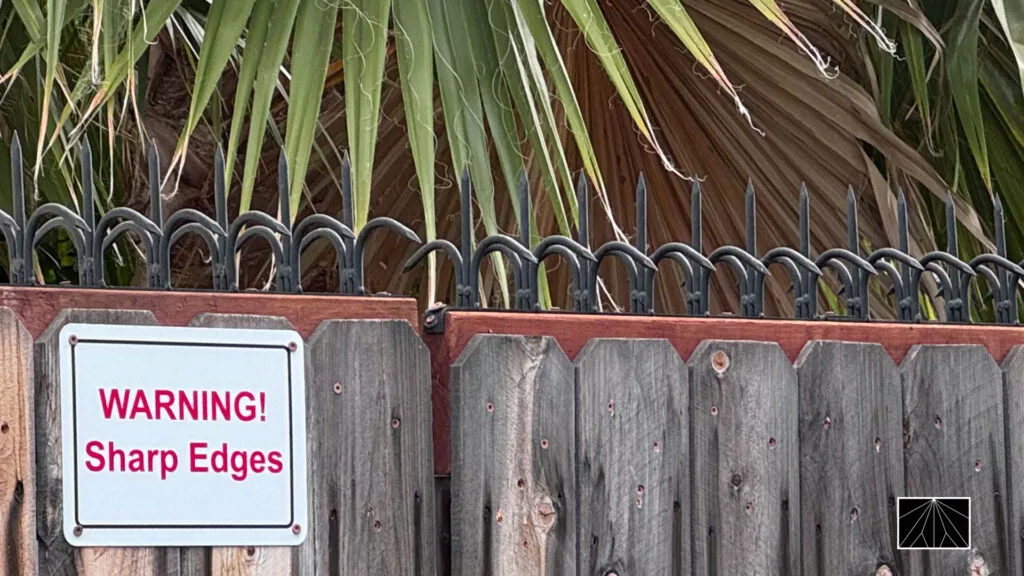
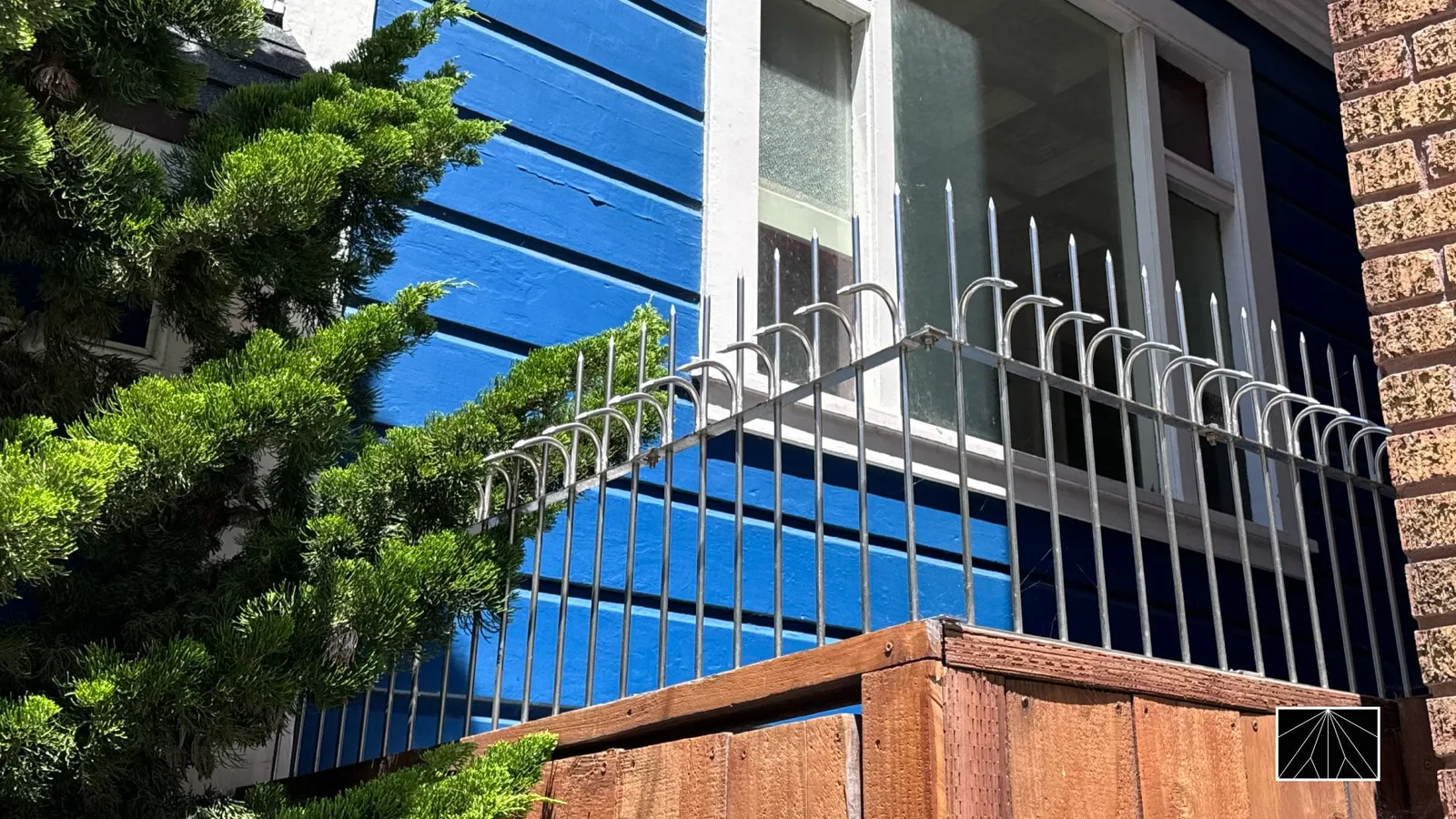
See anti-climb fencing installed across Los Angeles — Venice alleys, Laurel Canyon hillsides, Hollywood stucco coping, Santa Monica glass. Real LA jobs.
Column
TL;DR
- Security and beauty are not a trade-off: the best deterrent is one people actually want to install and keep maintained.
- Most burglars are opportunists — over 75% choose easy targets, and around 60% move on when a deterrent is visibly present (UNC Charlotte, Kuhns et al. 2012).
- A beautifully kept boundary signals control and ownership, exactly the "order" that Broken Windows theory and CPTED show deters crime.
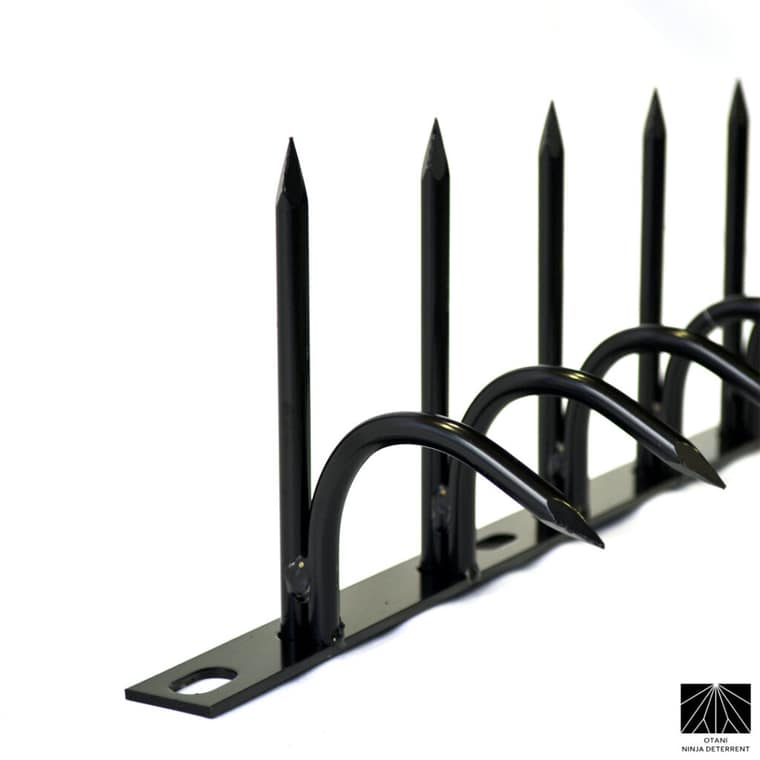
- Decorative shinobi gaeshi from Ninja Deterrent deter on sight while reading as architectural craftsmanship — not a grudging afterthought.
Security devices are too often something you reluctantly bolt on after the fact. Yet looking back at Japan's architectural history, security and aesthetics were never in opposition — they evolved as inseparable elements. This is the conviction at the heart of everything we make: that a deterrent can be beautiful, and that beauty itself does security work. This article sets out that philosophy — the evidence behind "beautiful security," and how it shapes every Ninja Deterrent series.
"Beautiful security" is the principle that an effective deterrent should also be attractive — because a deterrent people find attractive is one they will actually install, display proudly, and keep maintained. A crude spike strip gets hidden, neglected, or removed; a beautiful one stays up, stays cared for, and keeps deterring. Aesthetics are not decoration on top of security; they are part of the mechanism. Deterrence depends on continuous, visible upkeep, and — as the research below shows — that upkeep is one of its strongest signals.
Decorative security is effective precisely because it is attractive and well kept — the two reinforce each other. The overwhelming majority of burglaries are opportunistic rather than planned: research finds that over 75% of burglars target homes of opportunity, and roughly 60% will choose a different target when a deterrent such as an alarm is clearly present (UNC Charlotte, Kuhns et al. 2012). Visible deterrence changes the decision before any attempt begins.
A spike along a wall top works the way an alarm decal or a barking dog does — it raises the perceived cost and risk of entry at the very first glance, and the sharp profile of shinobi gaeshi instinctively reads as "painful and slow to cross." Because most intrusions are decided on sight, a deterrent only has to win that first glance — and a beautiful one is far more likely to still be standing, clean and intact, when that glance comes. To see how visible barriers shape the burglar's calculation, read do anti-climb spikes work.
The evidence is consistent: visible order and active maintenance deter crime, while neglect invites it. Broken Windows theory (Wilson & Kelling, 1982) argues that signs of disorder — an unrepaired broken window, accumulating litter — signal that no one is watching, encouraging further offending. The corollary is just as powerful: a visibly cared-for property broadcasts ownership and control.
CPTED — Crime Prevention Through Environmental Design (Jeffery, 1971; developed by Oscar Newman) — turns this into four working principles: natural surveillance, access control, territorial reinforcement, and maintenance. Decorative shinobi gaeshi act on three of them at once. They are physical access control along the boundary; they perform territorial reinforcement by marking a managed, owned edge; and because they are beautiful, they are maintained rather than neglected — closing the Broken Windows loop. A handsome, well-kept spike line says, unmistakably, "a powerful, attentive authority resides here."
We explore the deep historical roots of these ideas — and how Japan's castle builders intuited CPTED centuries early — in CPTED and Japanese castle architecture.
Hostile and beautiful security can deliver the same physical barrier, yet send opposite messages and produce opposite long-term outcomes. The difference is not strength — it is what each communicates, and whether it survives the years in good order.
| Dimension | Hostile security (razor wire, bars) | Beautiful security (decorative spikes) |
|---|---|---|
| First-glance deterrence | High, but reads as "something to fear here" | High, reads as "this place is controlled and cared for" |
| Aesthetics | Detracts; signals a "bad area" | Enhances; reads as architectural craft |
| Property value | Tends to lower kerb appeal | Preserves or enhances kerb appeal |
| Neighbour relations | Can provoke resentment and disputes | Welcomed as tasteful, considerate |
| Maintenance over time | Often hidden, neglected, removed | Displayed proudly and kept maintained |
| Legality / nuisance risk | Razor wire often restricted near footways | Designed to deter without gratuitous harm |
Razor wire and prison-style bars announce fear; they can lower a property's value, sour relations with neighbours, and in many jurisdictions raise liability where they overhang a public path. Decorative shinobi gaeshi achieve the deterrent effect while adding to the architecture — which is exactly why they stay up and stay maintained.
Japanese castle architecture proves the point centuries before it had a name. It is defined by a trinity of defensive function, intimidation, and aesthetic value — three goals met by a single structure.
Function. Stone walls, moats, and shinobi gaeshi physically prevented intrusion. Intimidation. The scale of the keep and the height of the walls created the psychological certainty that "this castle cannot be taken." Beauty. Crucially, all of this was designed to be beautiful — the white-heron elegance of Himeji, the black-and-white contrast of Matsumoto, the flowing stone curves of Inuyama.
Feudal lords built their defences beautiful because, in the language of CPTED's territorial reinforcement, a beautifully maintained environment declares that a powerful authority resides here. An attacker fears a well-kept castle far more than a dilapidated one. Beauty was never decoration — it was deterrence.
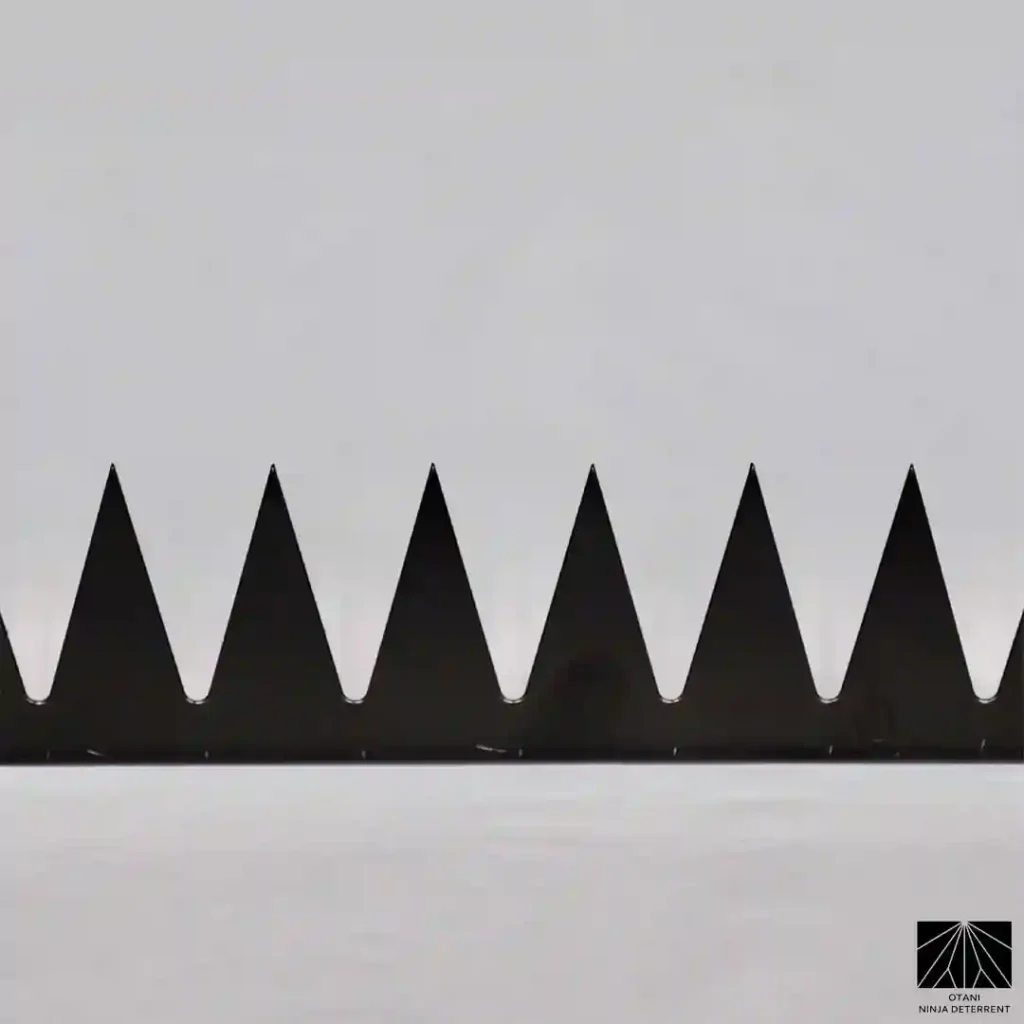
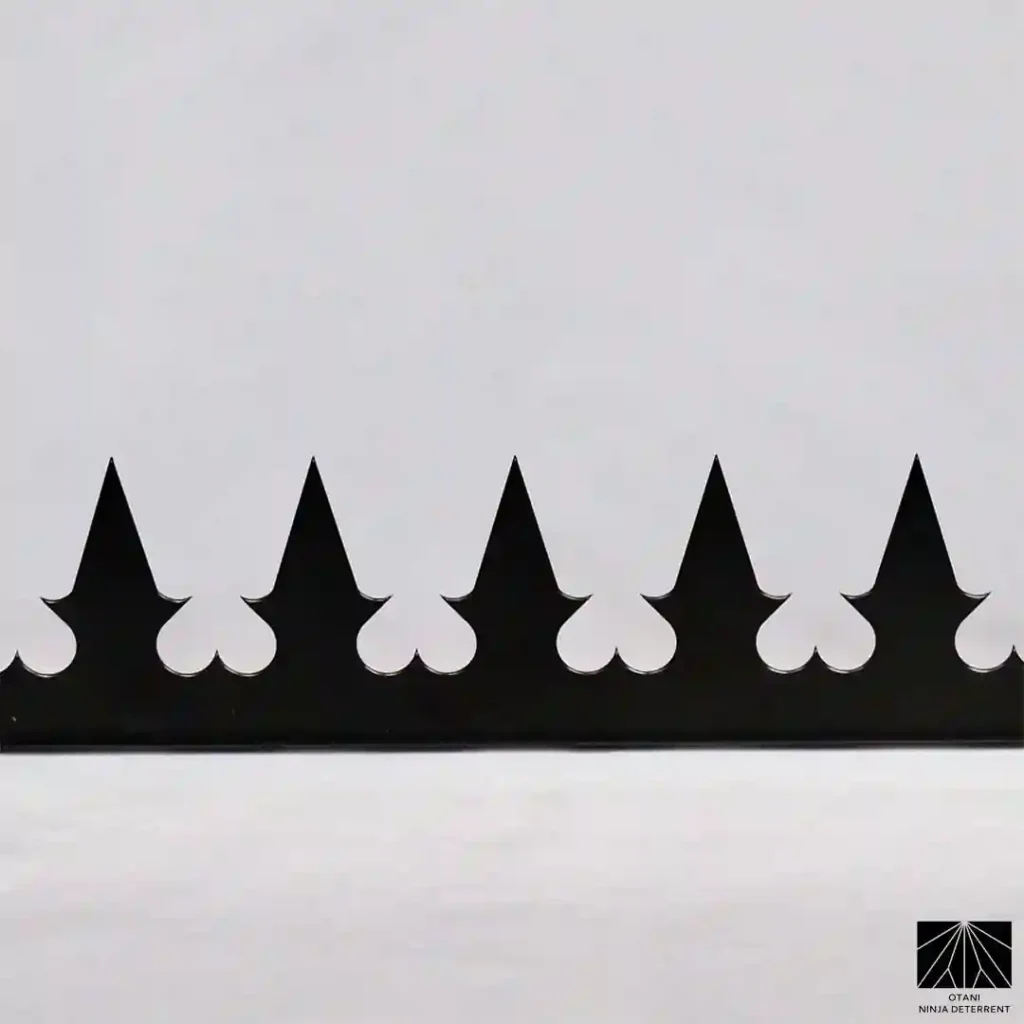
Every series translates "beautiful security" into a different architectural language, so the same protective function can be matched precisely to its setting. The right profile makes a deterrent belong — and a deterrent that belongs is one that endures.
For boundaries that demand an exact match to existing materials and colours, our custom order service adjusts profile, material (stainless steel, aluminium, galvanised steel), and finish (stainless silver, black, white) to the architect's intent.
Because people keep what they are proud of. The single greatest predictor of whether a security feature still works decades on is whether it is maintained — and maintenance follows from pride, not obligation. Broken Windows and CPTED both hinge on this: the appearance of active care is what deters, and a hidden, rusting spike strip eventually sends no signal at all.
A beautiful shinobi gaeshi solves this at the design stage. Homeowners display it, clean it, and fold it into the look of the property, so the deterrent message renews itself year after year. It is also why we work closely with architects and landscape designers and encourage planning the boundary from the outset: integrated from the design stage, fence, material, colour, and deterrent become part of the architecture itself rather than a retrofit that detracts from it. See our guide to wall and fence security spikes for how integrated boundary design unifies materials, colour, and protection.
"Beautiful security" is not a marketing slogan. It is a strategy supported by the evidence on opportunistic offending, by Broken Windows theory, and by the CPTED principles of territorial reinforcement and maintenance. Beautifully designed shinobi gaeshi function as a physical barrier and continuously broadcast: "this home is managed with high awareness." Like an invisible guard, they protect a property every hour of every day — and because they are admired, they are never quietly taken down.
Sacrifice beauty for security, or security for beauty — that binary is a thing of the past.
Yes. The deterrent effect comes from a visible barrier that raises the perceived time, risk, and difficulty of entry, and a well-designed spike line does this at the first glance just as razor wire does. The decisive difference is that beautiful spikes are kept maintained and accepted by neighbours, so they keep deterring for years rather than being hidden or removed.
It does, indirectly but strongly. Studies of offenders show burglary is overwhelmingly opportunistic — over 75% target homes of opportunity and around 60% move on when a deterrent is present (UNC Charlotte, Kuhns et al. 2012). Broken Windows theory (Wilson & Kelling, 1982) and CPTED (Jeffery, 1971) further show that visible order and maintenance deter crime, which is exactly what a well-kept, attractive boundary signals.
Hostile measures like razor wire and bars can lower kerb appeal and signal a troubled area, but decorative shinobi gaeshi are designed to do the opposite. Because they read as architectural ornament rather than prison hardware, they preserve and often enhance a property's appearance. This is the core of our design philosophy: protection that adds to a home rather than detracting from it.
Match the profile to the architecture. Classic suits traditional Japanese and tiled-roof walls, Gothic complements Western ironwork and gates, Forest blends into gardens and greenery, Iris works as a decorative statement, and Modern fits clean contemporary lines. If none is an exact fit, a custom order can adjust the profile, material, and finish colour to your boundary.
Because the deterrent message depends on visible care. Both Broken Windows theory and CPTED show that signs of neglect invite crime while signs of active management deter it. A beautiful spike line is far more likely to be displayed, cleaned, and maintained than a crude one, so it keeps broadcasting "this place is watched and controlled" year after year.
Yes, and we recommend it. Security is most effective and most harmonious when planned from the design stage, allowing fence, material, colour, and deterrent to be unified rather than retrofitted. We work directly with architects and landscape designers, and our custom-order service tailors each profile to the design intent of the project.
Beautiful security is a choice you no longer have to compromise on. Explore the Classic, Modern, Gothic, Forest, and Iris series to find the profile that belongs on your boundary — or start a custom order and we will design a deterrent that protects your home and looks as though it was always meant to be there.

Written by
Kojiro OtaniFounder of Saitani-Ya Co., Ltd. and creator of the Ninja Deterrent® brand. Drawing on Japan's tradition of shinobi-gaeshi, he designs and manufactures anti-climb security spikes that pair real deterrence with architectural beauty — writing from first-hand experience in their engineering, production, and real-world installation.
Jul 22, 2026
See anti-climb fencing installed across Los Angeles — Venice alleys, Laurel Canyon hillsides, Hollywood stucco coping, Santa Monica glass. Real LA jobs.
Jul 12, 2026
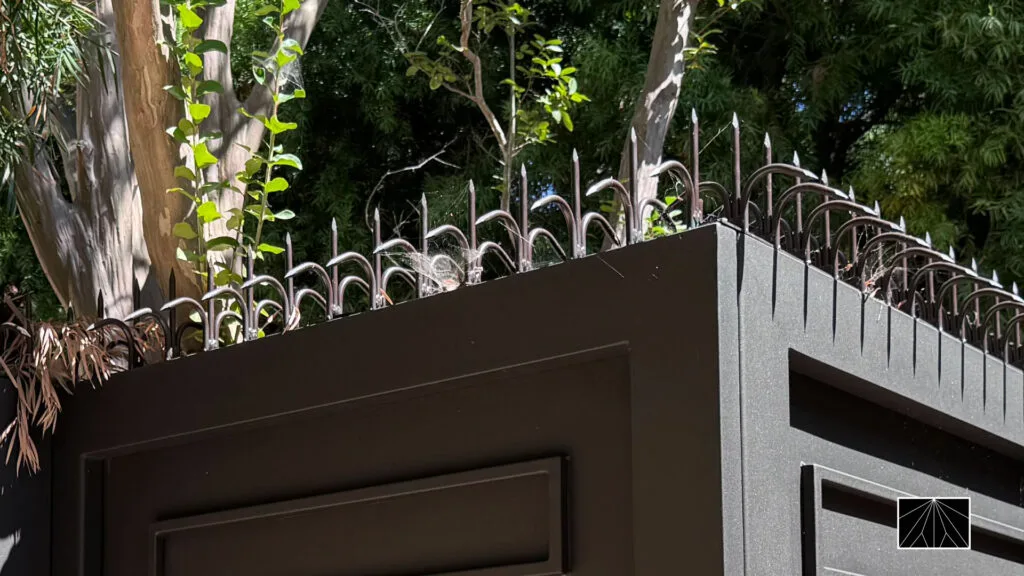
Explore anti-climb spikes for walls and fences. Compare types, materials, and aesthetics to find the best security solution, featuring premium options like Ninja Deterrent.
Jul 11, 2026
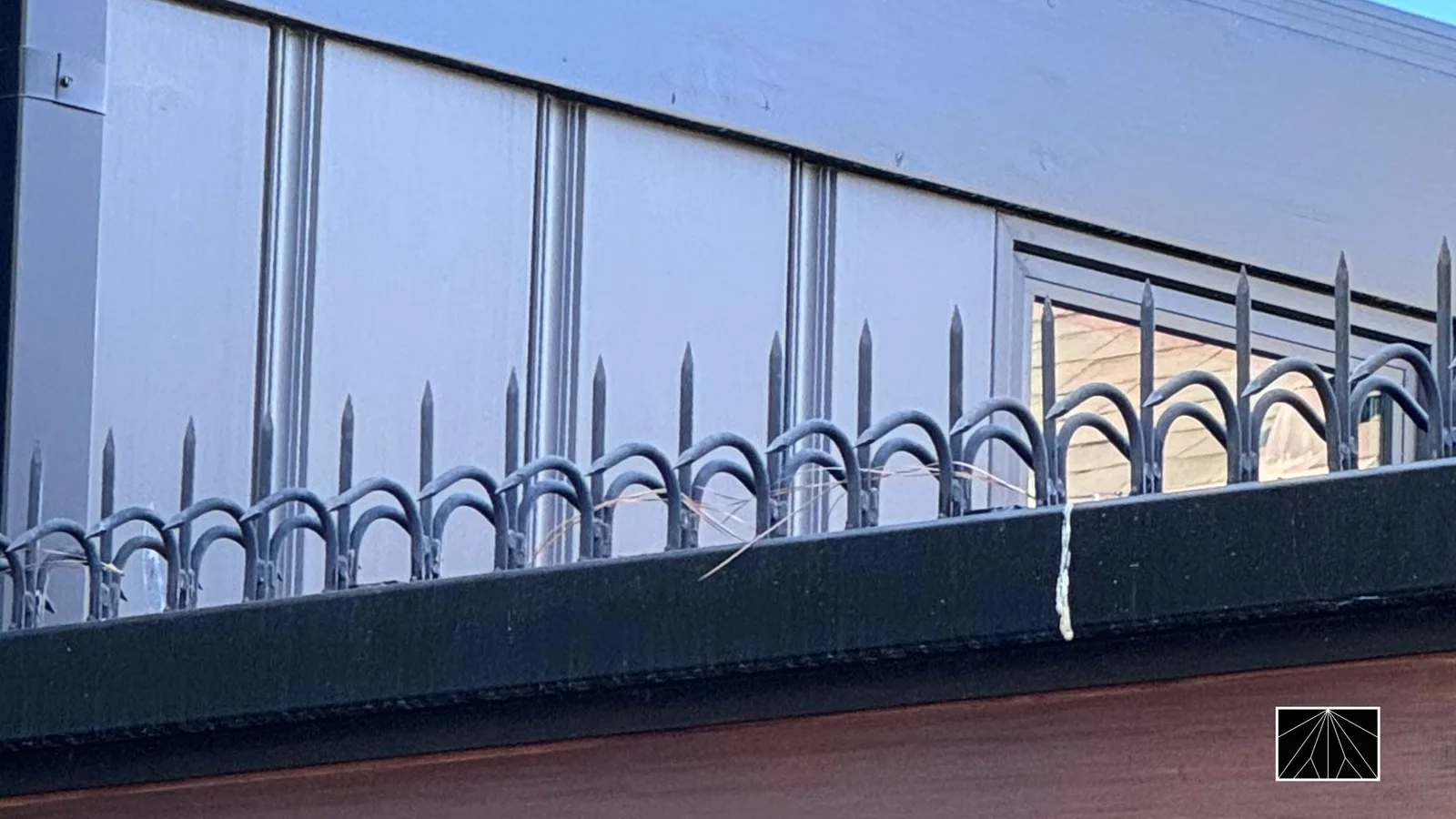
Discover how visible anti-climb deterrents, like Ninja Deterrent's architectural spikes, enhance home security beyond alarms. Learn their role in preventing burglaries.
Choose a series and a wall, then place it life-size in your own space with AR — before you order.

Choose a series and a wall, then place it life-size in your own space with AR — before you order.
Our standard series not quite right? We design and manufacture fully custom anti-climb systems tailored to your exact specifications — unique profiles, dimensions, materials, and finishes.
For general inquiries about our products or consultation regarding installation, please contact us.
Schedule a free online consultation with our team. Pick a time that works for you — available slots are shown in your local time zone.