Jul 22, 2026
Anti-Climb Fencing in Los Angeles: Installed Case Studies
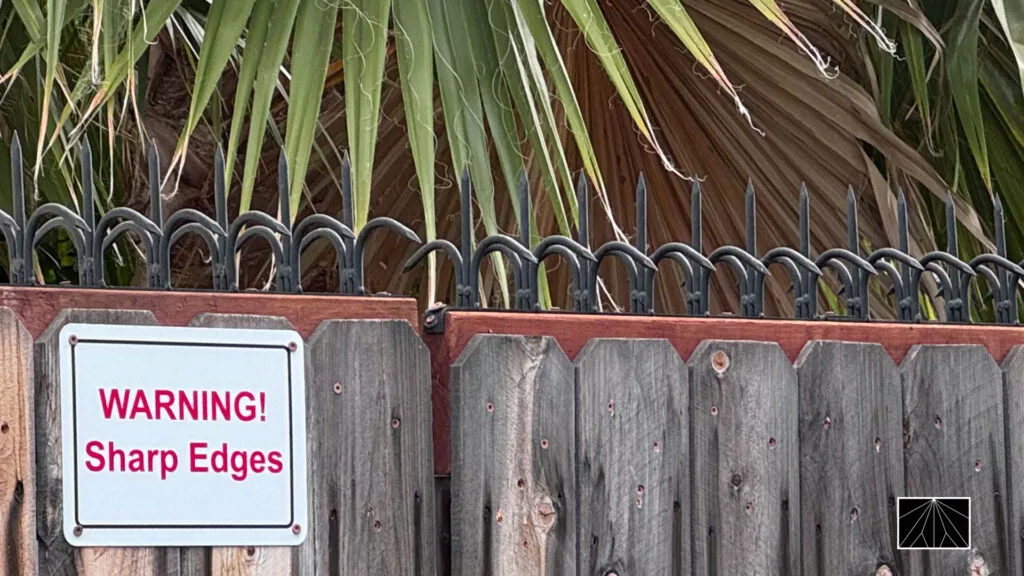
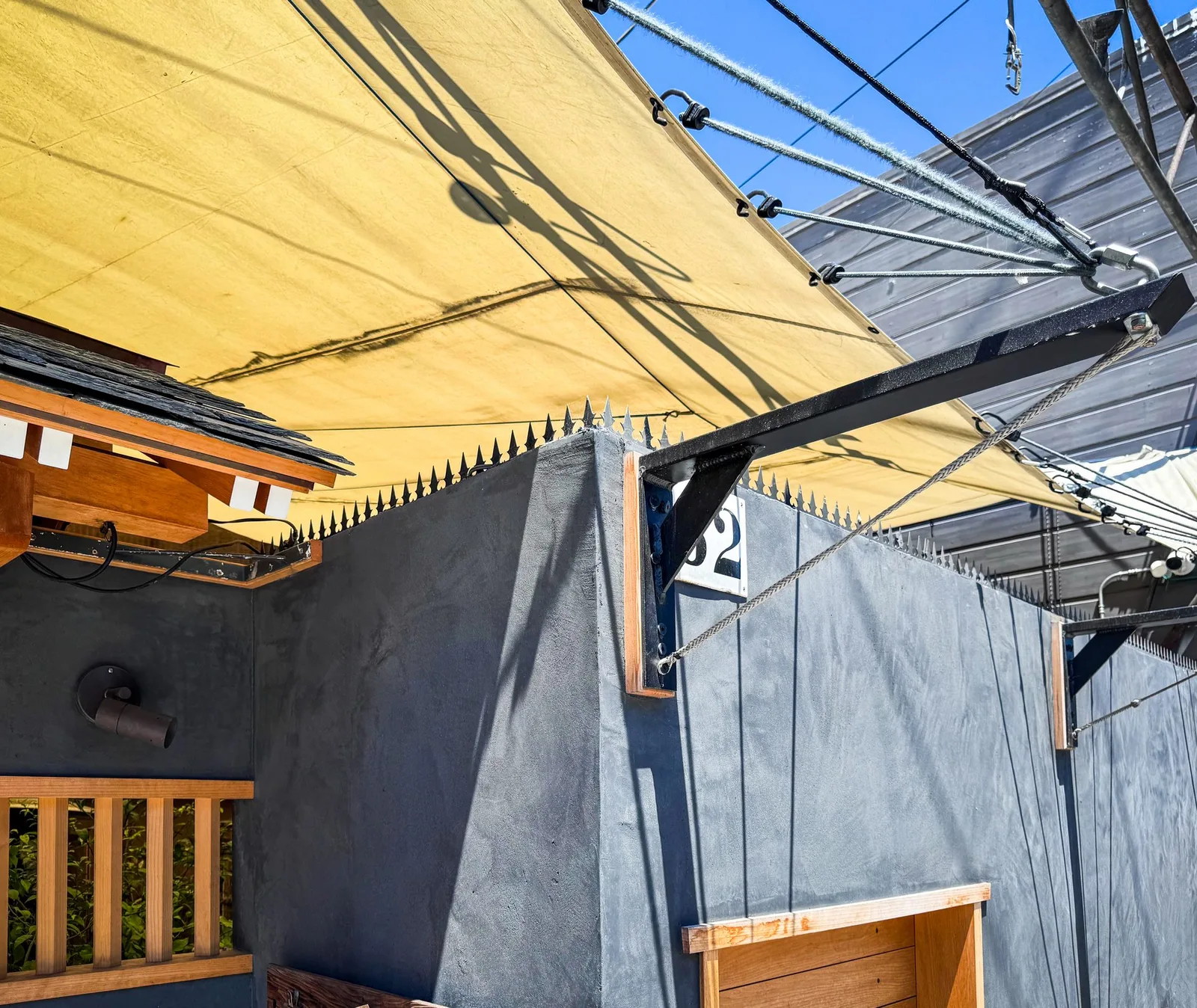
See anti-climb fencing installed across Los Angeles — Venice alleys, Laurel Canyon hillsides, Hollywood stucco coping, Santa Monica glass. Real LA jobs.
Column
TL;DR
- Japanese castle builders practised all four CPTED principles centuries before the term was coined in 1971.
- Sloped musha-gaeshi walls and masugata barbican gates were natural access control; nested baileys were territorial reinforcement.
- Keep and tower sightlines delivered natural surveillance, while constant fushin (repair) was maintenance as deterrence.
- Homeowners can borrow the same logic today: clear boundaries, open sightlines, decorative shinobi gaeshi, and visible upkeep — layered, not single-measure, security.
CPTED — Crime Prevention Through Environmental Design — is the idea that the layout of a place can prevent crime before it begins. Yet long before the discipline had a name, Japanese castle architects were applying its every principle at a remarkably sophisticated level. This article decodes the four CPTED principles through the lens of Japanese castles, and shows what homeowners can borrow today.
CPTED holds that thoughtful environmental design deters offenders before a crime occurs. American criminologist C. Ray Jeffery named the concept in 1971, building on architect Oscar Newman's notion of "defensible space". Its four principles are natural surveillance, natural access control, territorial reinforcement, and maintenance — and Japanese castles expressed all four for centuries.
What makes the comparison so instructive is that castle defence was never theoretical. Every wall, gate, and moat was tested by siege warfare, so only the designs that genuinely worked survived. The result is a living catalogue of environmental security, refined over generations, that maps almost perfectly onto a modern framework. For a closer look at that lineage, see our column on the evolution of ninja and castle security.
Natural surveillance means designing a space so that legitimate users can casually observe it, making intruders feel watched. Castles achieved this through sama — small loopholes set at regular intervals along their walls. These firing ports doubled as constant observation windows, letting defenders see out clearly while concealing the interior from outside.
That asymmetry — wide view out, poor view in — is the exact effect a well-placed window or CCTV camera creates today. Himeji Castle retains roughly a thousand sama, guaranteeing lines of sight in every direction along its ramparts. The lesson for a home is simple: position road-facing windows and lighting so the boundary is naturally overlooked, and trim hedges that would otherwise create blind spots. A camera is merely the modern sama.
Natural access control channels people towards a legitimate entrance and physically blocks every other route. Castles did this with masugata barbican gates that forced intruders through a 90–180° turn, sapping their momentum, and with musha-gaeshi — sloped stone bases (ishigaki) that curve from a gentle incline at the foot to a near-vertical face at the top.
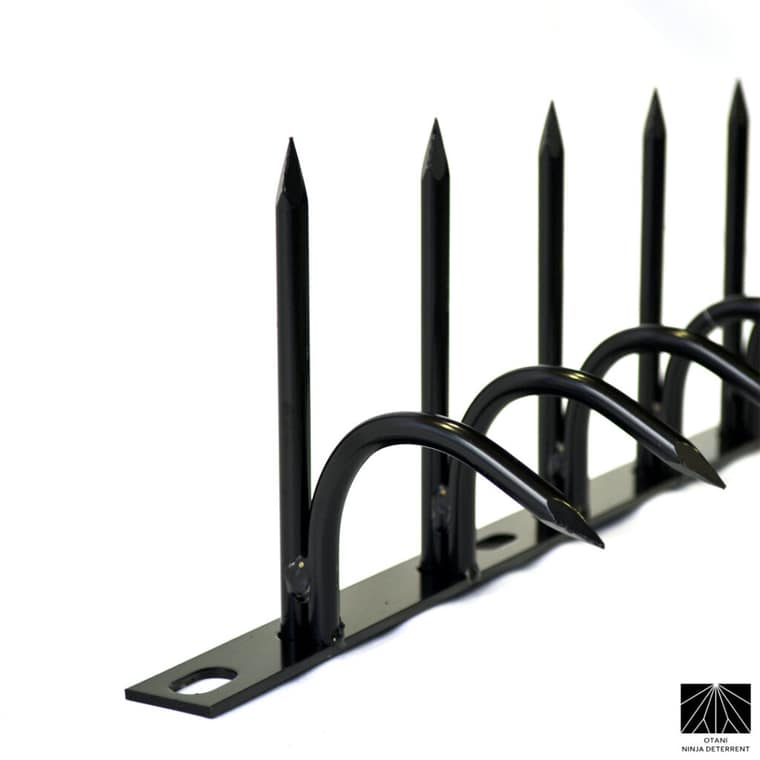
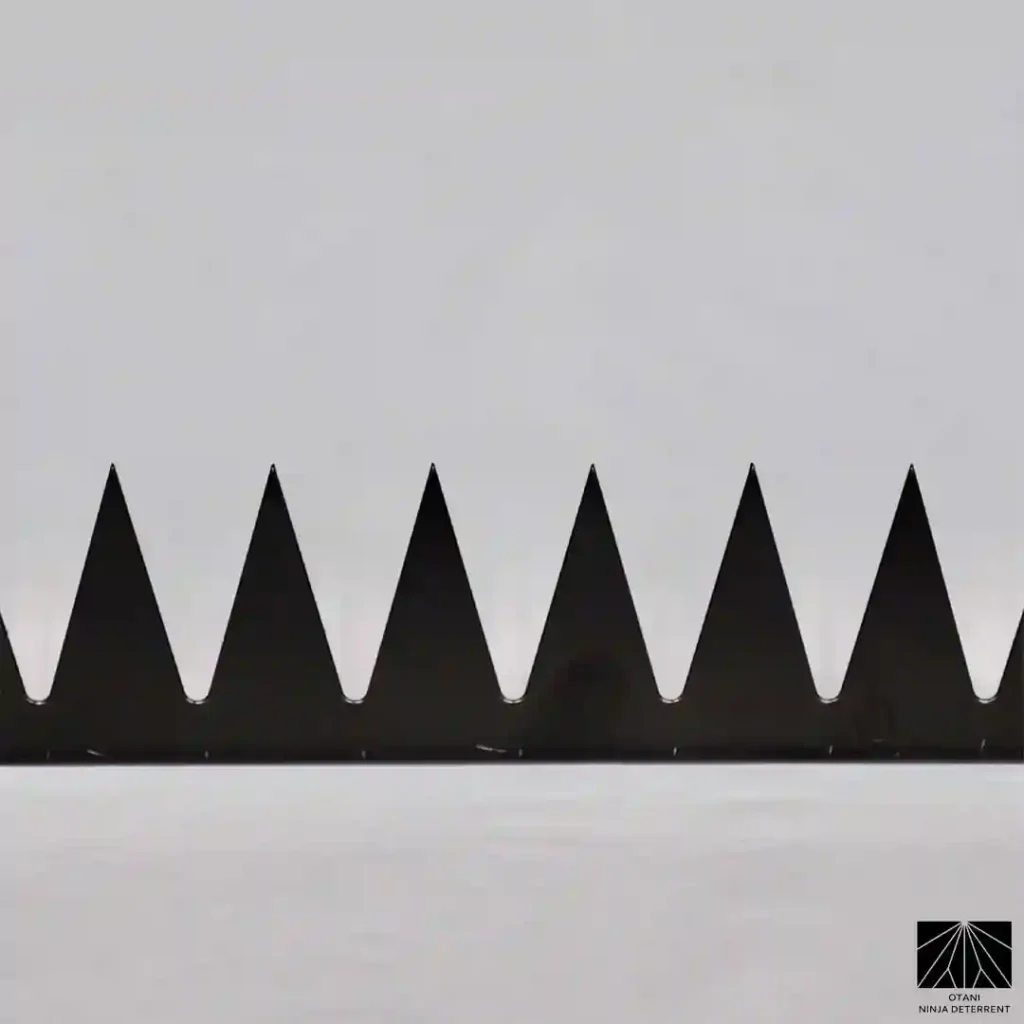
Kumamoto Castle's famous "fan slope" (ogi-no-kobai) is the textbook example: deceptively climbable at the base, but increasingly impossible the higher one rises. Crowning this with shinobi gaeshi — outward-projecting spikes — sealed off any approach other than the controlled gate. Modern homes apply the same idea by defining one clear main entrance and fitting Classic Series shinobi gaeshi along the top of walls and fences, the most direct form of access control available to a household.
Territorial reinforcement signals ownership so unmistakably that an intruder feels out of place the moment they cross the line. Castles achieved this by nesting concentric enclosures — kuruwa, or baileys — each ringed by stone walls and moats that declared, "beyond this point lies the lord's domain". The boundary did psychological work before any physical confrontation.
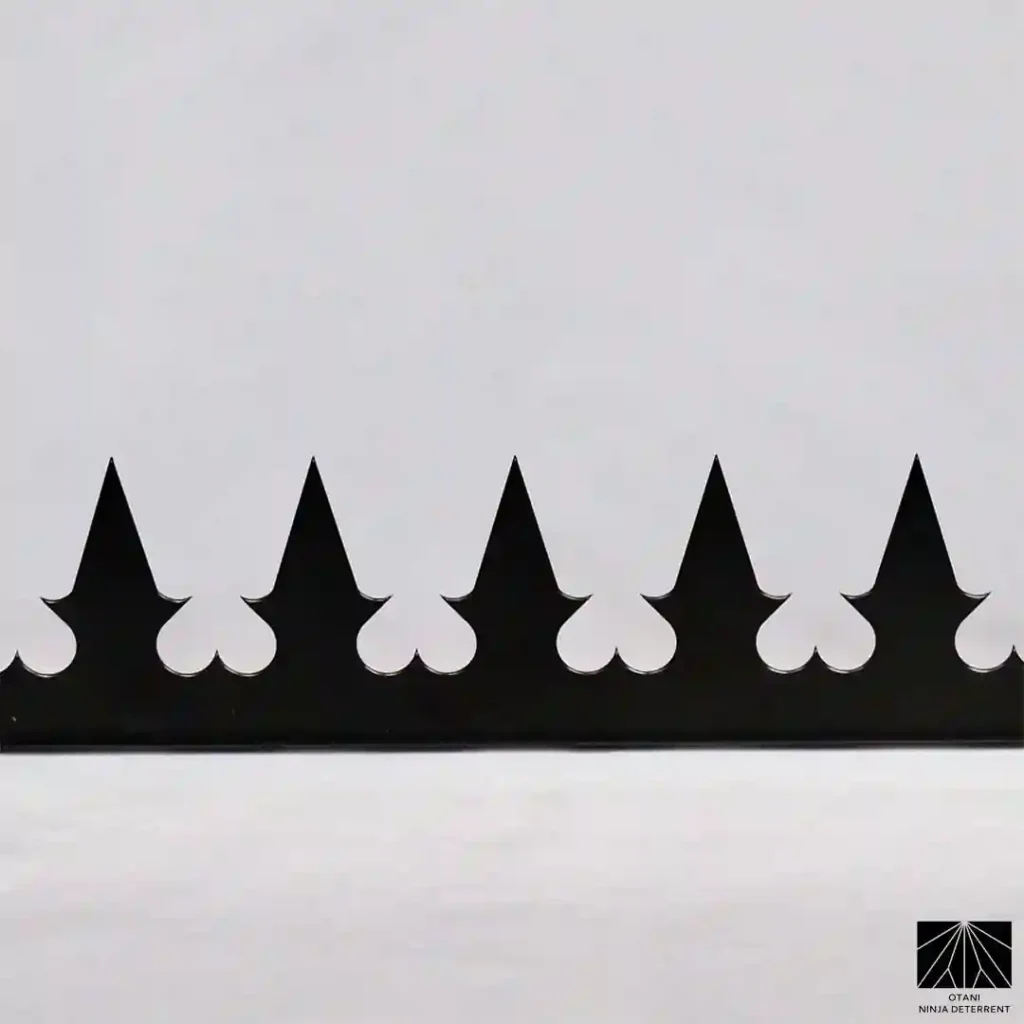
Crucially, many castles built their stone walls to be beautiful. The precise kirikomihagi masonry was not necessarily stronger than rough nozurazumi stacking, but its order broadcast authority and control. A tidy, deliberate boundary still reads as "this place is managed", which is why the decorative Gothic Series profile contributes to deterrence as much as to appearance. We explore that union of beauty and defence further in our security design philosophy.
Maintenance — CPTED's fourth principle — holds that a visibly well-kept environment deters crime, an insight later echoed by the Broken Windows Theory of Kelling and Wilson. Feudal lords treated fushin (construction and repair) as a duty of state. A crumbling castle advertised a weakening ruler and invited attack; an immaculate one projected enduring power.
Nijo Castle's gardens were meticulously maintained to the end of the Edo period not merely for beauty but to demonstrate the authority of the Tokugawa shogunate. For a home, the equivalent is straightforward: peeling paint, broken fixtures, and overgrown weeds all signal "unmanaged", while a tended garden, working gate light, and clean nameplate signal presence. Inspecting installed shinobi gaeshi periodically for rust or looseness keeps that protective signal sharp.
Each principle has a direct castle expression and an everyday residential application. The table below distils the lineage from siege defence to suburban boundary.
| CPTED principle | How a Japanese castle expressed it | Modern home application |
|---|---|---|
| Natural surveillance | Sama loopholes and keep/tower sightlines | Road-facing windows, gate lighting, CCTV, trimmed hedges |
| Natural access control | Masugata gates, sloped musha-gaeshi walls, shinobi gaeshi | One defined entrance; decorative anti-climb spikes on walls and fences |
| Territorial reinforcement | Layered kuruwa baileys, moats, ordered kirikomihagi stone | Defined boundary, nameplate, considered and beautiful exterior design |
| Maintenance | Constant fushin repair; tended castle gardens | Tidy garden, prompt repairs, periodic inspection of fittings |
As a general guide, a boundary of around 6 ft (≈1.8 m) deters casual intruders, roughly 8 ft (≈2.4 m) becomes genuinely effective, and 12 ft or more (≈3.7 m) is high-security territory. Height alone, however, was never the castle's secret — layering was.
A determined climber can defeat raw height, which is precisely why castles combined a moderate slope, an outward-projecting top deterrent, and overlapping sightlines rather than relying on one towering wall. The same holds for a home: a modest fence topped with anti-climb spikes and watched by good lighting outperforms a bare high wall. Where a boundary is an unusual shape or material, a custom order lets the deterrent follow the musha-gaeshi logic of fitting the top to the structure.
The central lesson is that security functions as a system, not a single purchase. Shinobi gaeshi contribute chiefly to natural access control and territorial reinforcement, but their value multiplies when combined with lighting (surveillance) and a maintained exterior (maintenance) — exactly as castles fused walls, moats, gates, and upkeep into one defence.
Borrow the whole framework, not one feature: define your boundary clearly, keep sightlines open, top vulnerable edges with a deterrent that suits your home's character, and maintain it all visibly. Whether the natural-stone tones of the Forest Series or the slender lines of the Iris Series suit your exterior, the principle that protected castles for centuries can quietly protect your home. To understand how the same framework is read internationally, see our note on CPTED around the world.
Applying the wisdom our ancestors perfected over centuries of castle defence to the modern home — that is the product concept of Ninja Deterrent. If you would like help translating these principles into your own boundary, our team is glad to advise on the right series and a bespoke configuration.
Not by that name, but in practice yes. CPTED was formalised by C. Ray Jeffery in 1971, drawing on Oscar Newman's concept of defensible space, whereas Japanese castles applied natural surveillance, access control, territorial reinforcement, and maintenance centuries earlier. The principles are universal, so siege-tested castle design and modern criminology arrive at the same conclusions.
Musha-gaeshi, literally "warrior repeller", refers to the sloped stone base of a castle wall that curves from a gentle incline at the foot to a near-vertical face at the top. Kumamoto Castle's "fan slope" is the classic example. The shape lets a climber begin easily but become trapped as the wall steepens, functioning as natural access control before any defender is even involved.
Shinobi gaeshi are outward-projecting spikes traditionally fixed along the tops of castle walls to block climbers. The same principle works on residential walls and fences, where they form the most direct form of access control a household can install. Modern decorative versions deter intruders while complementing a home's exterior rather than looking hostile.
As a rough guide, around 6 ft deters casual intruders, about 8 ft is genuinely effective, and 12 ft or more is high-security. That said, layering matters more than raw height, since a determined climber can defeat a plain wall. A moderate boundary topped with anti-climb spikes and watched by good lighting usually outperforms a taller bare wall.
A tall wall is a single physical measure, whereas CPTED is a system that combines surveillance, access control, territorial signalling, and maintenance. Castles never relied on height alone; they layered slopes, gates, moats, sightlines, and upkeep. Adopting the full framework produces far stronger, and more attractive, deterrence than any one element on its own.
Yes. Just as castles built their stone walls to be beautiful as a display of order and authority, well-designed deterrents reinforce territory while enhancing a home's appearance. A considered, tidy boundary signals "this place is managed", which itself discourages intruders. Decorative profiles let homeowners achieve genuine security without an aggressive, fortress-like look.

Written by
Kojiro OtaniFounder of Saitani-Ya Co., Ltd. and creator of the Ninja Deterrent® brand. Drawing on Japan's tradition of shinobi-gaeshi, he designs and manufactures anti-climb security spikes that pair real deterrence with architectural beauty — writing from first-hand experience in their engineering, production, and real-world installation.
Jul 22, 2026
See anti-climb fencing installed across Los Angeles — Venice alleys, Laurel Canyon hillsides, Hollywood stucco coping, Santa Monica glass. Real LA jobs.
Jul 12, 2026
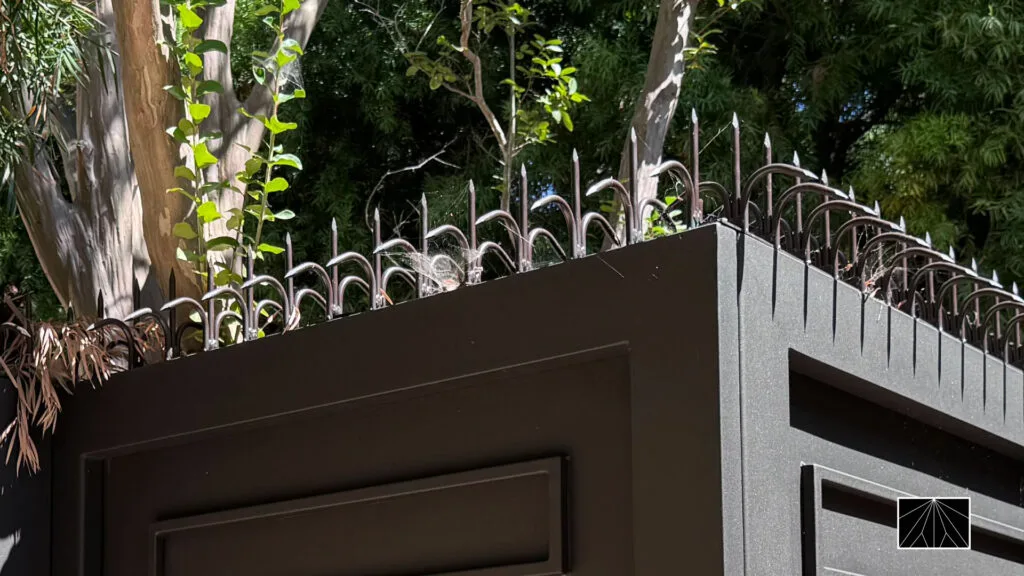
Explore anti-climb spikes for walls and fences. Compare types, materials, and aesthetics to find the best security solution, featuring premium options like Ninja Deterrent.
Jul 11, 2026
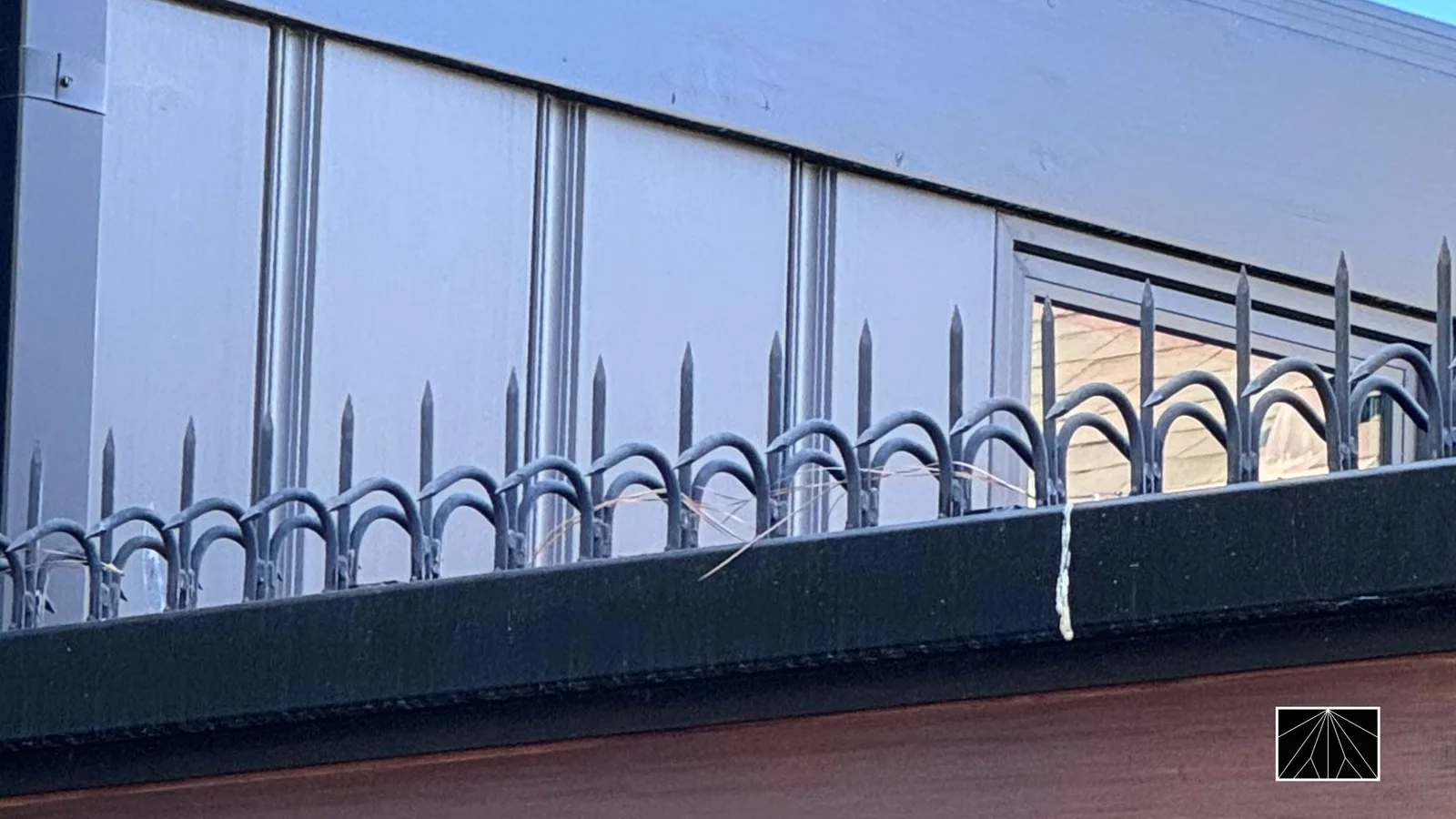
Discover how visible anti-climb deterrents, like Ninja Deterrent's architectural spikes, enhance home security beyond alarms. Learn their role in preventing burglaries.
Choose a series and a wall, then place it life-size in your own space with AR — before you order.

Choose a series and a wall, then place it life-size in your own space with AR — before you order.
Our standard series not quite right? We design and manufacture fully custom anti-climb systems tailored to your exact specifications — unique profiles, dimensions, materials, and finishes.
For general inquiries about our products or consultation regarding installation, please contact us.
Schedule a free online consultation with our team. Pick a time that works for you — available slots are shown in your local time zone.