Jul 22, 2026
Anti-Climb Fencing in Los Angeles: Installed Case Studies
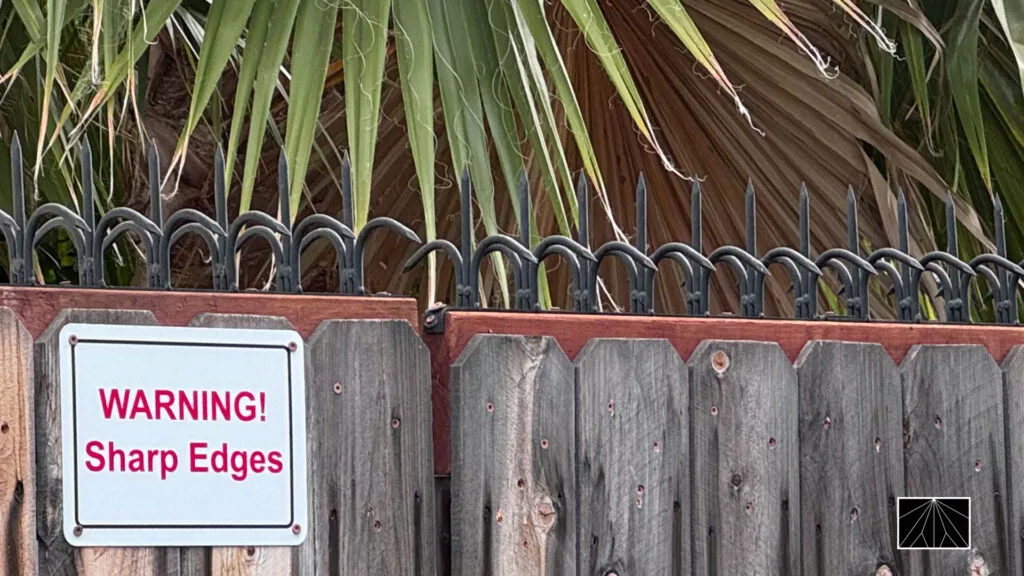
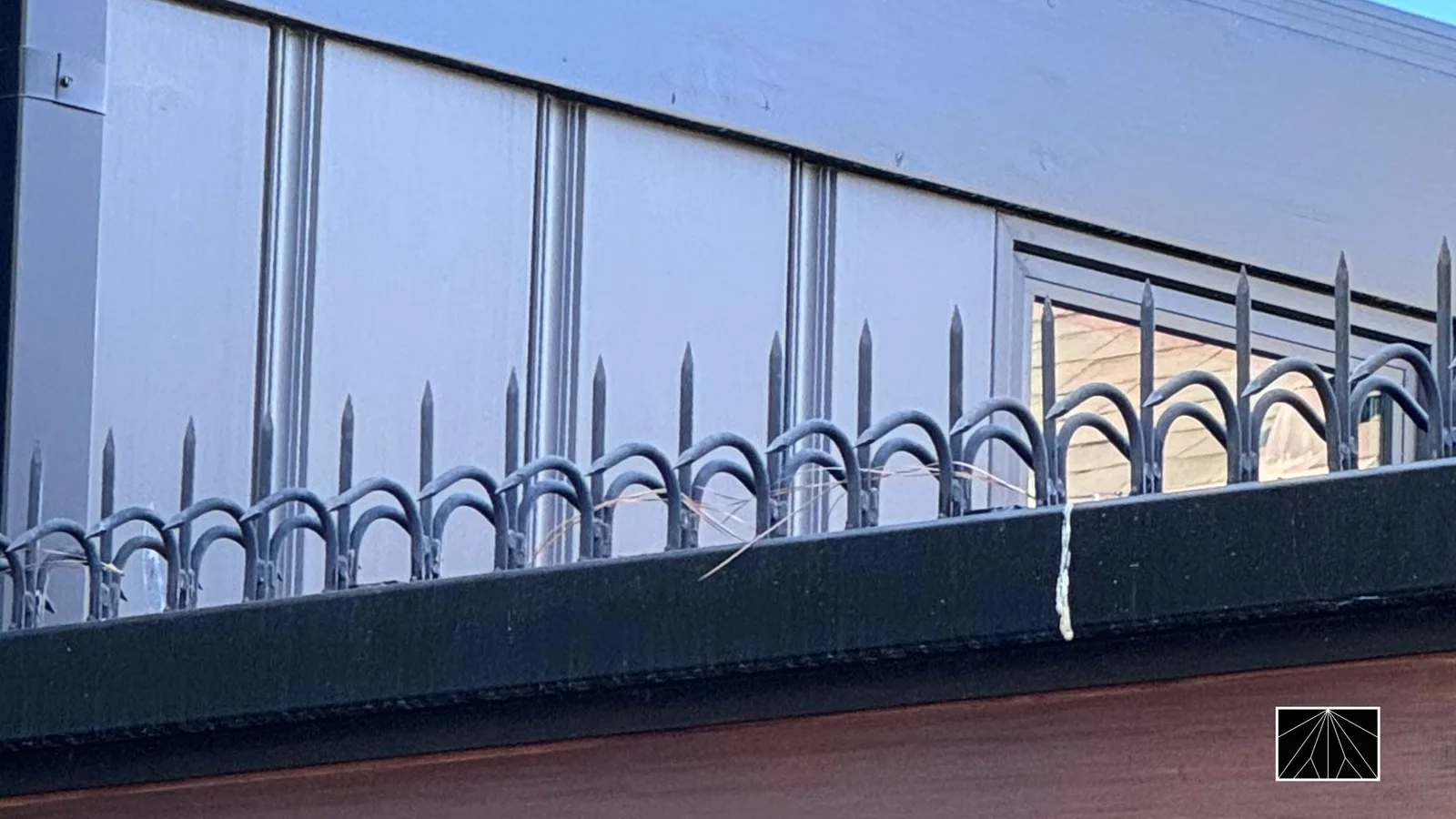
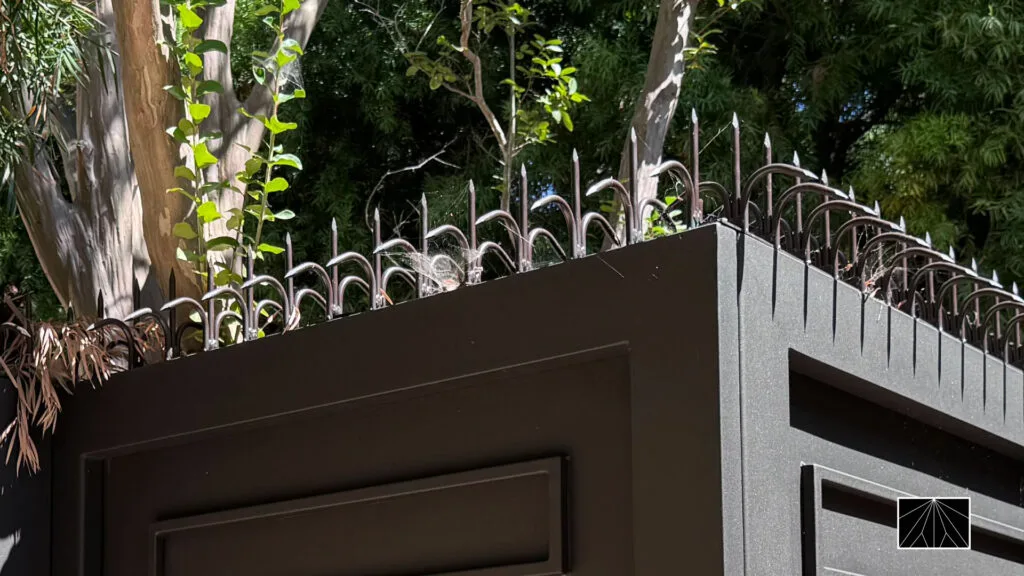
See anti-climb fencing installed across Los Angeles — Venice alleys, Laurel Canyon hillsides, Hollywood stucco coping, Santa Monica glass. Real LA jobs.
Column
In short:
- CPTED's four principles — natural surveillance, natural access control, territorial reinforcement and maintenance — are the recognised global framework for designing out crime (C. Ray Jeffery, 1971; Oscar Newman, "defensible space").
- A well-designed, decorative spiked boundary strengthens access control and territorial reinforcement without blocking the sightlines that natural surveillance depends on.
- Legal rule of thumb: fit anti-climb measures at 2 m / ~7 ft or higher, add a warning sign, and ensure nothing can injure people on the public side.
- Anti-climb spikes are broadly lawful in the UK, US, Australia and the EU — but US HOAs and local ordinances vary, so always check before you install.
Shinobi gaeshi (anti-climb spikes), born on Japanese castle walls, now occupy a serious place in security thinking worldwide. As CPTED has spread from American criminology textbooks into British, Australian and European planning practice, the decorative spiked boundary has been re-read not as a crude deterrent but as a precise, theory-aligned security device. This article sets out exactly how a Ninja Deterrent boundary maps onto recognised security theory — and where the law draws the line.
CPTED — Crime Prevention Through Environmental Design — is the theory that the layout and upkeep of a place can discourage crime before it occurs. Named by criminologist C. Ray Jeffery in 1971 and developed alongside Oscar Newman's concept of "defensible space", it rests on four principles: natural surveillance, natural access control, territorial reinforcement and maintenance.
In plain terms, each principle answers a question a would-be intruder asks subconsciously. Natural surveillance: can I be seen? Natural access control: can I even get in? Territorial reinforcement: does someone clearly own and watch this place? Maintenance: is anyone paying attention? The framework's strength is that it treats security as a system of environmental cues rather than a single barrier — which is why a thoughtfully designed fence top can do far more work than its size suggests.
A spiked boundary directly serves natural access control (it physically removes the climb-over route) and territorial reinforcement (a crafted, maintained finish signals an owner who is present and attentive). Crucially, because decorative spikes sit only along the top edge, they preserve the open sightlines that natural surveillance needs — unlike a solid, view-blocking wall.
That last point is the one most often missed. Piling height onto a solid wall can harm surveillance by creating a private, unobserved void behind it. A perimeter that combines a permeable or moderate-height boundary with a defined, hardened top edge keeps neighbours' and passers-by's eyes on the line while still denying the climb. The table below maps each principle to a practical boundary measure.
| CPTED principle | What it asks of a boundary | Practical boundary / spike measure |
|---|---|---|
| Natural surveillance | Keep the line visible; avoid creating hidden voids | Keep front boundaries lower and open; reserve hardened tops for side/rear runs that don't block key sightlines |
| Natural access control | Remove the climb-over and channel entry to the gate | Continuous anti-climb spikes along wall and fence tops; a single, clearly defined, lockable gate |
| Territorial reinforcement | Signal a present, attentive owner | A decorative, well-finished profile (Gothic, Iris) that reads as deliberate design, not afterthought |
| Maintenance | Show the property is cared for and watched | A corrosion-resistant, low-upkeep finish that stays crisp; periodic checks for rust, looseness and debris |
This is also why design quality is not vanity. A crude spike says "security present, attention low"; a crafted profile says "this owner cares about every detail" — exactly the message CPTED's territorial-reinforcement principle wants a boundary to send. We explore that idea fully in the philosophy of beautiful security.
In most jurisdictions anti-climb spikes are legal provided they cannot foreseeably injure lawful passers-by. The widely used rule of thumb across common-law countries is simple: install anti-climb measures at 2 m / roughly 7 ft above ground or higher, add a warning sign, and make sure nothing protrudes over, or can hurt anyone on, the public side.
The logic is duty of care. You are generally entitled to defend your own property line, but not to set a trap for the public. Keeping the sharp edge high, facing inward over your own land, and clearly signed converts a potential hazard into a reasonable, visible deterrent. Spikes mounted low, facing a footpath, or where a child could brush against them are where liability arises — not the spikes themselves. This framing is consistent worldwide; only the thresholds and the planning paperwork change.
Regional differences are real but follow a pattern. The UK permits rear and side boundaries up to about 2 m without planning permission and treats anti-climb measures as legitimate when signed and sensibly placed. In the US, legality is set locally — many HOAs and municipal ordinances restrict sharp spikes or razor wire, so you must check your specific community rules first.
Across markets the picture looks like this:
The common thread is unmistakable: a high, inward-facing, clearly-signed and well-designed boundary satisfies almost every regime. This is exactly the territory we cover in wall and fence security spikes.
Yes — because residential burglary is overwhelmingly a crime of opportunity, not determination. Research finds that more than 75% of burglars are opportunistic, and that roughly 60% will choose a different target if a visible deterrent such as an alarm is present (Kuhns et al., UNC Charlotte, 2012). A spiked boundary works on the same psychology, earlier in the attempt.
The practical takeaway is that you do not need a defence that can never be beaten; you need to be the harder choice on the street. An offender casing homes is weighing time, risk and effort. A continuous, gleaming spiked top changes that sum the moment it is seen — it signals delay, injury risk and an attentive owner, all before a hand touches the wall. For the deeper evidence base on this, see do anti-climb spikes work.
Industry guidance scales height to threat level: roughly 6 ft (about 1.8 m) for general deterrence, around 8 ft for an effective barrier, and 12 ft or more for genuine high-security sites. But raw height is only half the answer — a flat top of any height still offers a handhold and a place to perch.
The decisive factor is the top edge. A 1.8 m wall with a flat coping can be straddled in seconds; the same wall finished with anti-climb spikes denies the final pull-up and the perch entirely. In CPTED terms, height buys you the barrier, but the hardened top buys you the access control. That is why we treat the spiked top — not the wall behind it — as the working part of the perimeter.
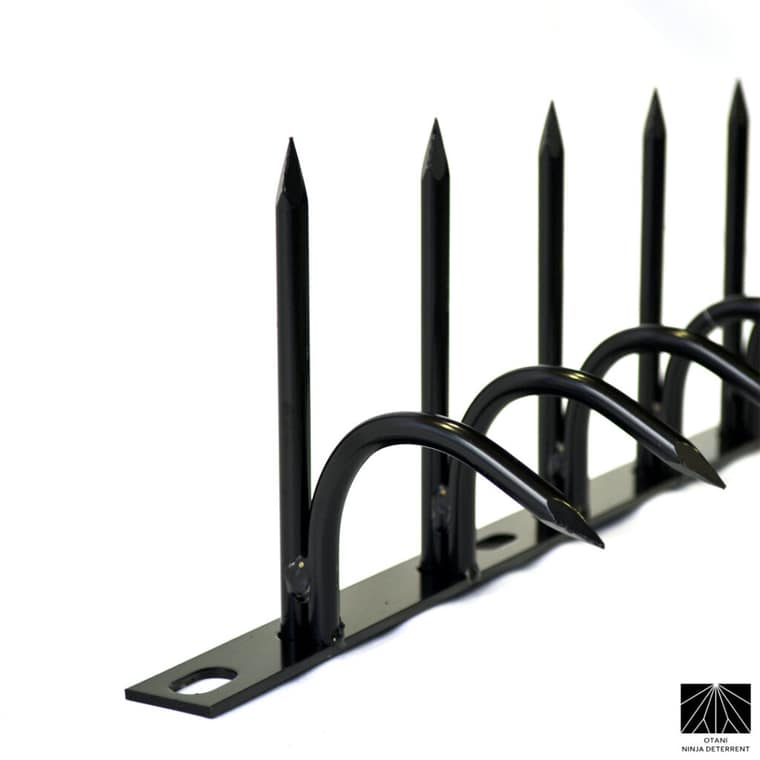
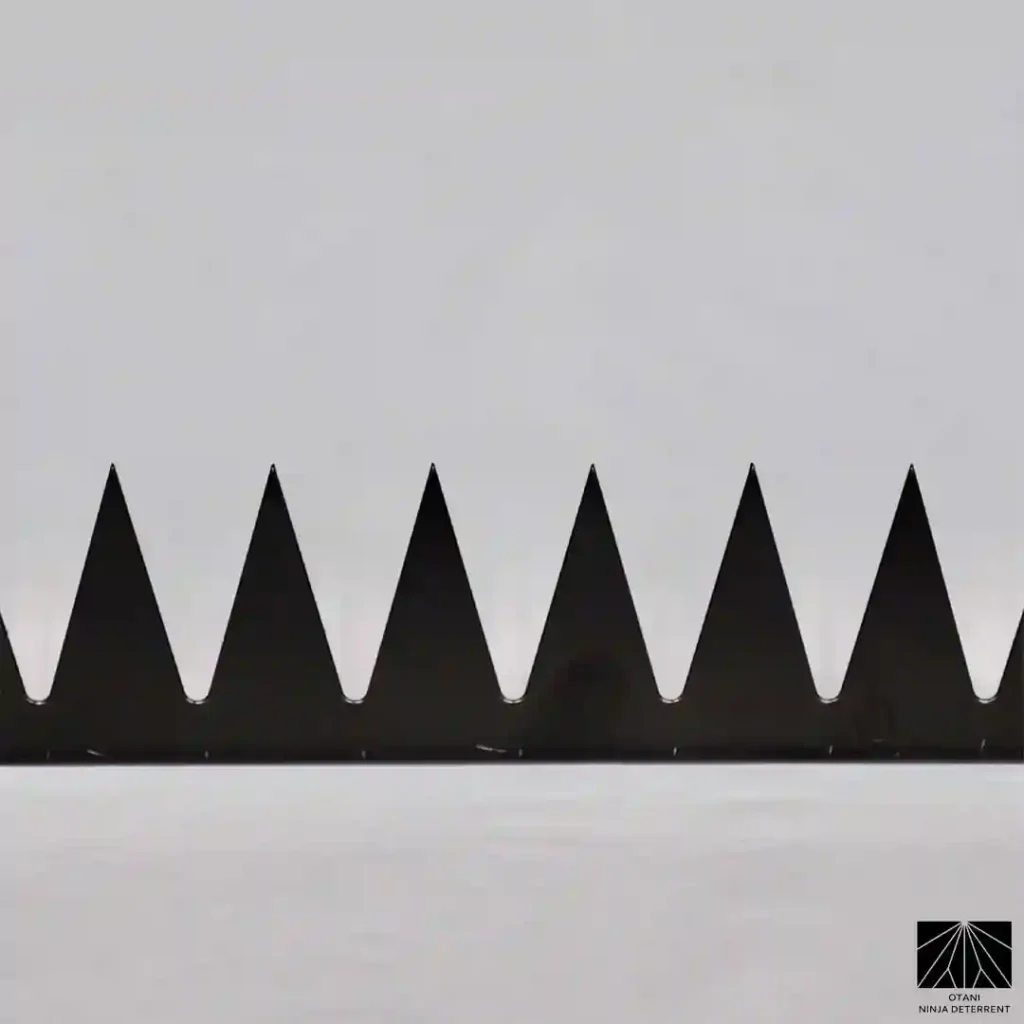
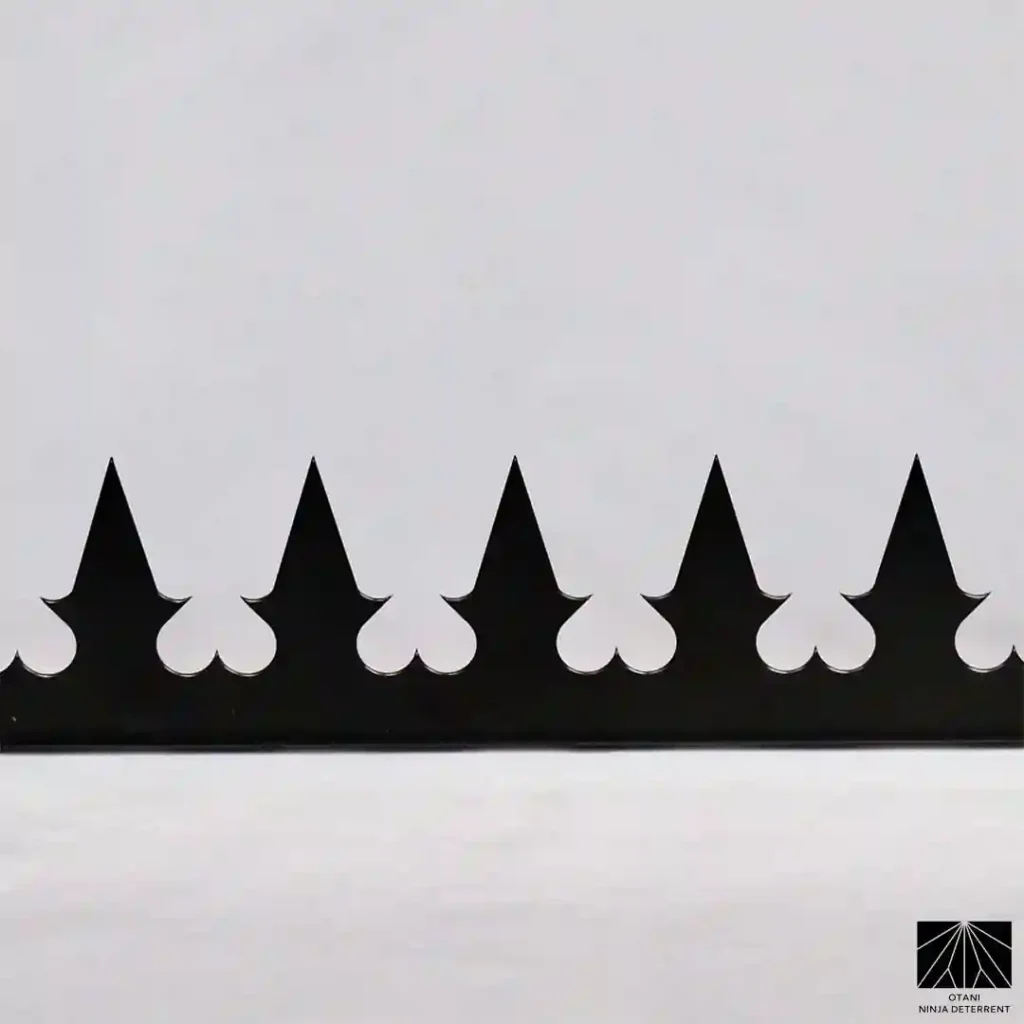
Choose by the message your boundary should send. For traditional masonry and tiled walls, the Classic series reads as authentic and deliberate. For contemporary architecture, Modern keeps lines clean and unobtrusive. Where territorial reinforcement and kerb appeal matter most — period homes, gated communities, luxury frontages — Gothic and Iris turn the security line into intentional ornament, while Forest blends into planted and garden boundaries.
Every profile is built to satisfy the same legal rule of thumb: a crisp, corrosion-resistant, inward-facing edge designed to sit high on the boundary and deter without endangering the public side. Where a site has unusual heights, materials or planning constraints, a custom order lets us tune the profile, material and finish to both your architecture and your local rules.
Planning a boundary that is both lawful and genuinely hard to climb? Tell us your wall height, location and the look you are after, and we will recommend a profile — and a placement — that aligns with CPTED principles and your local regulations.
In most countries anti-climb spikes are legal as long as they cannot foreseeably injure lawful passers-by. The accepted rule of thumb is to fit them at about 2 m / 7 ft or higher, add a warning sign, and keep the sharp edge facing your own property rather than a public path. The spikes are rarely the problem; placing them low or over a footpath is what creates liability.
It depends on your country and the boundary's height. In the UK, rear and side boundaries up to roughly 2 m generally need no planning permission, with stricter limits next to a highway. Elsewhere, thresholds vary, so check your local planning authority or council before building. Anti-climb spikes added on top of a compliant wall usually follow the same rules as the wall itself.
The risk is managed through placement, not avoidance. By installing spikes high, facing them inward over your own land, and adding a warning sign, you keep them out of normal public reach and demonstrate reasonable care. Decorative profiles are designed to deter through visible discomfort rather than to wound, which is exactly what duty-of-care rules expect. Avoid mounting anything sharp at low, accessible heights on the public side.
It varies widely, so you must check your specific community rules. Many US homeowners' associations and city ordinances restrict or ban exposed spikes and razor wire, yet the same communities often permit tasteful, architectural security profiles. A decorative shinobi gaeshi that reads as ornamental ironwork is far more likely to gain approval than industrial-looking deterrents. Always confirm in writing before you install.
Height should match the threat: around 6 ft suits general deterrence, about 8 ft makes an effective barrier, and 12 ft or more is for high-security sites. More important than the wall's height is the top edge. Most attempts fail at the final climb-over, so a hardened, spiked top defeats the perch and handhold that an otherwise scalable wall provides.
For homes, yes — and often more so. Because burglary is largely opportunistic, the goal is to be the harder, less appealing target, which a visible spiked boundary achieves immediately. Razor wire signals an industrial or prison setting, frequently breaches HOA and planning rules, and can harm passers-by. A decorative profile deters just as plainly while staying lawful and adding value to the property.

Written by
Kojiro OtaniFounder of Saitani-Ya Co., Ltd. and creator of the Ninja Deterrent® brand. Drawing on Japan's tradition of shinobi-gaeshi, he designs and manufactures anti-climb security spikes that pair real deterrence with architectural beauty — writing from first-hand experience in their engineering, production, and real-world installation.
Jul 22, 2026
See anti-climb fencing installed across Los Angeles — Venice alleys, Laurel Canyon hillsides, Hollywood stucco coping, Santa Monica glass. Real LA jobs.
Jul 12, 2026
Explore anti-climb spikes for walls and fences. Compare types, materials, and aesthetics to find the best security solution, featuring premium options like Ninja Deterrent.
Jul 11, 2026
Discover how visible anti-climb deterrents, like Ninja Deterrent's architectural spikes, enhance home security beyond alarms. Learn their role in preventing burglaries.
Choose a series and a wall, then place it life-size in your own space with AR — before you order.

Choose a series and a wall, then place it life-size in your own space with AR — before you order.
Our standard series not quite right? We design and manufacture fully custom anti-climb systems tailored to your exact specifications — unique profiles, dimensions, materials, and finishes.
For general inquiries about our products or consultation regarding installation, please contact us.
Schedule a free online consultation with our team. Pick a time that works for you — available slots are shown in your local time zone.