Jul 22, 2026
Anti-Climb Fencing in Los Angeles: Installed Case Studies
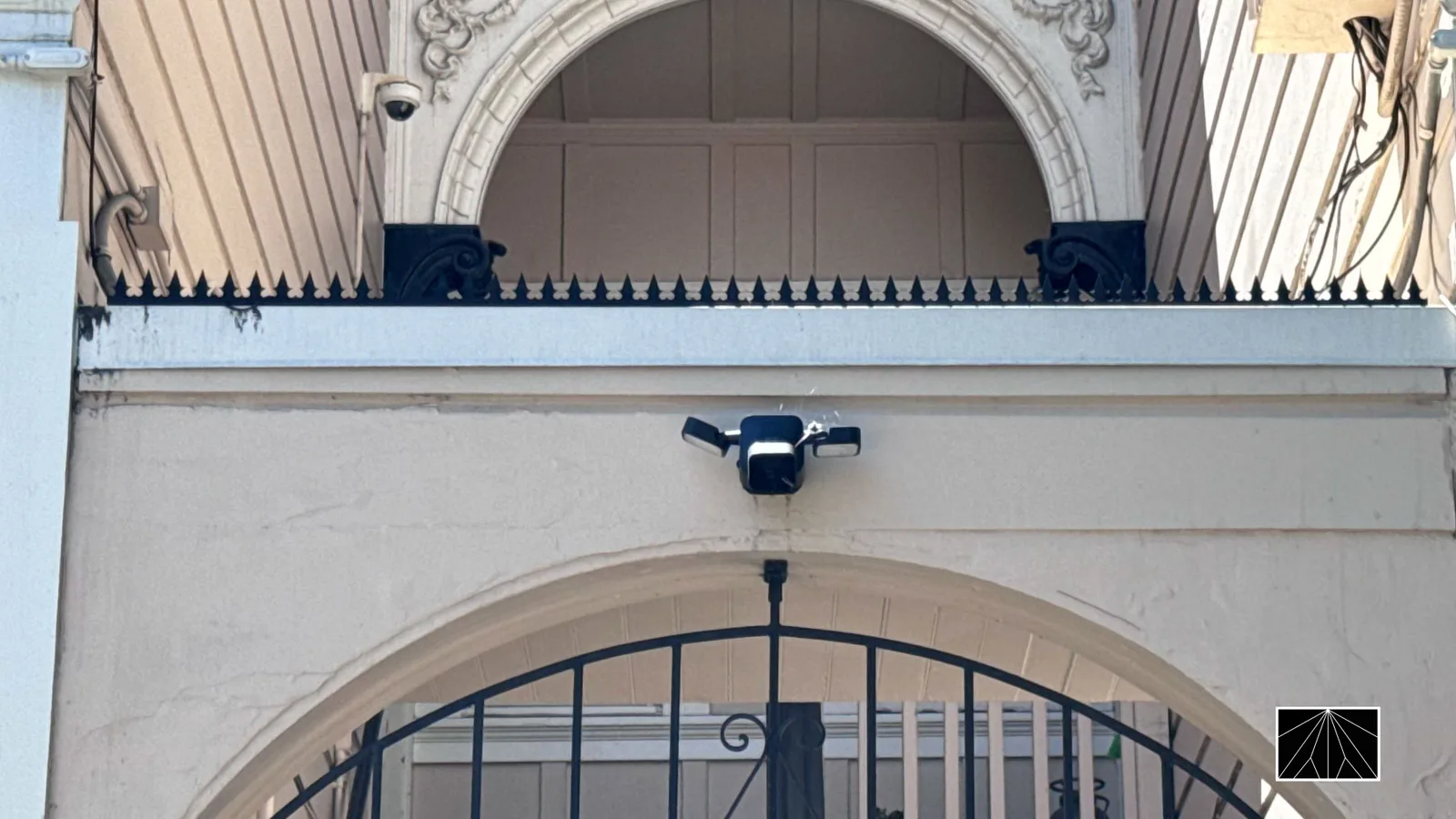
See anti-climb fencing installed across Los Angeles — Venice alleys, Laurel Canyon hillsides, Hollywood stucco coping, Santa Monica glass. Real LA jobs.
Column
TL;DR
- For five centuries, ninja infiltration and Japanese castle defence drove an arms race that produced layered moats, sloped stone walls (ishigaki) and the iron spikes known as shinobi gaeshi.
- Every great castle defence answered a specific attack — and each has a direct modern descendant in perimeter security.
- The Tenshō Iga Wars proved that no defence is unbreakable; the realistic goal is to raise the cost and effort of intrusion until it is not worth attempting.
- These same principles — layering, deterrence, denial and surveillance — underpin the CPTED thinking behind modern home security today.
The history of security is the history of a "cat-and-mouse game" between attack and defence. Whenever a new defence appears, a new attack arises to defeat it. Nowhere is this universal law more vivid than in the long contest between the ninja of Iga and Kōga and the fortifications of Japan's Warring States castles — a contest whose design lessons still shape the walls and fences around our homes.
The arms race began in the Muromachi period (1336–1573), when feudal lords organised specialist shinobi groups for reconnaissance and sabotage. Early castles were built for habitability rather than defence — earthen ramparts and wooden palisades that a skilled infiltrator could breach under cover of darkness. Each successful intrusion forced defenders to build harder, beginning a cycle of escalation.
As the value of information warfare rose, so did the sophistication of those who waged it. The shinobi specialised in approaching by night, scaling weak points and slipping past sentries — and because the earliest fortifications prioritised comfort over security, they often succeeded. That very success is what compelled castle designers to rethink the perimeter from the ground up. This is the oldest lesson in the trade: defenders rarely innovate until attackers force them to.
Castles evolved because each defence provoked a sharper attack. Earthen ramparts gave way to towering ishigaki stone walls, which made climbing far harder. Ninja answered with mortar-joint climbing and corner-stone (sumi-ishi) techniques, so defenders crowned the walls with shinobi gaeshi — sharp iron spikes that stopped even a climber who reached the top.
The introduction of stone walls in the early Warring States period was the single greatest turning point. Compared with packed earth, dressed stone offered few handholds and could not be undermined easily. Yet ninja manuals soon documented countermeasures: scaling the regular gaps in mortar joints, or exploiting the stepped corner stones where two wall faces met.
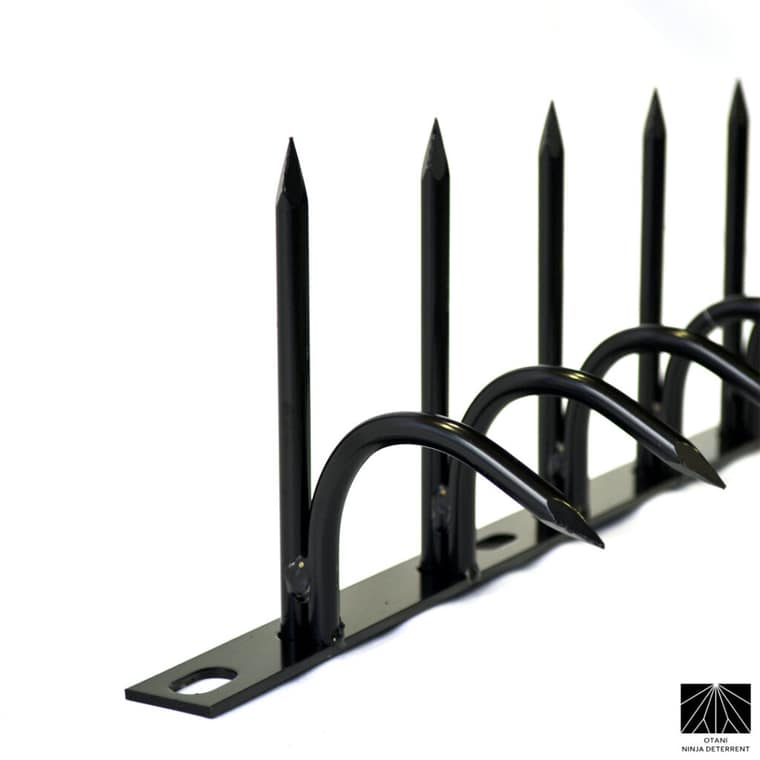
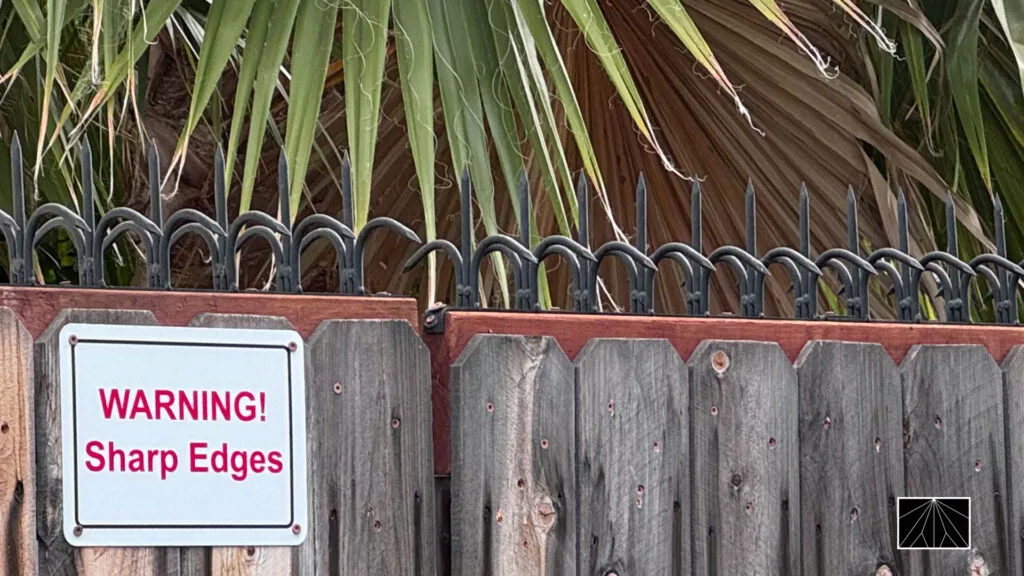
Shinobi gaeshi were the direct reply. By lining wall-tops and ramparts with outward-facing iron protrusions, defenders denied the final move of any climb. Predictably, the ninja adapted again — manuals describe the kaginawa (hooked rope) and shinobi-bashigo (collapsible ladder), as well as draping cloth over the spikes or seeking points where they were spaced more widely. The principle survives in the modern decorative spike: our Classic series carries that same wall-top deterrent in a form suited to a residential boundary, while the wall-and-fence guidance covers where it works best.
Almost every signature castle defence answered a specific threat, and each has a clear modern descendant. Moats defined the boundary; sloped walls defeated ladders; overhanging stone lips and shinobi gaeshi stopped climbers cresting the top; layered baileys prevented a single breach from being decisive. The table below traces that lineage from the Warring States keep to the contemporary perimeter.
| Historical castle defence | The threat it countered | Modern equivalent |
|---|---|---|
| Multiple moats (hori) | Sappers and direct night approach | Defined boundaries, gravel beds, defensive planting |
| Ishigaki sloped stone walls | Ladder-scaling and undermining | High boundary walls and fences |
| Musha-gaeshi (curved overhanging wall-top) | Climbers reaching the parapet | Anti-climb spikes and toppings |
| Shinobi gaeshi (iron spikes) | Ninja cresting the wall | Decorative anti-climb spikes |
| Masugata barbican and layered baileys (kuruwa) | A single point of breakthrough | Zoned, layered perimeter ("defence in depth") |
| Yagura towers and loopholes (sama) | Undetected approach | Natural surveillance, sensor lighting, CCTV |
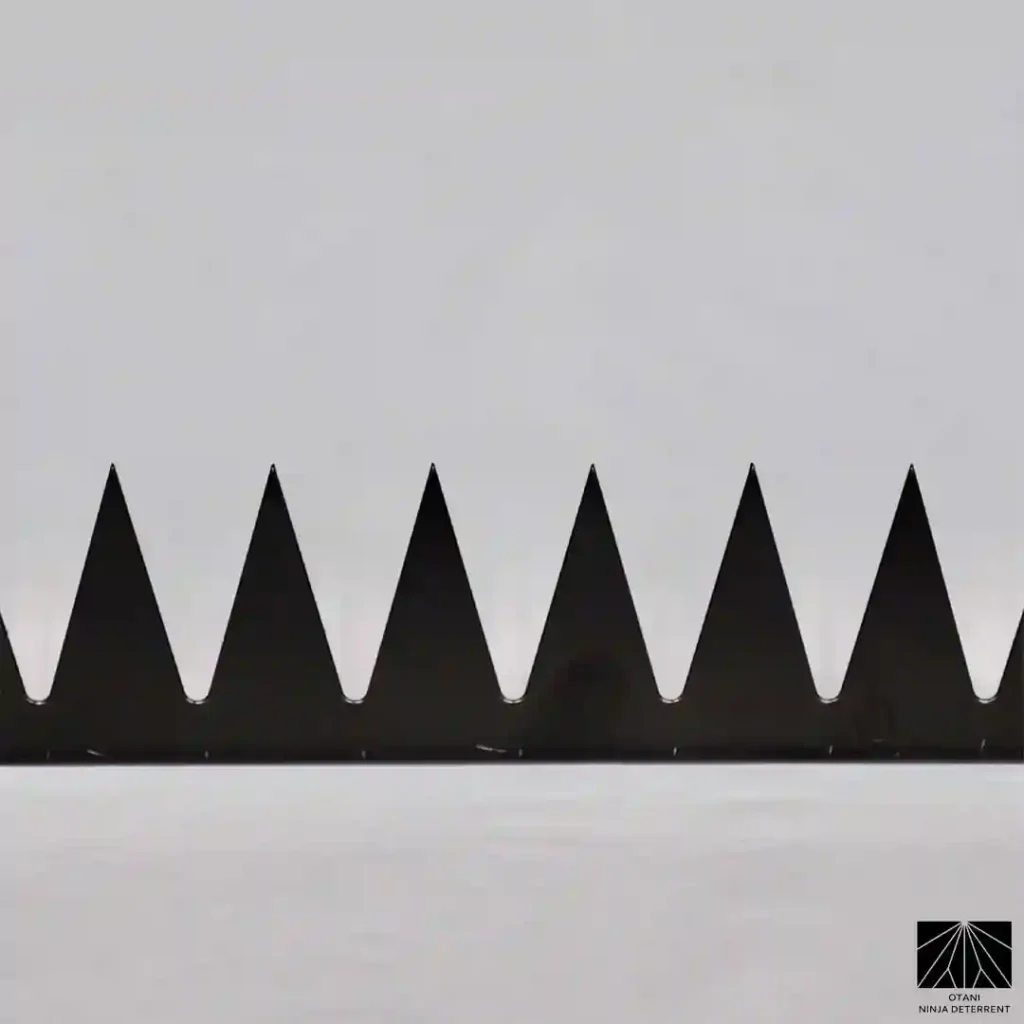
The castles of the Azuchi–Momoyama period — Nobunaga's Azuchi and Hideyoshi's Osaka — perfected this combination. Multiple moats, towering walls, shinobi gaeshi, loopholes and masugata barbicans were fused into a single organic system. That fusion is precisely what modern security professionals mean by defence in depth, and what a homeowner reproduces, on a smaller scale, with a boundary that combines a wall, a topping such as our Forest series and good sightlines.
The two Tenshō Iga Wars (1579 and 1581) are the most dramatic test of these defences. In 1579 Oda Nobukatsu invaded Iga with roughly 8,000 troops, only to be confounded by ninja who avoided open battle and relied on night raids, fire attacks and ambush. With supply lines cut and the terrain unreadable, the Oda army retreated — a textbook case of attackers underestimating defenders.
Modern security analysts cite the first war as exactly that failure mode. The defenders never tried to win a pitched battle; they made the cost of advancing intolerable. In 1581 Nobunaga returned in overwhelming force — around 44,000 troops advancing from several directions at once — and subdued Iga. Yet several hundred ninja resisted an army of tens of thousands for months. Defence that leveraged terrain and structure — an early prototype of what criminologist C. Ray Jeffery would later name CPTED (Crime Prevention Through Environmental Design, 1971), building on Oscar Newman's "defensible space" — partly offset a wildly lopsided balance of force.
No. The Iga Wars prove that with enough resources and time any defence can be breached, so perfection is the wrong target. The realistic aim — for a castle or a home — is to raise the cost of intrusion until an attacker judges the effort, time and risk not worth it. A defence does not need to be unbreakable; it needs to be unappealing.
This matters because a residential burglar is not a national army. Research on offender decision-making found that more than 75% of burglaries are opportunistic rather than carefully planned (Kuhns et al., UNC Charlotte, 2012). Opportunists want a target that is easy, quick and low-risk. The job of a visible deterrent is to remove that ease — and a wall-top that plainly resists climbing tells an opportunist to look elsewhere. This is the heart of "target hardening", explored further in our piece on crime opportunity theory.
They translate into four overlapping layers, exactly as a castle combined moat, wall, spike and watchtower. Modern security professionals describe these as deterrence, denial, detection and response — no single measure is trusted alone, so the failure of one is caught by the next. Anti-climb spikes are unusual in spanning the first two layers at once.
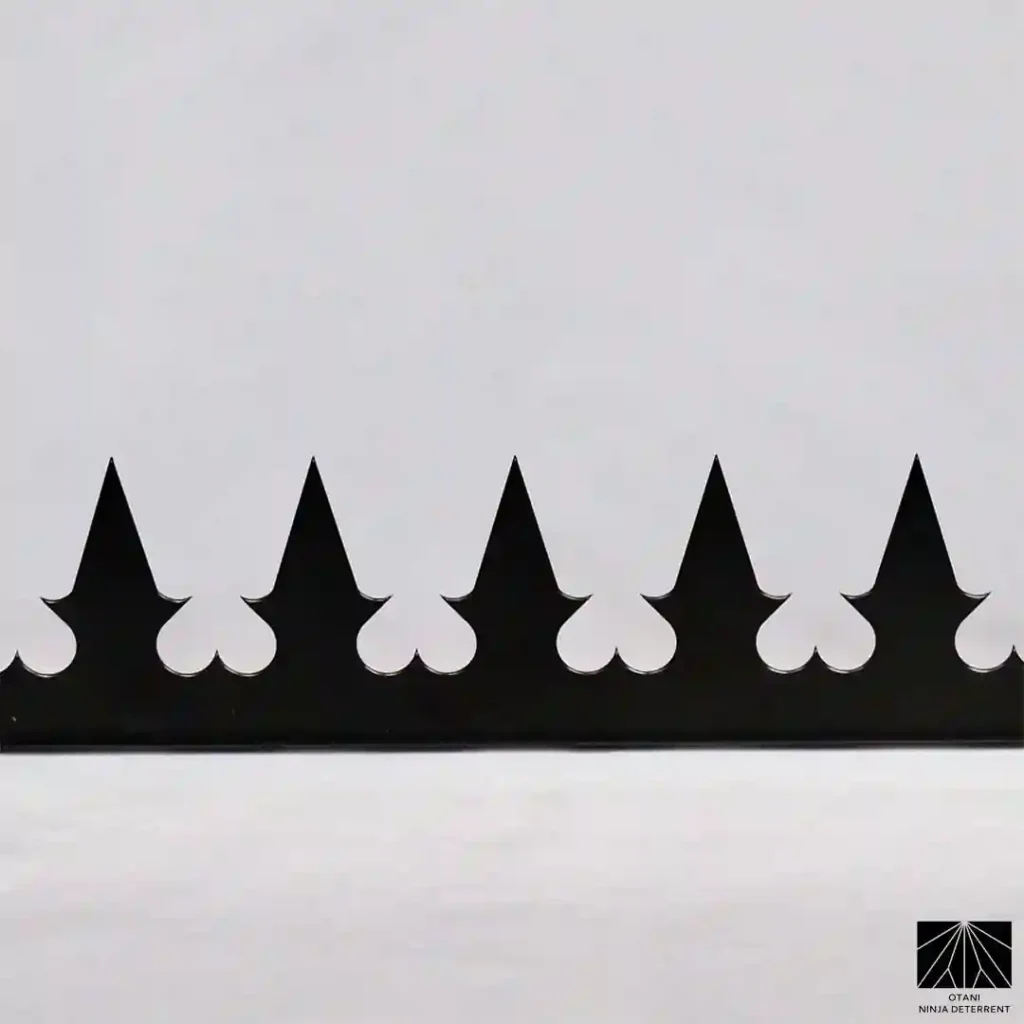
Shinobi gaeshi sit across deterrence and denial, which is why they were the cornerstone of castle perimeters and remain so for homes. The CPTED quartet — natural surveillance, access control, territorial reinforcement and maintenance — maps neatly onto this: a well-kept, clearly bounded property signals control, and a poorly maintained one signals neglect. For boundaries where appearance carries as much weight as security, our Iris series is designed to reinforce that sense of a cared-for, defended territory, and a custom order lets the topping follow an unusual wall line precisely.
It teaches that security never reaches "completion" — yet basic physical barriers remain the most effective first line of defence in any era. Technology evolves, attackers adapt and no perimeter is final, but the underlying principles are remarkably stable. Layer your defences, make intrusion costly, and watch what you cannot wall off.
Just as stone walls and shinobi gaeshi protected Warring States castles, walls and spikes protect modern homes. The locks-versus-picks and glass-versus-breaking contests of today are simply the latest rounds of the same game the Iga ninja played against the Oda. The form changes; the logic does not.
Shinobi gaeshi are sharp, outward-facing iron spikes that were fixed along the tops of Japanese castle walls and ramparts during the Warring States period. Their purpose was to stop a ninja who had managed to scale the wall from climbing over the parapet. The same concept survives today as decorative anti-climb spikes for residential walls and fences.
They were highly effective but never absolute, which is true of any single defence. Ninja manuals record countermeasures such as hooked ropes, collapsible ladders and draping cloth over the spikes to blunt them. Their real value lay in making the final move of a climb slow and dangerous, which is exactly how a modern wall-top spike deters an opportunist.
The Tenshō Iga Wars were two campaigns, in 1579 and 1581, in which the Oda clan invaded Iga Province, a stronghold of ninja. The first invasion was repelled by smaller, terrain-aware ninja forces, while the second succeeded only through overwhelming numbers. They are often cited as a case study in how defenders can offset a disadvantage in force through environment and structure.
Defence in depth means never relying on one barrier, but layering several so the failure of one is caught by the next. In a castle this meant moats, stone walls, spikes and watchtowers working together. For a home it means combining deterrence, physical denial, detection and response rather than trusting a lock or a wall alone.
No security system is completely impenetrable, as the eventual fall of even the strongest castles shows. The realistic and effective goal is to raise the cost, time and risk of intrusion until an attacker decides the target is not worth it. Because most residential burglary is opportunistic, a visibly well-defended boundary is often enough to redirect that decision.
Warring States castle builders intuitively applied ideas that criminology later formalised as CPTED, or Crime Prevention Through Environmental Design. Layered baileys, sightlines from towers and clearly defined boundaries correspond to access control, natural surveillance and territorial reinforcement. In effect, castle architects were practising environmental crime prevention centuries before it had a name.
The contest between ninja and castle never produced a perfect defence — and it never needed to. If your own boundary could send the same quiet signal those wall-tops once sent, explore our series of decorative anti-climb spikes or request a custom order tailored to your wall.

Written by
Kojiro OtaniFounder of Saitani-Ya Co., Ltd. and creator of the Ninja Deterrent® brand. Drawing on Japan's tradition of shinobi-gaeshi, he designs and manufactures anti-climb security spikes that pair real deterrence with architectural beauty — writing from first-hand experience in their engineering, production, and real-world installation.
Jul 22, 2026
See anti-climb fencing installed across Los Angeles — Venice alleys, Laurel Canyon hillsides, Hollywood stucco coping, Santa Monica glass. Real LA jobs.
Jul 12, 2026
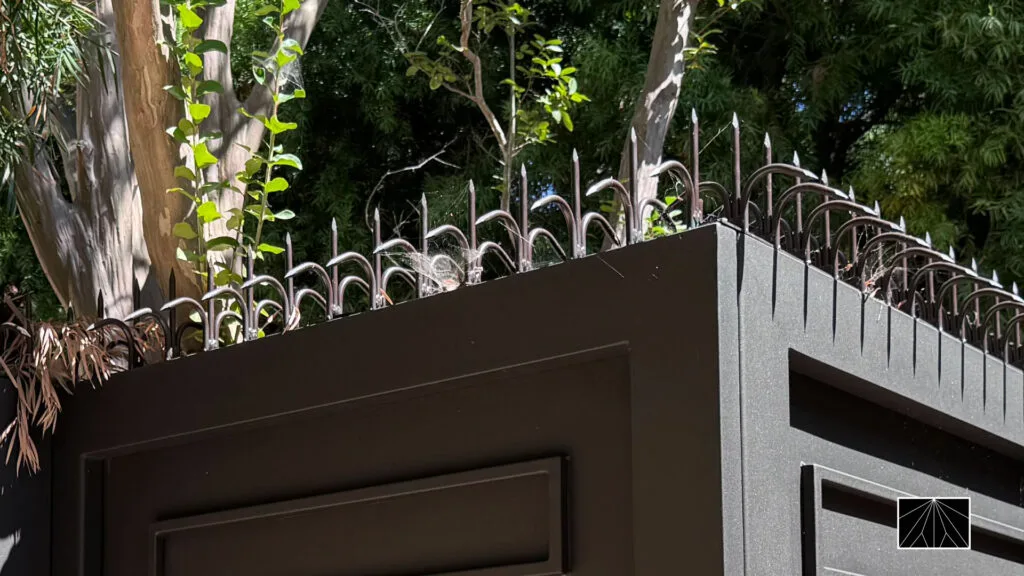
Explore anti-climb spikes for walls and fences. Compare types, materials, and aesthetics to find the best security solution, featuring premium options like Ninja Deterrent.
Jul 11, 2026
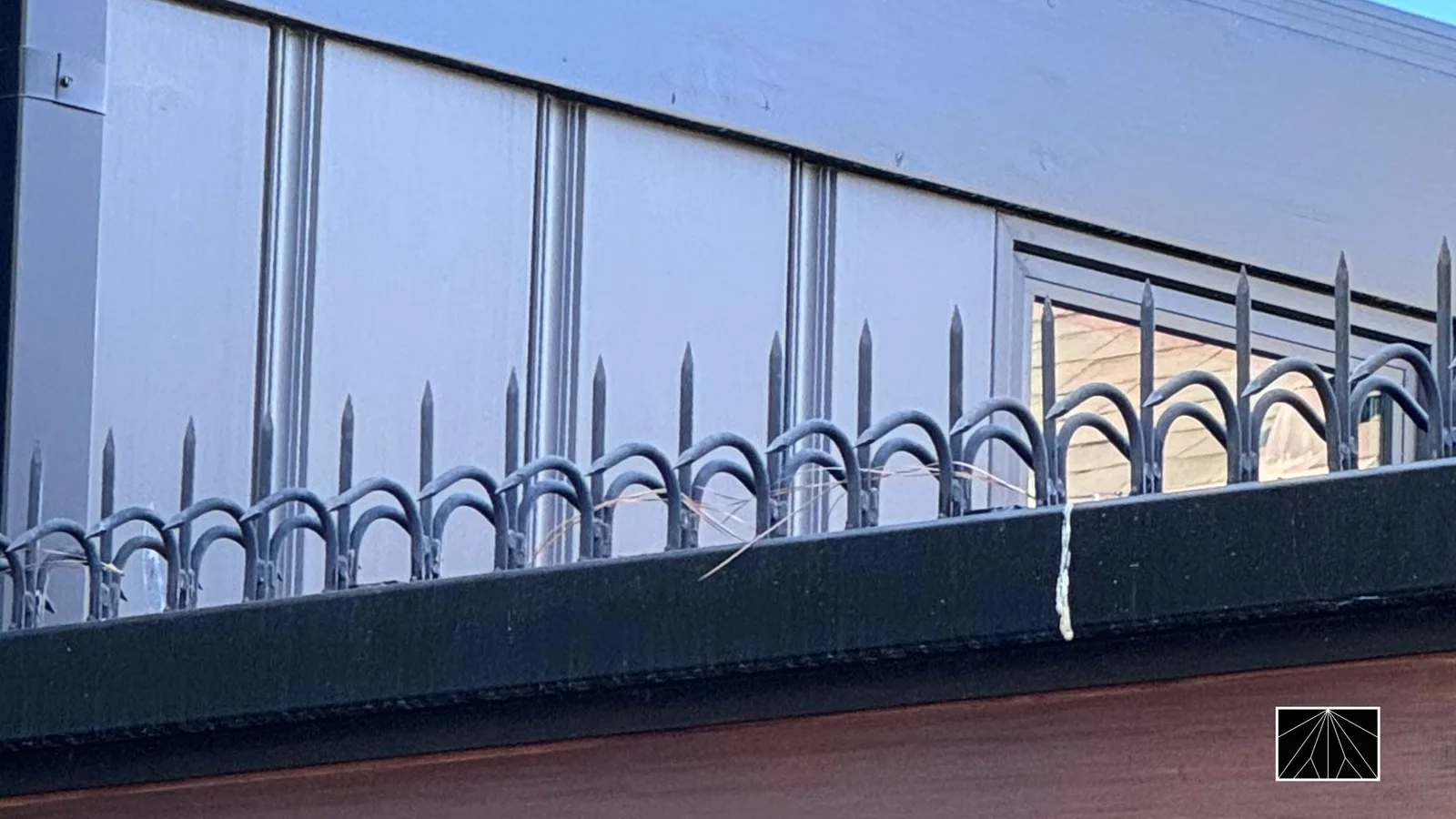
Discover how visible anti-climb deterrents, like Ninja Deterrent's architectural spikes, enhance home security beyond alarms. Learn their role in preventing burglaries.
Choose a series and a wall, then place it life-size in your own space with AR — before you order.

Choose a series and a wall, then place it life-size in your own space with AR — before you order.
Our standard series not quite right? We design and manufacture fully custom anti-climb systems tailored to your exact specifications — unique profiles, dimensions, materials, and finishes.
For general inquiries about our products or consultation regarding installation, please contact us.
Schedule a free online consultation with our team. Pick a time that works for you — available slots are shown in your local time zone.