Jul 22, 2026
Anti-Climb Fencing in Los Angeles: Installed Case Studies
See anti-climb fencing installed across Los Angeles — Venice alleys, Laurel Canyon hillsides, Hollywood stucco coping, Santa Monica glass. Real LA jobs.
Column
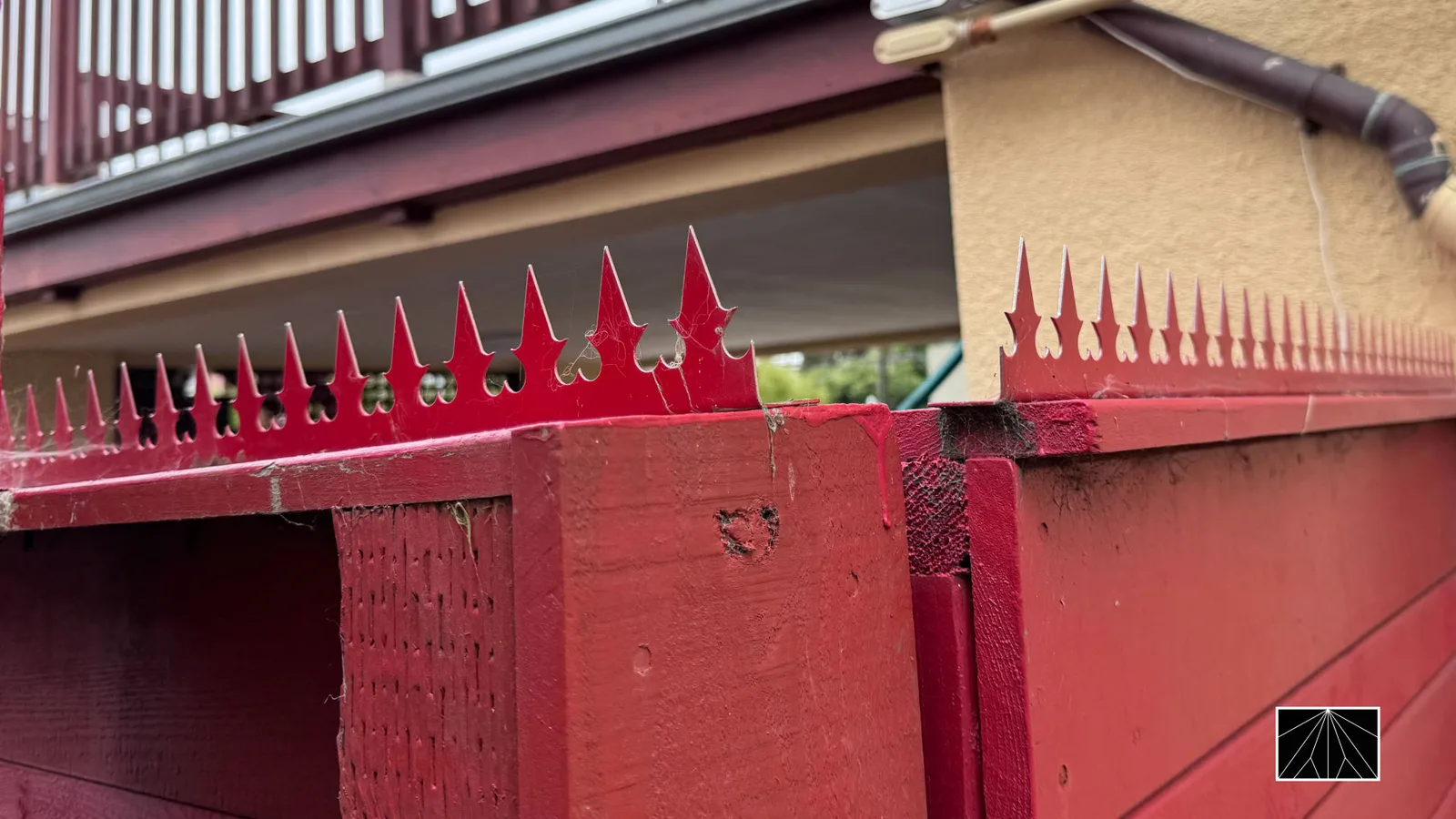
- Over 75% of burglaries are opportunistic — intruders pick the easiest-looking home on the street, not the wealthiest one.
- The cues that mark you out are visible from the pavement: poor visibility, no lighting, a low or climbable boundary, and signs that nobody is home.
- Fix those cues and the offender simply moves on — a phenomenon known as target displacement.
- A boundary at the right height, topped with outward-leaning anti-climb spikes, removes the single fastest route in.
"Our house will be fine" or "we've nothing worth stealing" is, paradoxically, one of the most expensive assumptions a homeowner can make. Burglars do not choose targets by guessing what is inside. They choose by reading what is outside — and almost every signal they rely on is something you can change.
This is a practical guide to target selection: the environmental cues that make a home look like an easy mark, and the concrete fix for each. The goal is not a fortress. It is simply to stop looking like the easiest house on the street.
Opportunity, not wealth. More than 75% of burglaries are opportunistic (UNC Charlotte; Kuhns et al., 2012), meaning the offender acts on a target that looks quick and low-risk rather than one researched for its contents. Burglars behave as rational economic actors, weighing time, visibility and effort against reward — and they choose the path of least resistance.
For decades, criminology focused on why people offend — poverty, upbringing, psychology. From the 1970s the emphasis shifted to crime opportunity theory: you cannot easily change a criminal's motivation, but you can change the places and situations where crime is possible. The practical consequence is liberating. You do not have to deter every burglar in your city — only to make your own home a poor opportunity. When you do, the offender does not abandon crime; they relocate to a softer target. That displacement, unfair as it feels to the neighbour, is precisely the outcome residential security is designed to achieve.
Speed is the reason opportunity dominates. FBI figures show actual entry usually takes under a minute, with intruders typically inside for just 8–12 minutes. An offender working to that clock cannot afford a boundary that fights back. Anything that adds time or visibility breaks the model.
Five cues do most of the work: poor visibility, no lighting, a low or climbable boundary, signs of absence, and concealment near the building. Each one tells an offender they can enter unseen, quickly and without risk. Read your own frontage against the table below — every signal has a direct, physical fix.
| Easy-target signal | What the burglar reads | The fix |
|---|---|---|
| Overgrown hedges, blank high walls, blind side-returns | "No one will see me work" | Open the front for natural surveillance; trim hedges to ~1.2 m; keep sightlines from the road |
| No lighting after dark | "I can approach the unlit side unseen" | Motion-sensor lighting along approaches and boundaries |
| Low or flat-topped wall (≤1.2 m, easy handhold) | "Over in seconds" | Raise to an effective height and add outward anti-climb spikes on top |
| Piled post, dark windows, full bins, no car | "Nobody's home" | Timers, paused deliveries, simulated occupancy |
| Bins, meter boxes, AC units, downpipes against the wall | "Free ladder to the first floor" | Remove footholds; spike vulnerable climbing points |
The pattern is consistent: each cue lowers the offender's perceived time, risk or effort. Removing even two or three of them moves you out of the "easy" bracket — which, given how opportunistic most burglaries are, is usually all it takes.
A great deal. Burglars avoid places where a legitimate observer might see them, so concealment is one of the strongest target signals. CPTED's first principle — natural surveillance — is about denying that cover. A home that can be seen from the street, where the offender feels watched, is a home most opportunists skip.
The mistake many owners make is to "improve security" by raising solid hedges or blank walls across the entire frontage. To the resident this feels private; to a burglar it is a screen to work behind. Better practice — echoed in CPTED guidance worldwide — is to keep the front boundary relatively open for surveillance while making the sides and rear, where casual eyes never reach, genuinely hard to cross. Concealment near the building matters just as much: a recessed porch, a dark side-return or dense shrubs against a window all give an intruder somewhere to work undisturbed. For more on how the boundary itself does this job, see our guide to wall and fence security spikes.
Yes — and the data is striking. Burglars actively look for signs of security before committing: 83% check for an alarm first, and around 60% will choose a different target if one is present (UNC Charlotte; Kuhns et al., 2012). Visible deterrence works because it raises perceived risk before any physical barrier is even tested. Darkness, by contrast, removes the "capable guardian" and invites approach.
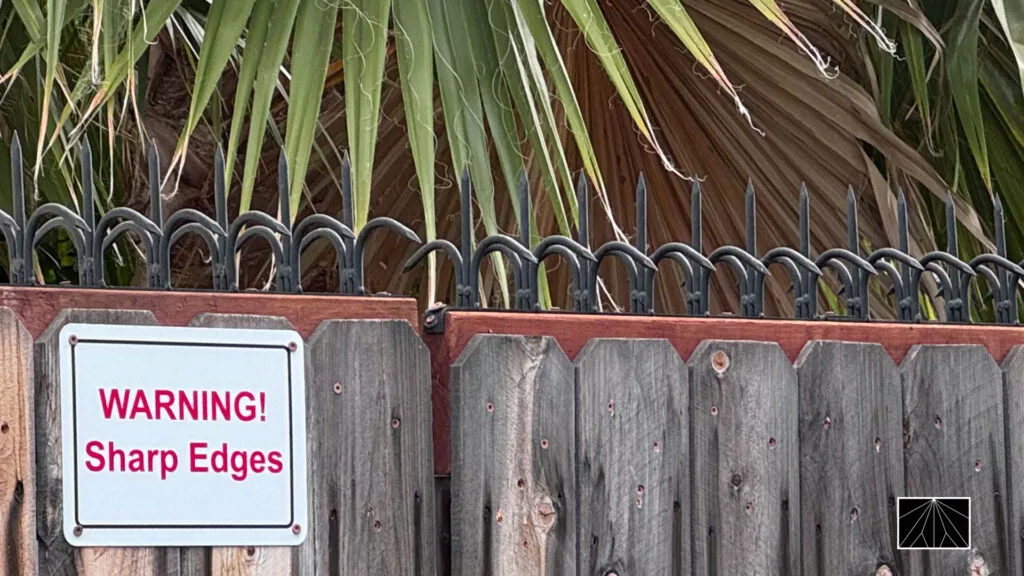
Lighting attacks the problem on two fronts. A sudden motion-activated light creates the sensation of being noticed, and it makes the intruder visible to neighbours and passers-by — manufacturing the very guardians the offender came to avoid. Anti-climb spikes work like that alarm sticker, but they cannot be faked or ignored: they are a permanent, visible declaration that this boundary will cost time and possibly injury to cross. When a sensor light catches sharp profiles gleaming along a wall top, the deterrent message is unmistakable, day or night. To understand why this visible signalling is so effective, see do anti-climb spikes work?
Height sets the bar; the top decides whether it holds. As a rule of thumb, a boundary of around 6 ft (1.8 m) is a basic deterrent, ~8 ft (2.4 m) is genuinely effective, and 12 ft or more enters high-security territory. But a flat top of any height offers a handhold — so the decisive detail is an outward-facing overhang of roughly 30–45 mm angled at 10–15°, which defeats the climb-over itself.
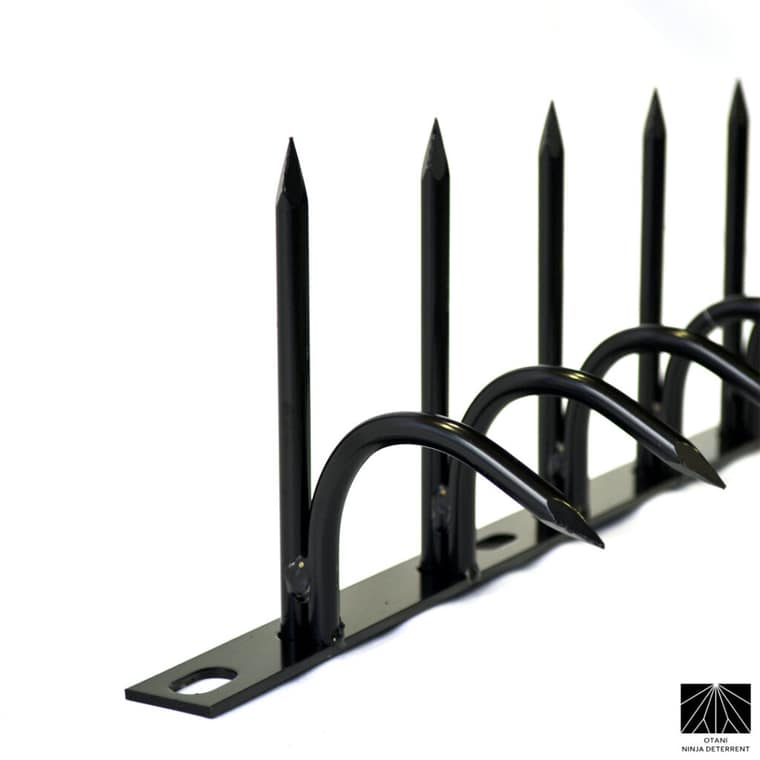
This is the single most overlooked point in residential security. A wall stops being a wall the moment its top becomes a foothold. Even an 1.8 m boundary is scaled in seconds if the coping is flat and broad. Anti-climb spikes — shinobi gaeshi — complete the barrier by removing the one move the climb depends on: getting a hand and then a leg over the top. The outward lean is essential; tips angled away from the property push the body's weight back, so there is no safe purchase at the very point an intruder is most committed and least balanced.
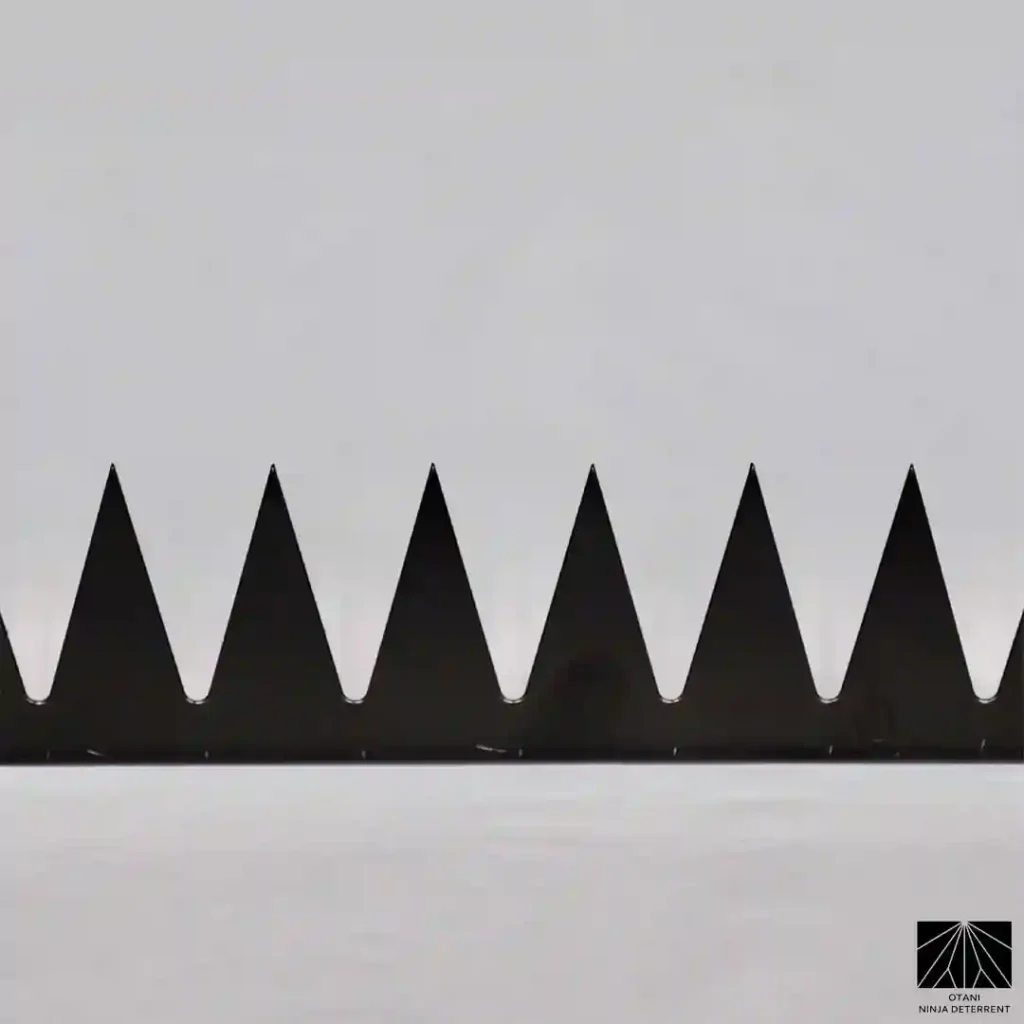
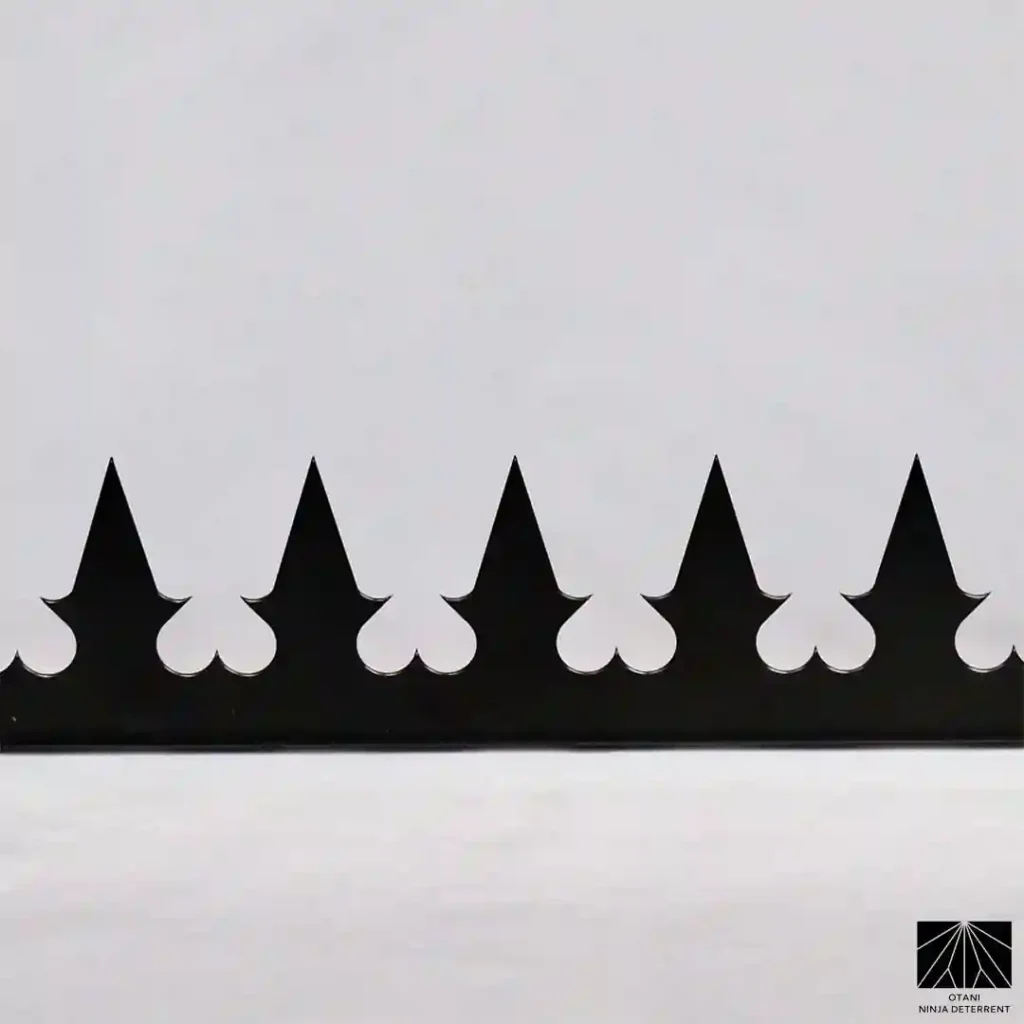
Choosing the profile is where security meets the rest of your home. The Classic series follows the traditional castle silhouette; the Gothic and Iris series read as decorative ironwork while functioning as a serious barrier; the Forest series blends into planting and garden boundaries; and the Modern series suits clean contemporary fencing. Where a run is non-standard, a custom order matches profile, material and finish to the architecture — because, as our beautiful security design philosophy explains, a well-kept, well-designed boundary is itself a territorial signal that someone here is paying attention.
Anything that says "no one is home right now." Accumulated post, daytime-drawn curtains, dark windows after dusk, overflowing bins and a permanently empty driveway all tell an offender they can work without interruption. Because intruders are typically inside only 8–12 minutes (FBI), they need confidence the house is empty before they start — and absence cues supply exactly that confidence.
This is the cheapest weakness to fix and the most commonly neglected. Light timers that mimic an evening routine, a neighbour collecting post, paused deliveries while you travel, and a car left on the drive all break the "empty" reading. CPTED calls the underlying principle maintenance: a tended, lived-in frontage signals active ownership, while peeling paint, dead bulbs and overgrowth signal neglect — and neglect, to an opportunist, reads as opportunity. None of this requires technology; it requires only that your home never broadcasts your absence.
Remove the cues, in layers, starting at the boundary. Apply CPTED's four principles — natural surveillance, natural access control, territorial reinforcement and maintenance — to your own frontage: open the front for sightlines, light the approaches, make the boundary genuinely uncrossable, and keep everything tidy. The first device an intruder meets is the perimeter, so harden it first.
Think of defence in three layers. The perimeter — walls and fences topped with anti-climb spikes, a self-closing gate, clear boundaries — is the layer that turns a target away before any other measure is tested. The exterior adds sensor lighting, security gravel and window locks. The interior holds alarms, safes and timed lighting. Each layer matters, but the perimeter is the cornerstone: if the boundary makes an opportunist give up at the wall, nothing behind it is ever challenged. Given that more than three-quarters of burglaries are opportunistic, hardening that first line is the most direct, lowest-maintenance investment you can make.
You cannot change the burglar. You can change your home into one they pass over. Explore the full Ninja Deterrent range and find a profile that protects your boundary while looking like it belongs there.
An easy target is a home that looks quick and low-risk to enter, not one that looks wealthy. The main cues are poor visibility from the street, no lighting after dark, a low or flat-topped boundary, and signs that nobody is home. More than three-quarters of burglaries are opportunistic, so these visible signals matter far more than whatever is actually inside.
Often, yes — and from a personal-security standpoint that is the intended result. Because most burglars are opportunists working against the clock, they relocate to an easier target rather than persist with a difficult one. This is called target displacement. It is also why you do not need a perfect, unbreakable defence; you only need to look like more effort than the alternatives nearby.
As a general guide, around 6 ft (1.8 m) provides a basic deterrent, roughly 8 ft (2.4 m) is genuinely effective, and 12 ft or more is high-security territory. Height alone is not enough, though. A flat top of any height gives a handhold, so the boundary should finish with an outward-leaning anti-climb profile that defeats the climb-over itself.
Their main value is deterrence and delay rather than absolute prevention. Burglars actively screen for risk before committing, and a visible physical barrier signals time, effort and possible injury — exactly the costs an opportunist wants to avoid. Combined with the speed at which most break-ins happen, that added friction is usually enough to make the offender choose somewhere else.
Yes. Darkness removes natural surveillance and lets an intruder approach unseen, so motion-activated lighting is one of the most cost-effective deterrents available. A sudden light creates the feeling of being noticed and makes the intruder visible to neighbours. Lighting also illuminates any anti-climb spikes on the boundary, amplifying their visual deterrent effect after dark.
Stop broadcasting your absence. Light timers, paused deliveries, collected post and a tidy, lived-in frontage cost almost nothing yet remove one of the strongest target signals — the empty house. Pair that with trimming hedges for better street visibility, and you have addressed several of the main cues without any major expenditure.

Written by
Kojiro OtaniFounder of Saitani-Ya Co., Ltd. and creator of the Ninja Deterrent® brand. Drawing on Japan's tradition of shinobi-gaeshi, he designs and manufactures anti-climb security spikes that pair real deterrence with architectural beauty — writing from first-hand experience in their engineering, production, and real-world installation.
Jul 22, 2026
See anti-climb fencing installed across Los Angeles — Venice alleys, Laurel Canyon hillsides, Hollywood stucco coping, Santa Monica glass. Real LA jobs.
Jul 12, 2026
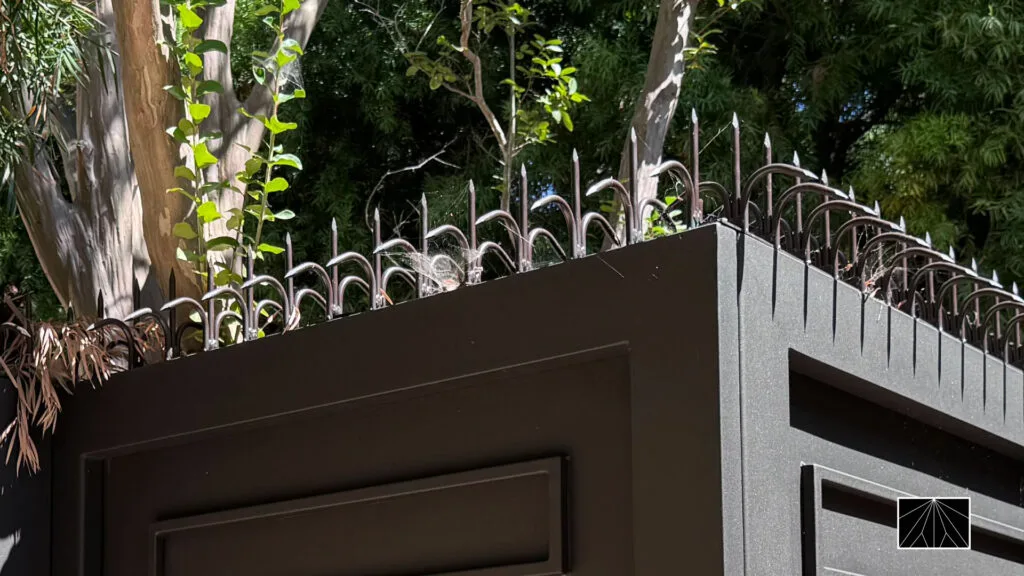
Explore anti-climb spikes for walls and fences. Compare types, materials, and aesthetics to find the best security solution, featuring premium options like Ninja Deterrent.
Jul 11, 2026
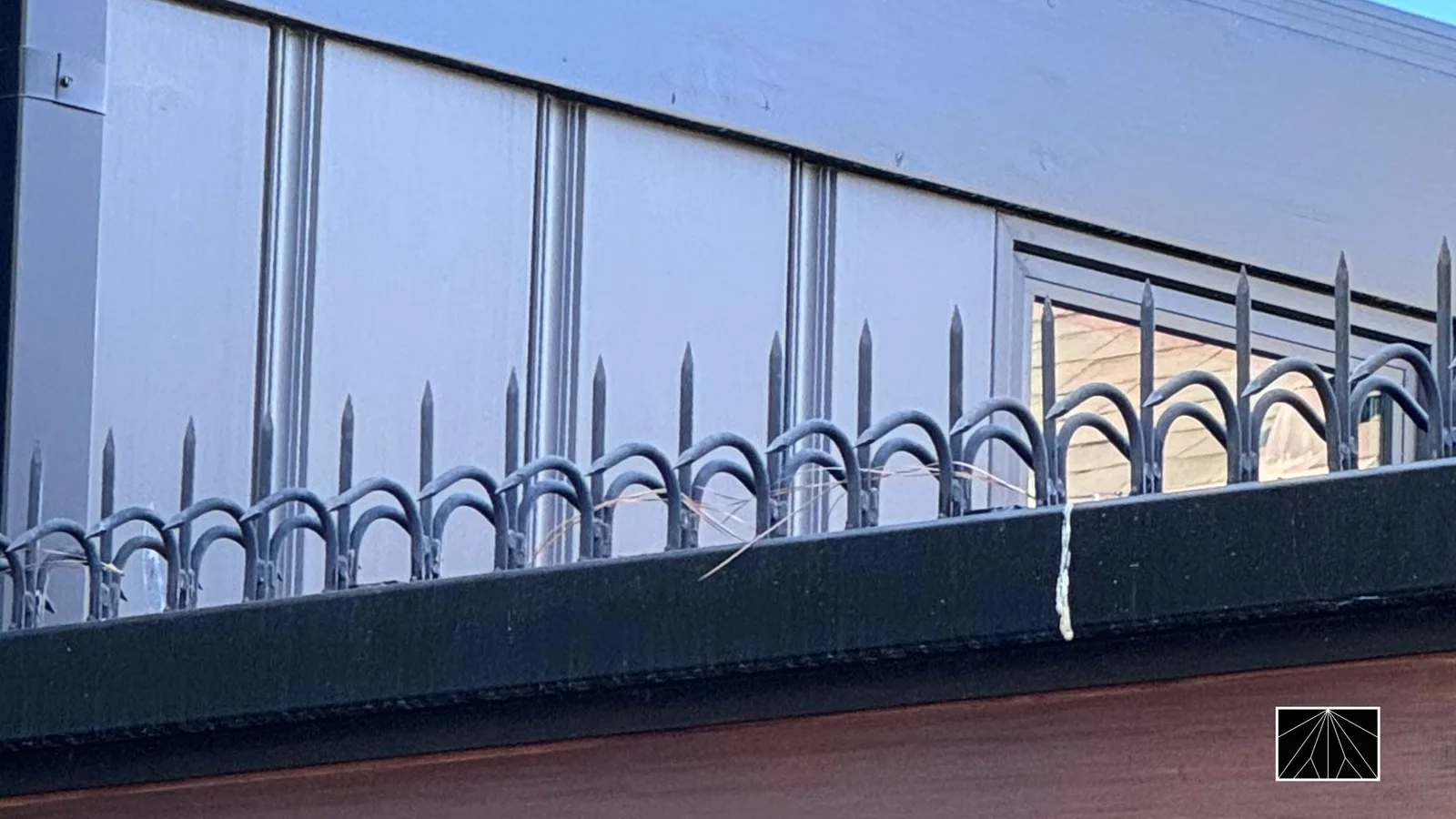
Discover how visible anti-climb deterrents, like Ninja Deterrent's architectural spikes, enhance home security beyond alarms. Learn their role in preventing burglaries.
Choose a series and a wall, then place it life-size in your own space with AR — before you order.

Choose a series and a wall, then place it life-size in your own space with AR — before you order.
Our standard series not quite right? We design and manufacture fully custom anti-climb systems tailored to your exact specifications — unique profiles, dimensions, materials, and finishes.
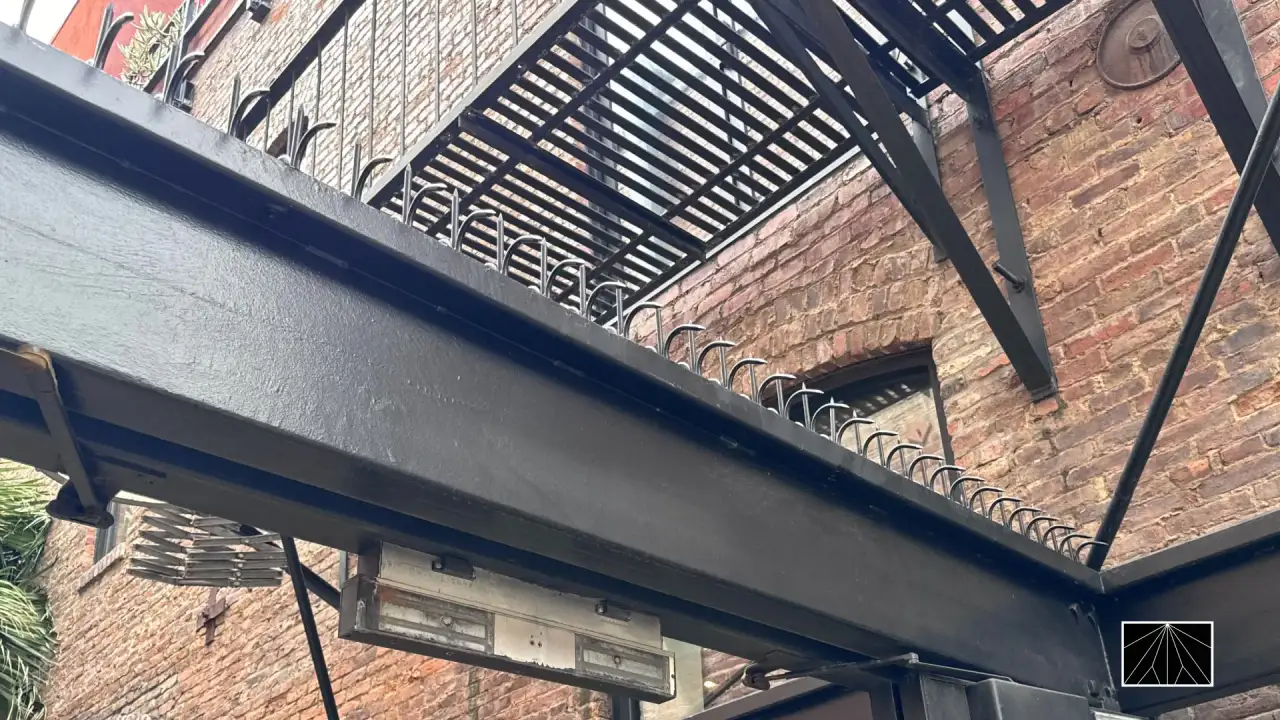
For general inquiries about our products or consultation regarding installation, please contact us.
Schedule a free online consultation with our team. Pick a time that works for you — available slots are shown in your local time zone.