Jul 22, 2026
Anti-Climb Fencing in Los Angeles: Installed Case Studies
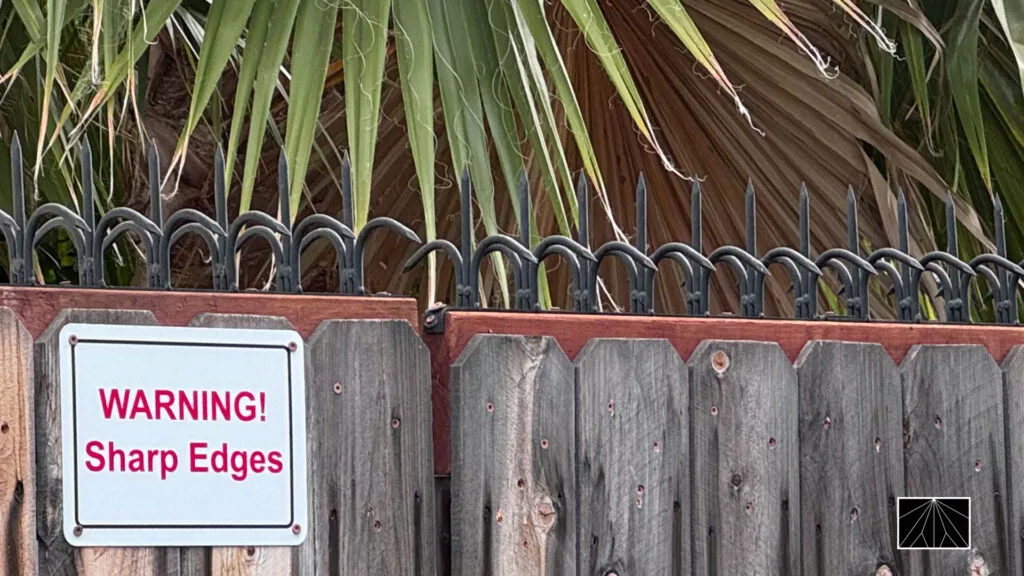
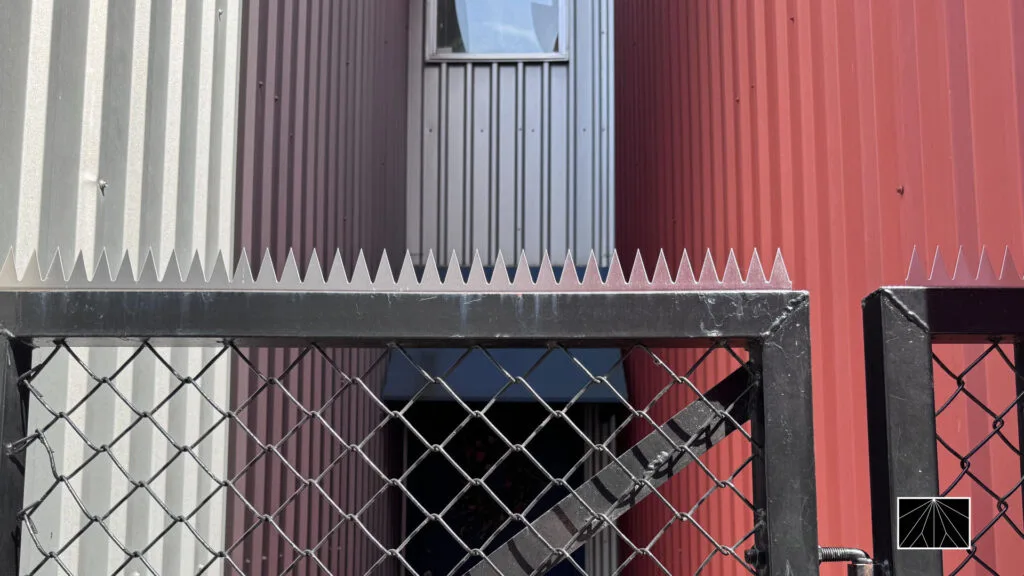
See anti-climb fencing installed across Los Angeles — Venice alleys, Laurel Canyon hillsides, Hollywood stucco coping, Santa Monica glass. Real LA jobs.
Column
TL;DR
- National Police Agency (NPA) data show detached houses absorb ~40% of residential burglaries — the highest-risk building type.
- ~55% of detached-house intrusions come through windows, and wall-climbing is the precursor route, so perimeter defence is the priority.
- Shinobi gaeshi are a one-off purchase (~150,000 yen) costing ~15,000 yen/year over a 10+ year life — far cheaper than monitored security at 3,000-6,000 yen/month.
- Burglars are rational and mostly opportunistic, so a visible physical barrier shifts their cost-benefit sum and pushes them towards an easier target.
When you plan security measures, data-driven decisions beat feelings and impressions. This article analyses the reality of burglary in Japan using the National Police Agency's crime statistics, and evaluates the cost-effectiveness of shinobi gaeshi against the numbers already on the record.
Residential burglary has fallen sharply — from roughly 340,000 reported cases in 2003 to around 30,000 a year recently (NPA). But the threat is concentrating, not vanishing: the clearance rate sits near 50%, unreported "dark figure" cases are excluded from the totals, and the average damage per case is rising. Lower numbers are no reason for complacency.
Detached houses are the dominant target, accounting for roughly 40% of cases in NPA figures — far more than any apartment category. Detached homes offer more intrusion routes and make it easier for an outsider to judge when residents are away, which is exactly why perimeter defence matters most for houses.
| Building Type | Share of Total |
|---|---|
| Detached houses | ~40% |
| Apartments (3 floors or below) | ~10% |
| Apartments (4 floors and above) | ~5% |
| Offices | ~15% |
| Retail shops | ~12% |
| Other | ~18% |
It's clear that detached houses are the primary target. Compared to apartment buildings, detached houses offer more intrusion routes and make it easier for outsiders to determine when residents are away. If this describes your home, our easy-target-homes guide explains why "ease of entry" — not wealth — drives target selection.
In detached houses, windows are the single biggest entry point at about 55% (NPA), followed by front doors (~18%), side/rear doors (~15%) and wall-climbing or roof routes (~12%). The catch: many window break-ins begin with climbing a wall or fence to reach a less-visible rear window, so window locks alone leave a gap.
| Entry Point | Percentage |
|---|---|
| Windows | ~55% |
| Front entrance (main door) | ~18% |
| Other entrances (side/rear doors) | ~15% |
| Other (wall climbing, via roof, etc.) | ~12% |
Window entry accounts for the majority, but the wall-climbing routes included in "other" deserve attention. Many burglars avoid the front entrance, instead climbing over walls or fences to reach the rear of the building and enter through less visible windows or side doors. In other words, even window intrusions often involve wall climbing as a preliminary step — the case for stopping the climb is set out in our wall-and-fence security spikes guide.
In apartments the picture shifts: the front door dominates at ~45%, with windows ~35% and balconies ~15%.
| Entry Point | Percentage |
|---|---|
| Front entrance (main door) | ~45% |
| Windows | ~35% |
| Balconies | ~15% |
| Other | ~5% |
In apartments, front door entry is most common, but balcony intrusions are frequent on lower floors. The 1st and 2nd floors have a risk profile similar to detached houses.
The leading method is no method at all — about 45% of intrusions are through doors or windows left unlocked (NPA). Glass-breaking (~25%) and lock-picking (~10%) account for most of the rest, which means a turned lock still leaves roughly a third of forced-entry techniques in play. A lock is necessary, not sufficient.
| Entry Method | Percentage |
|---|---|
| Unlocked doors/windows | ~45% |
| Glass breaking | ~25% |
| Lock picking | ~10% |
| Door lock forcing | ~8% |
| Other | ~12% |
The leading entry method is "unlocked" — meaning doors or windows were simply left unlocked, accounting for nearly half of all cases. This reflects the complacency of thinking "I'm just stepping out briefly." Yet even when locked, glass breaking and lock picking account for approximately 35% of entries. "Having the lock on" doesn't equal "being safe."
Most residential burglaries happen in daylight, not at night. NPA data put the 12:00-16:00 window at the ~30% peak and 8:00-12:00 at ~25% — burglars target empty homes after commuters leave. This is precisely why a passive, always-on barrier beats measures that only work when someone is home and watching.
| Time Period | Percentage | Characteristics |
|---|---|---|
| 8:00-12:00 | ~25% | Targeting empty homes after commuters leave |
| 12:00-16:00 | ~30% | Peak daytime period |
| 16:00-20:00 | ~15% | Before residents return |
| 20:00-24:00 | ~15% | Pre-sleep to post-sleep |
| 0:00-8:00 | ~15% | Late night to early morning |
Surprisingly, residential burglary is most frequent during daytime (8:00-16:00). Targeting empty homes ("akisu" break-ins) is the dominant pattern — a rational behavioural strategy that avoids encountering residents. Meanwhile, nighttime intrusions (20:00-8:00) account for approximately 30%, consisting of "shinobikomi" (sneaking in while residents sleep) and "iaki" (entering while residents are home but in another room).
Yes. On the article's own figures, a one-off ~150,000 yen installation against ~750,000 yen average damage returns roughly 400% from preventing a single break-in. Spread over a 10+ year life that is ~15,000 yen a year — about 1,250 yen a month, well below monitored security at 3,000-6,000 yen a month, with no power or connectivity needed.
Average damage from a residential burglary is estimated as follows:
| Loss Type | Typical Amount |
|---|---|
| Cash losses | Average 200,000-500,000 yen |
| Jewellery and goods | Average 100,000-300,000 yen |
| Building damage (windows, doors, etc.) | Repair costs 100,000-300,000 yen |
| Psychological damage | Difficult to quantify (PTSD, relocation costs, etc.) |
| Total (monetary damage only) | Approximately 500,000-1,000,000 yen |
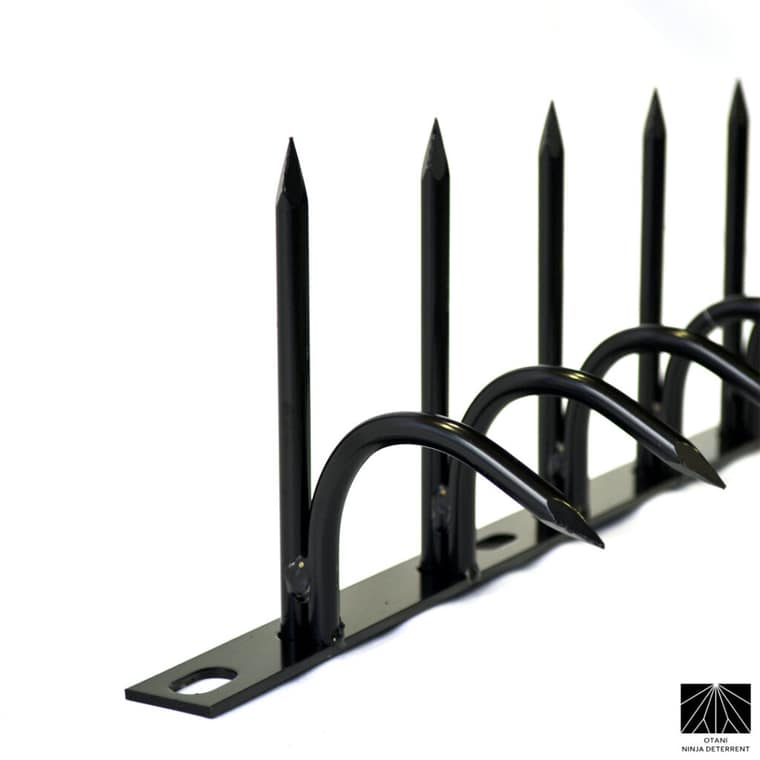
Taking Ninja Deterrent products as an example:
Assuming shinobi gaeshi installation costs 150,000 yen and average burglary damage is 750,000 yen:
That's approximately 1,250 yen per month — significantly less than typical home security service monthly fees (3,000-6,000 yen). The clearest way to see the value is to compare a one-off passive barrier with a recurring subscription:
| Shinobi gaeshi (passive barrier) | Monitored security service | |
|---|---|---|
| Payment type | One-off purchase | Recurring subscription |
| Cost | ~150,000 yen up front (~15,000 yen/year over 10+ years; ~1,250 yen/month) | 3,000-6,000 yen/month |
| Power / connectivity | None required | Required |
| Failure risk | Virtually zero | Depends on power and comms |
| Protects an empty daytime home | Always, automatically | Only while powered and connected |
Moreover, shinobi gaeshi require no power, no connectivity, and have virtually zero failure risk. For more on whether spikes genuinely stop a determined climber, see do anti-climb spikes work.
Suburban detached houses are statistically the highest-risk category. Residents commute and leave the home empty by day, houses sit farther apart, and walls or fences are common but usually carry nothing on top — making a climb-over easy. Dense urban areas benefit from natural surveillance; regional cities see fewer cases but higher average damage per incident.
Suburban detached houses are statistically the highest-risk category. Residents commute, leaving homes empty during the day, and even when surrounded by walls or fences, the lack of security measures on top makes climbing over easy.
Four conclusions stand out: detached houses face the greatest risk; wall-climbing is a precursor to many intrusions; physical barriers are the most cost-effective layer; and daytime empty homes are the prime target. Together they point to a one-off, always-on perimeter barrier as the most rational first investment a homeowner can make.
This squares with international research on offender behaviour: more than 75% of burglars act opportunistically rather than meticulously planning, and around 60% will move to a different target when a deterrent such as an alarm is present (UNC Charlotte; Kuhns et al., 2012). The FBI likewise notes that entry typically takes under a minute and the average burglar stays only 8-12 minutes — so anything that adds friction at the boundary changes the calculation. A visible barrier that says "this one will take too long" does most of its work before a hand is laid on the wall.
When you base security decisions on data rather than intuition, shinobi gaeshi emerge as one of the most rational investments. Once installed, they continuously transform your home into one that's "not worth targeting" — for over 10 years, requiring no power, no connectivity, and no human intervention.
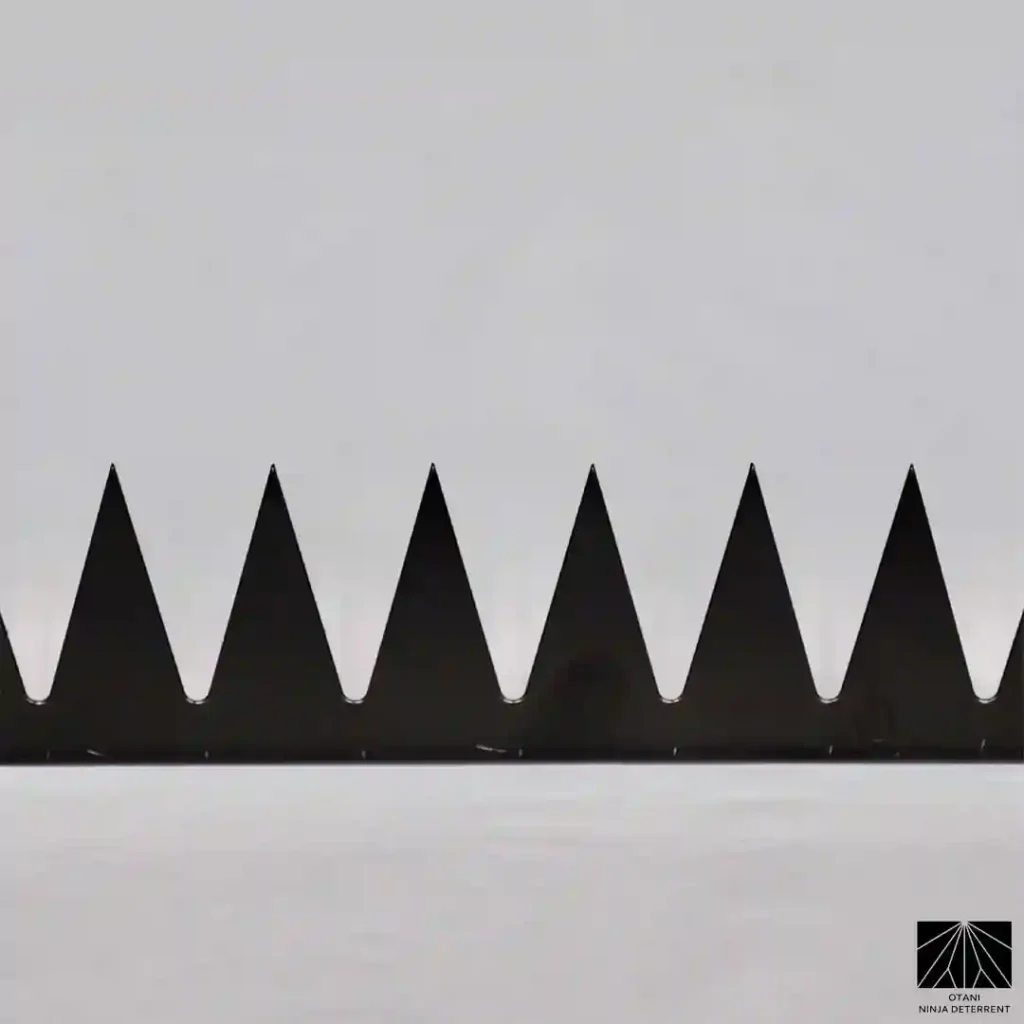
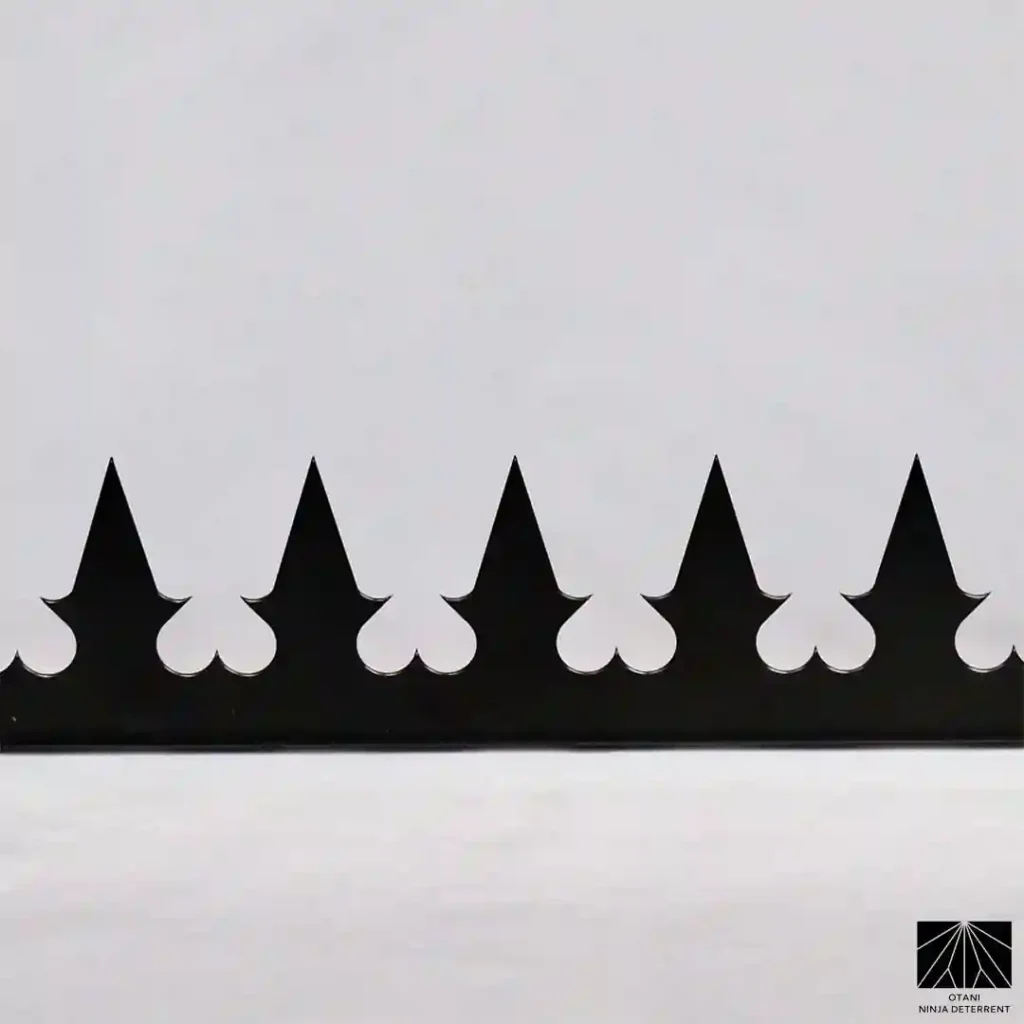
Ready to harden your perimeter? Match a decorative profile to your property — the traditional Classic series, the clean-lined Modern series, or the ornamental Gothic series — or request a bespoke run sized to your exact 30-50m perimeter via custom order.
Yes. National Police Agency figures put detached houses at roughly 40% of residential burglary targets, far above any apartment category. Detached homes offer more potential entry routes and make it easier for an outsider to tell when the family is out. This is why perimeter measures matter most for houses rather than upper-floor flats.
On the figures in this article, a 150,000 yen installation against an average 750,000 yen loss returns about 400% if it prevents a single break-in. Spread over a 10+ year service life, that is roughly 15,000 yen a year, or about 1,250 yen a month. Because they need no power, connectivity or subscription, the running cost after purchase is effectively zero.
Because the two are linked. About 55% of detached-house intrusions are via windows, but burglars frequently climb a wall or fence first to reach a hidden rear or side window out of public view. Stopping the climb at the boundary therefore also protects the windows behind it. Perimeter defence and window security work together, not in competition.
Most simply move on. Research finds more than 75% of burglars act opportunistically, and around 60% choose a different target when a deterrent is present (UNC Charlotte; Kuhns et al., 2012). Since a burglar weighs time and risk against reward, a visible barrier that threatens injury and delay usually fails the test before any attempt is made. From a household's point of view, that displacement is exactly the goal.
Over time, yes. A monitored security service typically costs 3,000-6,000 yen every month indefinitely, whereas shinobi gaeshi are a one-off purchase that works out to roughly 1,250 yen a month across a decade-plus lifespan. The two are complementary rather than mutually exclusive, but the passive barrier carries no recurring fee, no power draw and no failure risk.
Very little. Stainless steel models are virtually maintenance-free and are designed to last 10+ years, needing only occasional inspection for rust, looseness or trapped debris. They use no electricity and no network connection, so they keep working during power cuts and while the house sits empty during the day. That always-on reliability is a large part of their cost-effectiveness.

Written by
Kojiro OtaniFounder of Saitani-Ya Co., Ltd. and creator of the Ninja Deterrent® brand. Drawing on Japan's tradition of shinobi-gaeshi, he designs and manufactures anti-climb security spikes that pair real deterrence with architectural beauty — writing from first-hand experience in their engineering, production, and real-world installation.
Jul 22, 2026
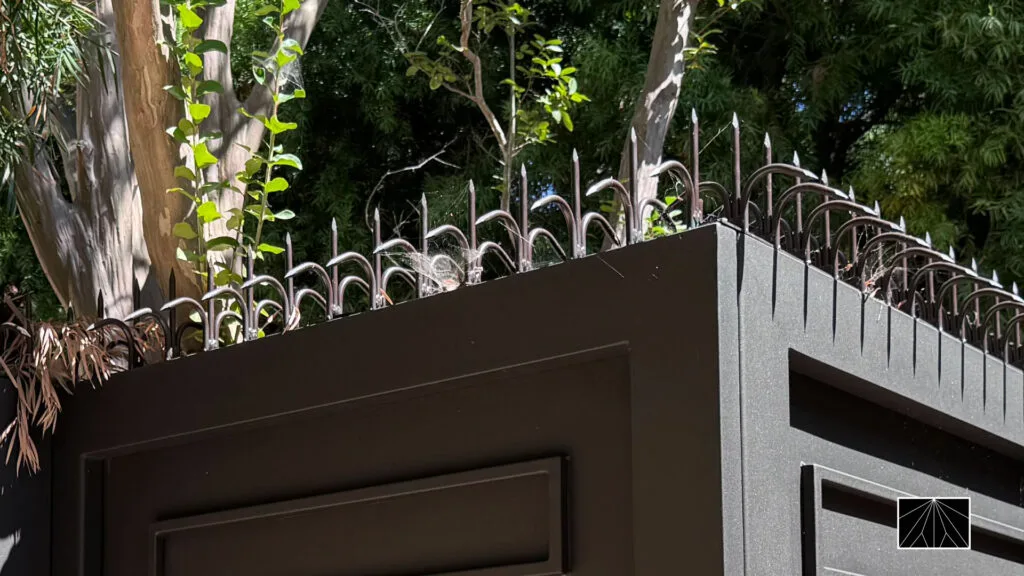
See anti-climb fencing installed across Los Angeles — Venice alleys, Laurel Canyon hillsides, Hollywood stucco coping, Santa Monica glass. Real LA jobs.
Jul 12, 2026
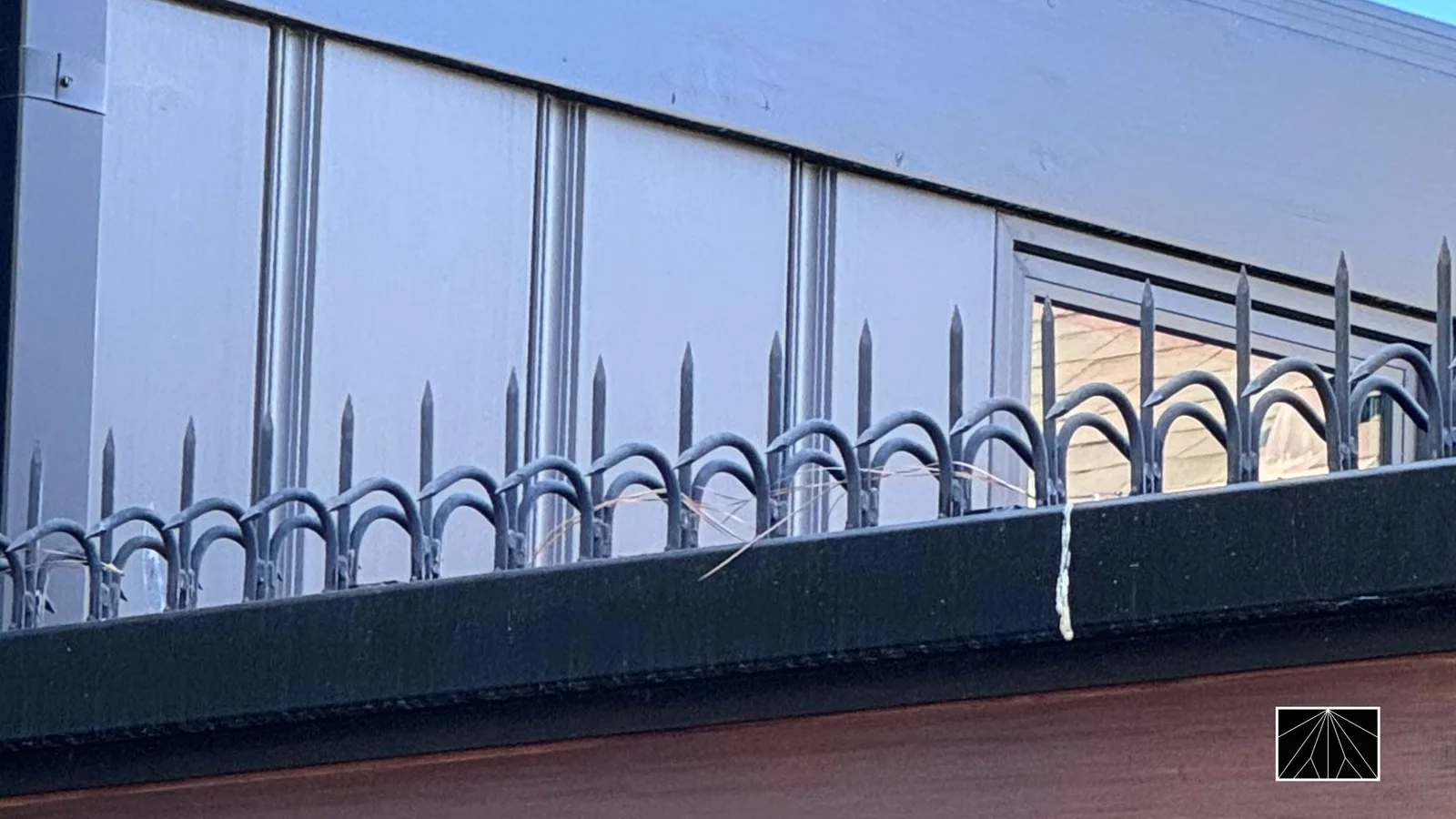
Explore anti-climb spikes for walls and fences. Compare types, materials, and aesthetics to find the best security solution, featuring premium options like Ninja Deterrent.
Jul 11, 2026
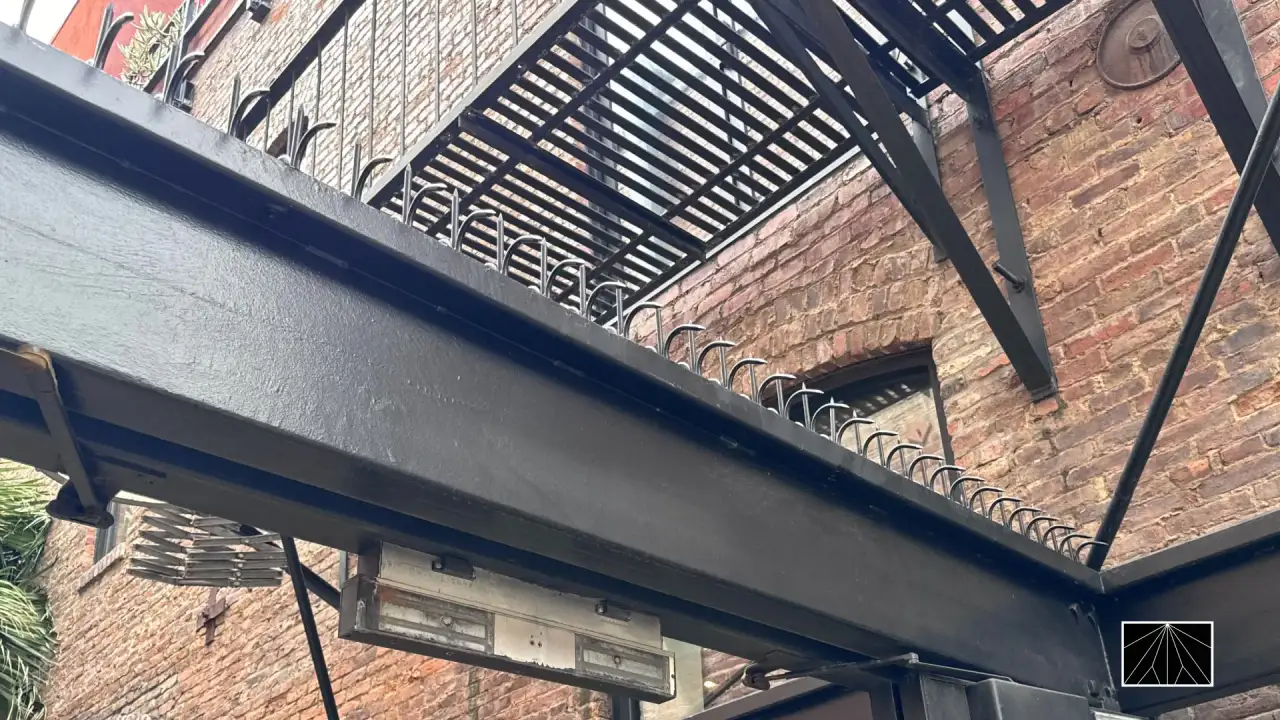
Discover how visible anti-climb deterrents, like Ninja Deterrent's architectural spikes, enhance home security beyond alarms. Learn their role in preventing burglaries.
Choose a series and a wall, then place it life-size in your own space with AR — before you order.

Choose a series and a wall, then place it life-size in your own space with AR — before you order.
Our standard series not quite right? We design and manufacture fully custom anti-climb systems tailored to your exact specifications — unique profiles, dimensions, materials, and finishes.
For general inquiries about our products or consultation regarding installation, please contact us.
Schedule a free online consultation with our team. Pick a time that works for you — available slots are shown in your local time zone.