Jul 22, 2026
Anti-Climb Fencing in Los Angeles: Installed Case Studies
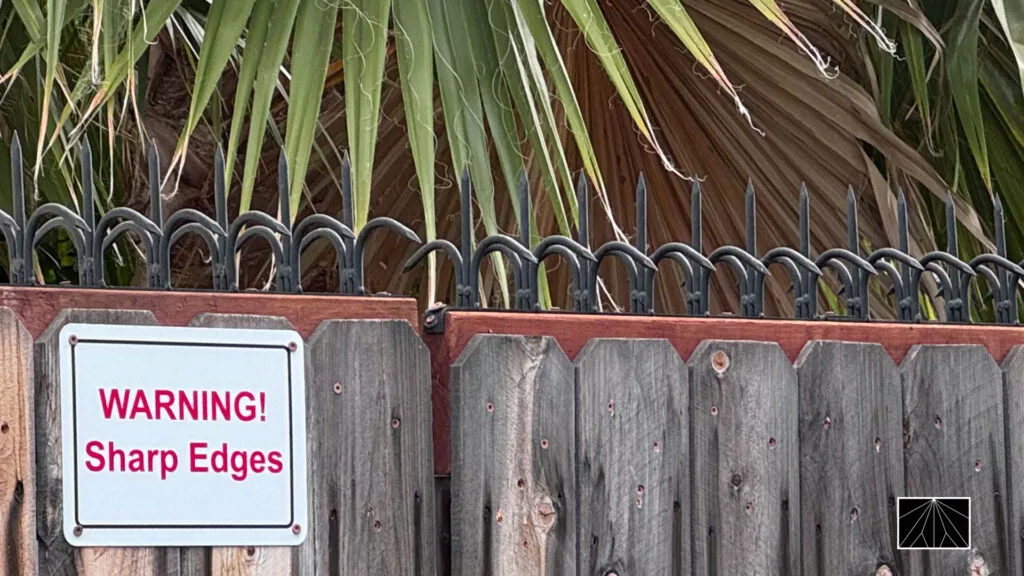
See anti-climb fencing installed across Los Angeles — Venice alleys, Laurel Canyon hillsides, Hollywood stucco coping, Santa Monica glass. Real LA jobs.
Column
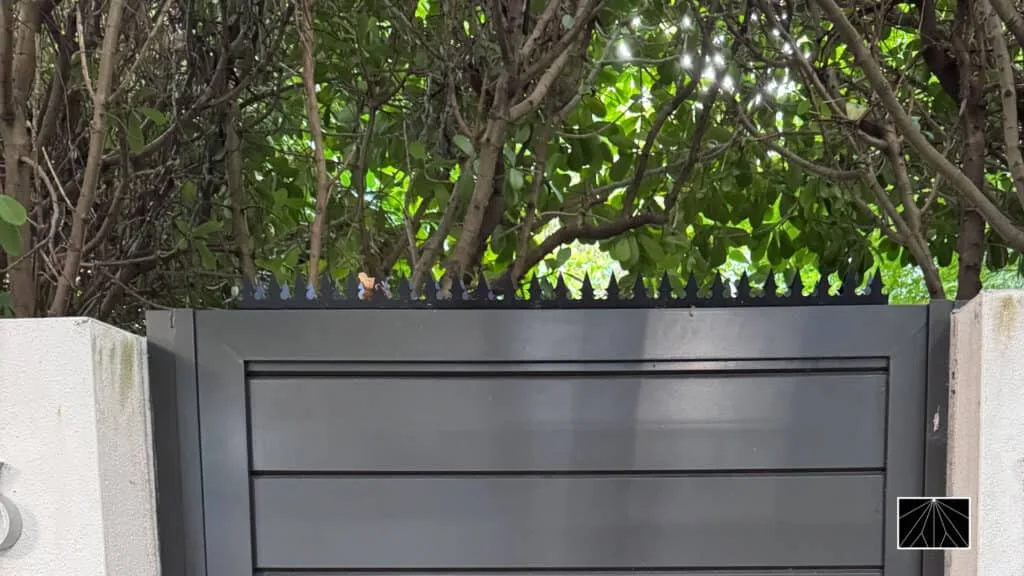
- Lighting and anti-climb spikes are complementary security layers: light removes the cover of darkness, spikes remove the climb.
- Improved street lighting cuts crime by around 20% on average (Welsh & Farrington meta-analysis, Campbell Collaboration).
- Burglars are overwhelmingly opportunists — over 75% — and 83% check for an alarm before acting (Kuhns et al., UNC Charlotte, 2012).
- The winning approach is layered: lighting restores natural surveillance, while a physical barrier removes the route over the wall.
Ninja carried out their missions almost exclusively at night — not because they were nocturnal, but because darkness automatically delivers a criminal's greatest ally: the absence of anyone watching. Centuries later the tactic is unchanged. Modern intruders do not scale floodlit, overlooked walls; they exploit the unlit blind spot. Understanding why darkness works for an intruder is the first step to designing it out, and to seeing why lighting and physical barriers belong together.
Yes — but as one layer, not a complete defence. Systematic reviews of improved street lighting find it reduces crime by roughly 20% on average (Welsh & Farrington, Campbell Collaboration). Lighting works by restoring "natural surveillance" — it makes an intruder feel seen. Pair it with a physical barrier and the deterrent effect compounds rather than overlaps.
The mechanism matters more than the brightness. In Crime Prevention Through Environmental Design (CPTED), natural surveillance is the principle that people behave better when they believe they can be observed. Darkness removes that surveillance; light restores it. This is why the same 20% figure holds across very different neighbourhoods — the effect is psychological, not merely optical. A well-lit boundary tells an opportunist that this is a property where they could be noticed, and most intruders respond to exactly that signal. As we explain in do anti-climb spikes work, perceived risk is the lever that decides whether a property is approached at all.
Ninja chose darkness because it neutralises the eyes and ears of guardians. The classic manual Bansenshukai details which moonless, rainy and windy nights best restricted visibility and hearing. Every famous ninja technique — dark clothing, silenced footsteps, crawling, freezing in place — served one goal: evading the gaze of a watcher.
The wardrobe alone is revealing. Ninja favoured navy blue and persimmon-dyed brown over pure black, because true black throws a hard silhouette under moonlight. They silenced their tabi, crawled below the line of sight, and froze into the terrain when discovery loomed. Read together, these are not mystical arts but a disciplined system for defeating natural surveillance. The modern intruder uses the same playbook with cheaper tools: approaching from the dark side of a house, keeping low, and avoiding the overlooked front. The countermeasure is the same one a feudal castle relied upon — deny the cover of darkness, then deny the route over the wall.
Darkness removes natural surveillance, the third pillar of crime opportunity alongside a motivated offender and a suitable target. Most break-ins are unplanned: over 75% of burglars are opportunists who act on a target of convenience rather than a long-studied plan (Kuhns et al., UNC Charlotte, 2012). An unlit boundary is precisely such a convenience.
The same research shows how risk-averse these opportunists really are. Some 83% check for an alarm before attempting entry, and around 60% will choose a different target if an alarm is present (Kuhns et al., 2012). In other words, the typical intruder is not hunting for a fight — they are scanning for any signal that the odds have tilted against them, and they leave when they find one. Darkness suppresses those signals; lighting reinstates them. Speed compounds the problem: the FBI notes that entry itself usually takes under a minute, after which intruders stay only eight to twelve minutes. If the property never forced a pause at the boundary, the decisive moment is already lost. A lit, spiked perimeter reintroduces that pause exactly where it counts.
You need all three, because each controls a different stage of an intrusion and none is sufficient alone. Lighting governs visibility, a physical barrier governs access, and cameras govern detection. Layering them means an intruder must defeat exposure, the climb and the record simultaneously — a far higher bar than beating any single measure.
| Security layer | What it controls | Strength | Limitation |
|---|---|---|---|
| Lighting (natural surveillance) | Removes darkness; exposes the intruder | Inexpensive, deters opportunists, reveals the barrier behind it | Does not physically stop a climb |
| Anti-climb spikes (access control) | Removes the wall or fence as a route | Works in any light, 24/7, needs no power | Most effective when clearly visible |
| Cameras and alarms (detection) | Record activity and signal risk | Raise the perceived risk of capture | Largely reactive; evidence arrives after the event |
Read this way, lighting and wall and fence security spikes are not alternatives competing for the same budget — they are partners. One removes the cover of darkness; the other removes the climb. Cameras then capture whatever remains. The cheapest meaningful upgrade for most homes is to make sure the first two layers reinforce each other along the same boundary line.
Motion-sensor lights stop a climb less by brightness than by surprise and exposure. A sudden burst of light blinds eyes adapted to the dark, signals "someone has noticed me," and makes the intruder visible to neighbours and passers-by. In CPTED terms, the sensor manufactures an instant guardian where, a second earlier, there was none.
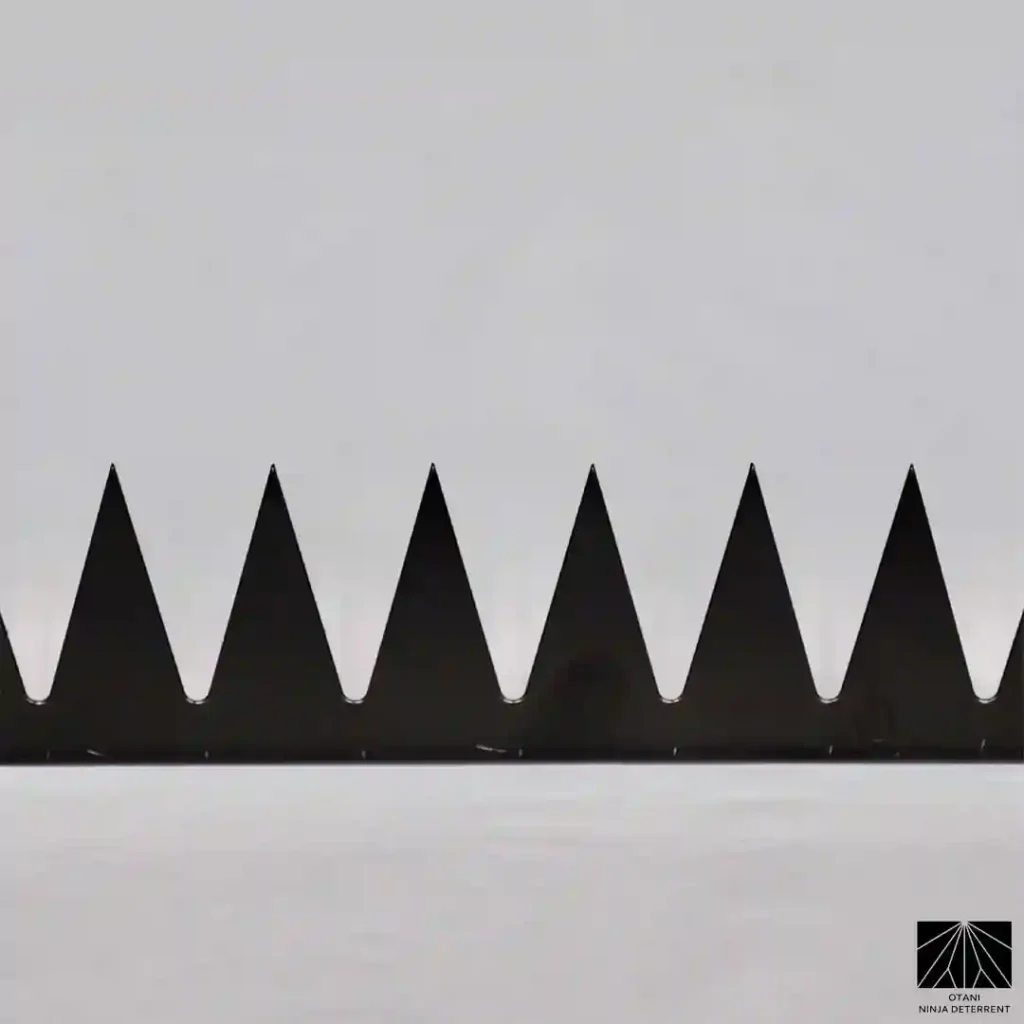
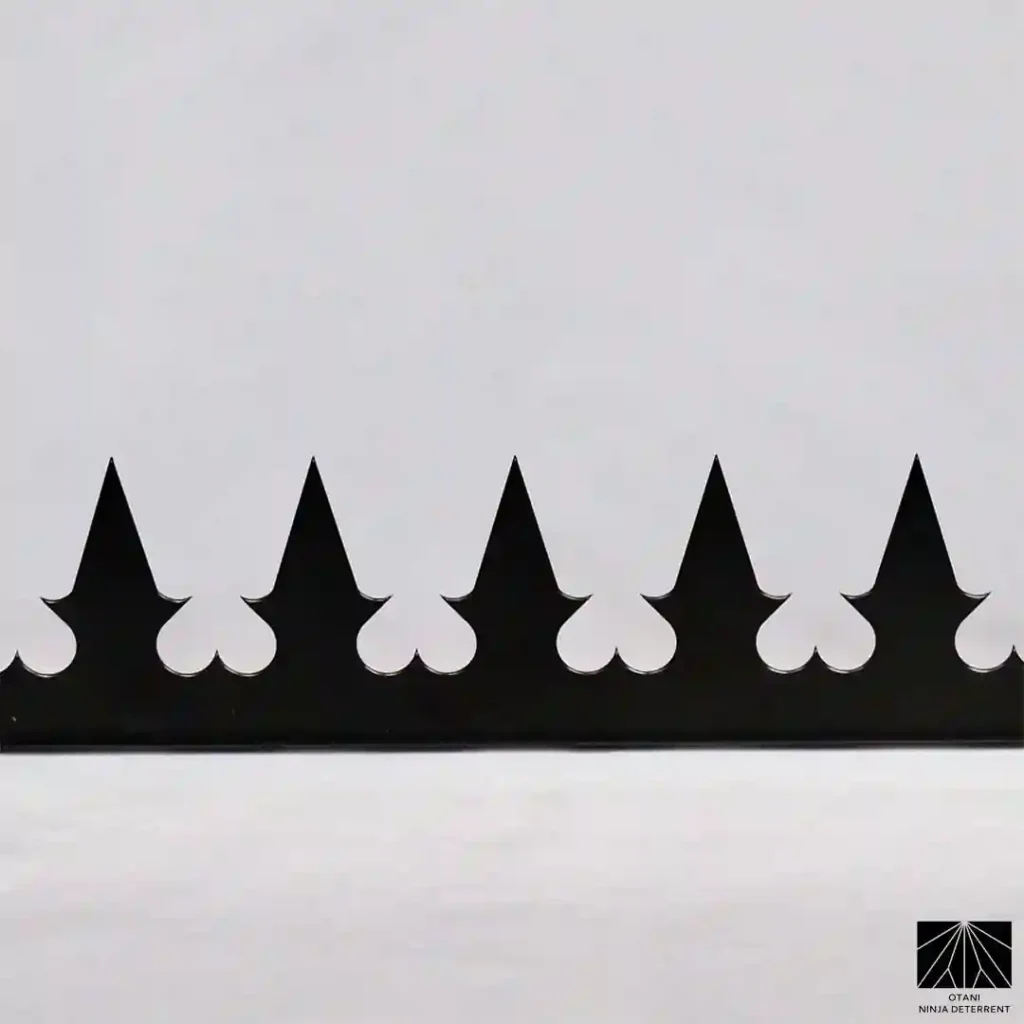
Three psychological effects do the work. First, sudden illumination triggers momentary blindness and panic — historical accounts record that ninja feared an unexpected torch above almost any other countermeasure. Second, activation creates the illusion of being discovered; the intruder cannot know that only a sensor, not a person, has reacted. Third, the light turns a private act into a public one. A fourth benefit is specific to a spiked boundary: the light reveals the barrier. In darkness an intruder may not register the spikes at all, but the instant a sensor fires and sharp tips gleam along the wall, the deterrent becomes undeniable. A Gothic crest throwing long shadows, or the clean glint of a Modern line, communicates "do not climb here" without a word of warning.
Place lighting to illuminate the boundary line itself, not just the garden, so the barrier and any approach to it are both lit. Aim for sensor coverage that triggers before contact, even illumination along the fence top, and angles that let the spikes cast moving shadows. The goal is a perimeter that lights up the moment it is approached.
In practice, position sensor lights every two to three metres along walls and fences fitted with spikes, and set the beam so the tips throw shadows — movement in those shadows amplifies the visual impact. Provide a usable level of light at the fence surface (a modern LED unit reaches full brightness instantly and sips power), and set the detection zone two to three metres beyond the boundary so the light fires before an intruder reaches it. Keep the active duration to roughly thirty to sixty seconds; longer simply creates light pollution and dulls the "someone noticed" effect. Crucially, light the dark sides — the rear and flank approaches an opportunist actually prefers — rather than over-lighting the already-overlooked front. For unusual runs, returns or gateposts where standard brackets will not sit cleanly, a custom order lets the spike line follow the lit boundary exactly.
Because they remove different conditions for crime at the same time. Lighting eliminates the absence of guardians by restoring natural surveillance; spikes convert a suitable target into an unsuitable one by removing the climb. Used together they strip away two of the three conditions an intruder needs, which is far stronger than doubling down on either alone.
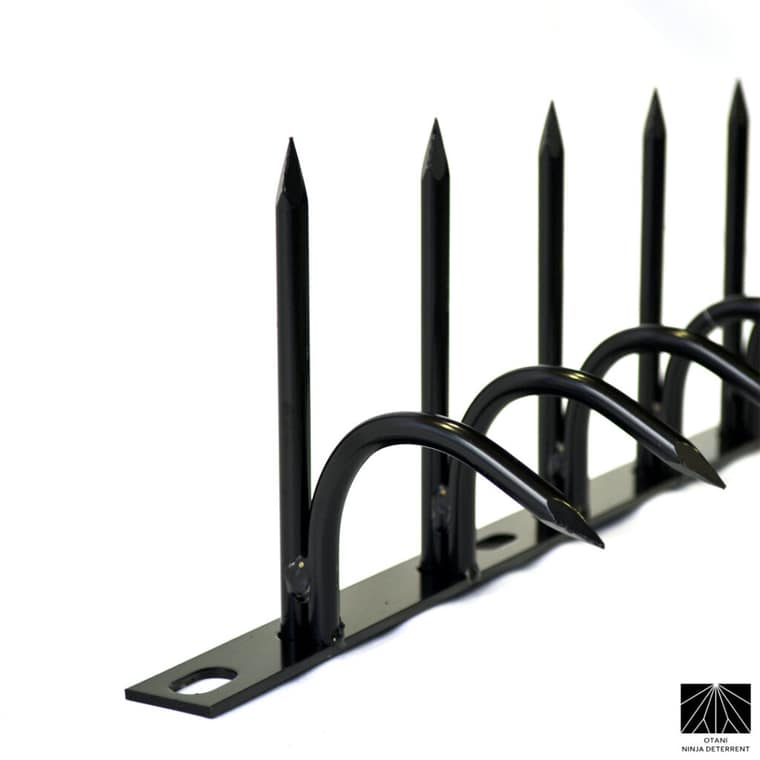
This is the layered logic feudal castles already understood: torches denied the cover of darkness while shinobi gaeshi denied the route over the wall. Today the tools are LEDs and engineered spikes, but the principle is unchanged. The synergy is also aesthetic. A boundary that is hostile to climbers need not be hostile to look at — the point we make in our beautiful security design philosophy. A timeless Classic run, a naturalistic Forest profile or a refined Iris crest reads as considered architecture by day and reveals its teeth under a sensor light by night.
If you are planning a perimeter, treat lighting and spikes as a single brief rather than two purchases. Map the dark approaches first, light them so the boundary is exposed, then let a visible, well-made spike line remove the climb. Explore the Classic, Modern, Gothic, Forest and Iris series to find a profile that suits your wall — or start a custom order if your boundary needs something made to fit.
No. Improved lighting reduces crime by around 20% on average (Welsh & Farrington, Campbell Collaboration), but it works by raising the perception of being watched rather than by physically blocking entry. An intruder who is willing to be seen can still climb an unprotected wall. Lighting is most effective as one layer alongside a physical barrier and, where possible, cameras or an alarm.
A light that is always on becomes part of the background, while a light that snaps on in response to movement signals change — and change reads as "someone has noticed me." That sudden activation also briefly blinds eyes adapted to darkness and draws the attention of neighbours. Sensor lights additionally save energy and reduce light pollution, making them easier to live with on a residential boundary.
Yes. Spikes provide physical access control around the clock and need no power, so they function in full darkness. The limitation is that an intruder may not notice them until they are already committed to a climb. Adding lighting makes the barrier visible from a distance, which converts a physical deterrent into a psychological one as well.
Concentrate on the dark, less-overlooked approaches — typically the rear and side boundaries — rather than the front, which is usually already visible from the street. Position sensor lights to illuminate the boundary line and any path leading to it, and set the detection zone so the light triggers before an intruder reaches the wall. This is also where anti-climb spikes do their most important work.
It does not have to. A well-designed spike line reads as decorative ironwork by day, and sensor lighting only reveals its function for the brief moment it is needed. Choosing a profile that suits your architecture — from a restrained Modern line to an ornate Gothic crest — keeps the boundary attractive while still removing the climb.
Very quickly. The FBI notes that entry itself usually takes under a minute, with intruders remaining only eight to twelve minutes inside. Because there is so little margin, the decisive moment is at the boundary, not the front door. A perimeter that forces a pause — by exposing the intruder under light and denying an easy climb — disrupts that timeline before it begins.

Written by
Kojiro OtaniFounder of Saitani-Ya Co., Ltd. and creator of the Ninja Deterrent® brand. Drawing on Japan's tradition of shinobi-gaeshi, he designs and manufactures anti-climb security spikes that pair real deterrence with architectural beauty — writing from first-hand experience in their engineering, production, and real-world installation.
Jul 22, 2026
See anti-climb fencing installed across Los Angeles — Venice alleys, Laurel Canyon hillsides, Hollywood stucco coping, Santa Monica glass. Real LA jobs.
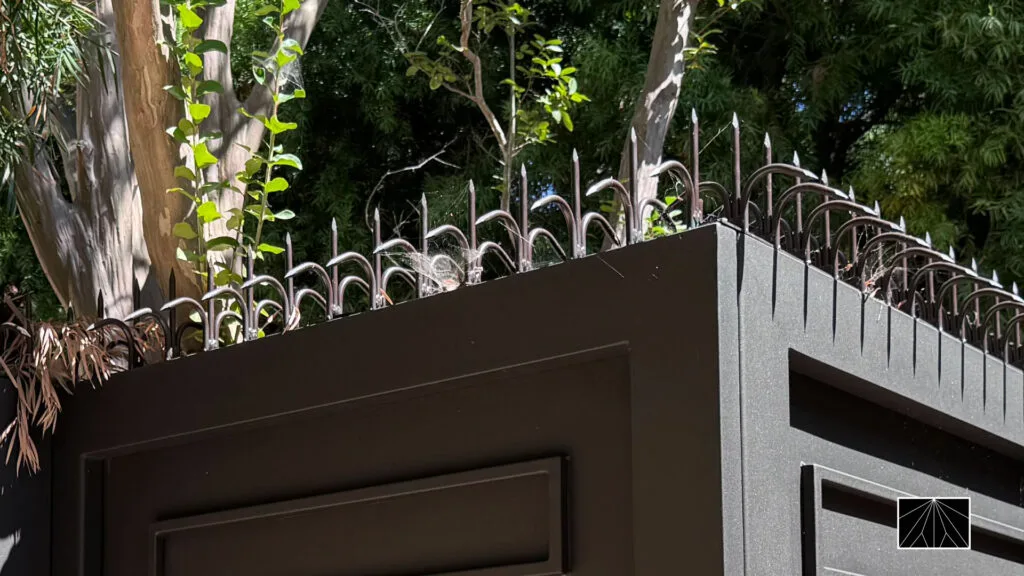
Jul 12, 2026
Explore anti-climb spikes for walls and fences. Compare types, materials, and aesthetics to find the best security solution, featuring premium options like Ninja Deterrent.
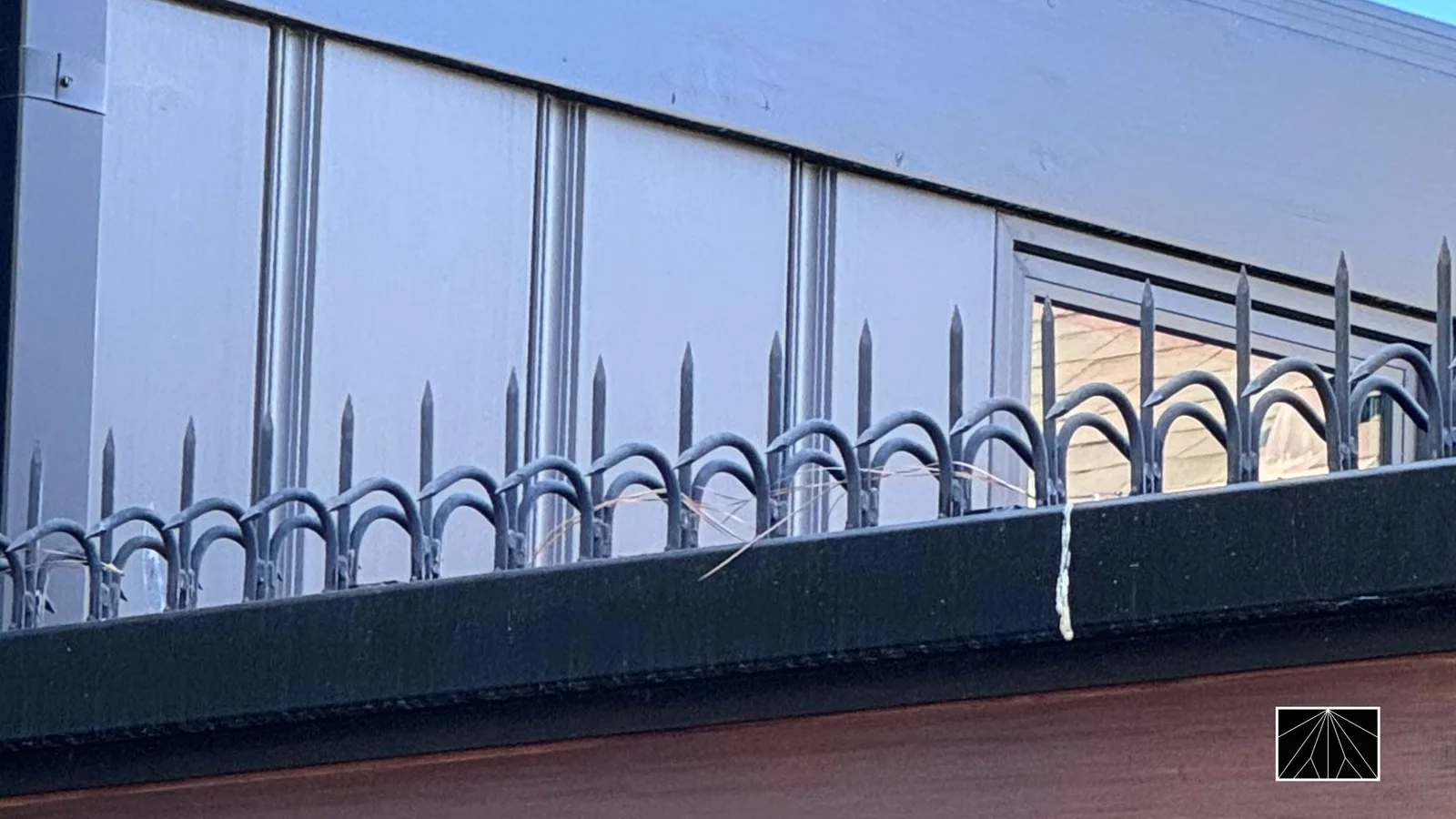
Jul 11, 2026
Discover how visible anti-climb deterrents, like Ninja Deterrent's architectural spikes, enhance home security beyond alarms. Learn their role in preventing burglaries.
Choose a series and a wall, then place it life-size in your own space with AR — before you order.

Choose a series and a wall, then place it life-size in your own space with AR — before you order.
Our standard series not quite right? We design and manufacture fully custom anti-climb systems tailored to your exact specifications — unique profiles, dimensions, materials, and finishes.
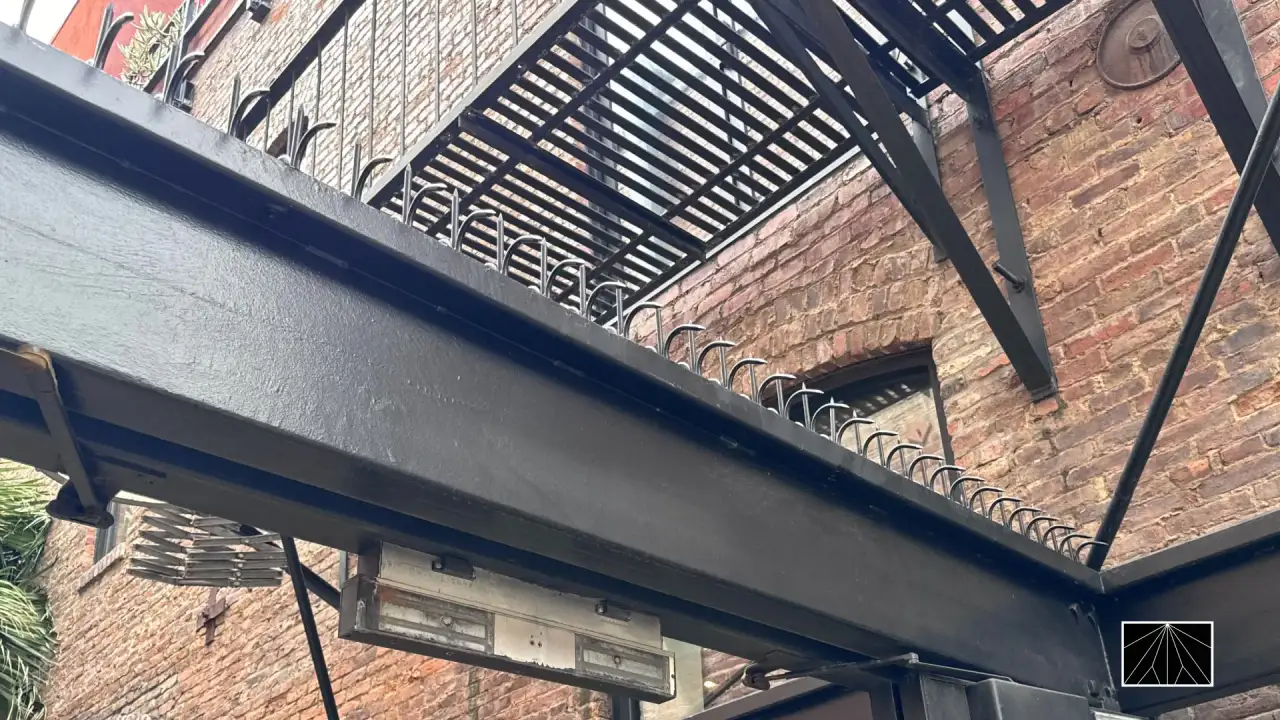
For general inquiries about our products or consultation regarding installation, please contact us.
Schedule a free online consultation with our team. Pick a time that works for you — available slots are shown in your local time zone.