Jul 22, 2026
Anti-Climb Fencing in Los Angeles: Installed Case Studies
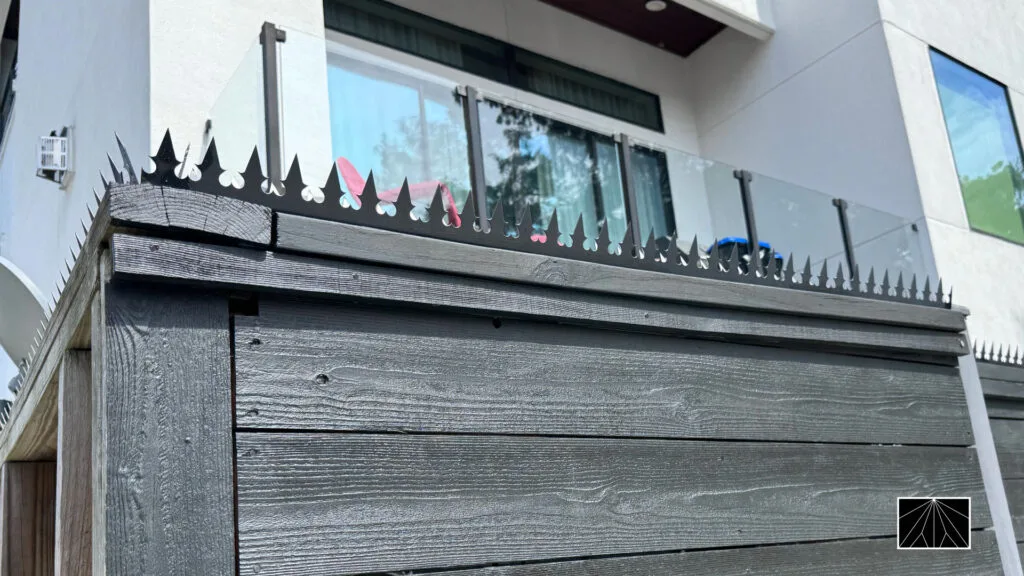
See anti-climb fencing installed across Los Angeles — Venice alleys, Laurel Canyon hillsides, Hollywood stucco coping, Santa Monica glass. Real LA jobs.
Column
TL;DR
- Ninja infiltration was never superhuman — it was about finding the one weak point a designer never considered, and modern homes still hand intruders the same openings.
- Most burglars are opportunists who take the easiest route: footholds on walls, flat fence tops, drainpipes and the unwatched second-floor balcony.
- The fix is geometric, not high-tech — raise and cap the boundary, strip the footholds, light the blind spots and vary your routine.
- A boundary that cannot be climbed over turns a confident intruder into one who moves on to a softer target.
Ninja techniques were not the superhuman feats of films and anime. Their essence was practical: analysing a building's structural weaknesses and choosing the most efficient route in. The weaknesses Warring States-era ninja exploited have not disappeared — they have simply been rebuilt in aluminium, render and decorative block. This piece maps each classic technique to the weak point it becomes in a modern property, with the concrete fix for each.
Yes — both are opportunists hunting the path of least resistance, not athletes seeking a challenge. More than 75% of burglaries are opportunistic rather than carefully planned, around 60% of intruders choose a different target when an alarm is present, and 83% try to establish whether there is an alarm before committing (UNC Charlotte, Kuhns et al. 2012).
The lesson is the one a Sengoku-era commander knew: the intruder is rational. They read your boundary the way a ninja read a castle wall, seeking the cheapest, quietest, lowest-risk way over. Make that route slow, noisy, exposed and uncertain, and the rational choice is to leave. Speed reinforces this — the FBI notes entry usually takes under a minute and an intruder typically stays only 8-12 minutes inside, so even thirty seconds of awkward climbing breaks the economy. We explore target selection further in why some homes are easy targets.
Every one of the five core techniques has a direct modern equivalent, and each has a fix that costs far less than the loss it prevents. Read your own property against the middle column, then act on the right.
| Classic infiltration technique | The modern home weak point it maps to | The concrete fix |
|---|---|---|
| Scaling stone walls via mortar joints (ishigaki-nobori) | Decorative block, brick texture and relief patterns acting as footholds | Cap the wall top so the final climb-over fails, even if the face is scaled |
| Cat-walking the parapet (neko-bashiri) | Flat fence cappings and wall copings offering an easy handhold | Run angled anti-climb spikes along the entire top edge |
| Senior-ninja entry from above (jonin no iri) | The unwatched second-floor balcony with weaker window locks | Protect carport roofs, AC units and every approach to the balcony |
| Waterway and pipe routes | Downspouts, gas pipes and external ladders used as a vertical ladder | Fit anti-climb collars or spikes around exposed pipework |
| Disguise and diversion (shichiho-de) | Social engineering plus exploiting predictable absence | A physical second line of defence, a varied routine and lit blind spots |
Walls and fences are stopped not by height alone but by denying the final pull-over at the top. Ninja climbed near-vertical stonework by wedging fingertips and toes into mortar joints — ishigaki-nobori — and a modern decorative block wall offers the same handholds. To the designer it is "texture"; to the intruder it is a climbing frame.
The companion technique was neko-bashiri, "cat-walking" along the top once the climber had pulled up. Today almost every wall is finished with a flat coping — aluminium rails, block copings, smooth concrete — and each is an ideal handhold, optimised for looks while the "can this be climbed?" question is overlooked entirely.
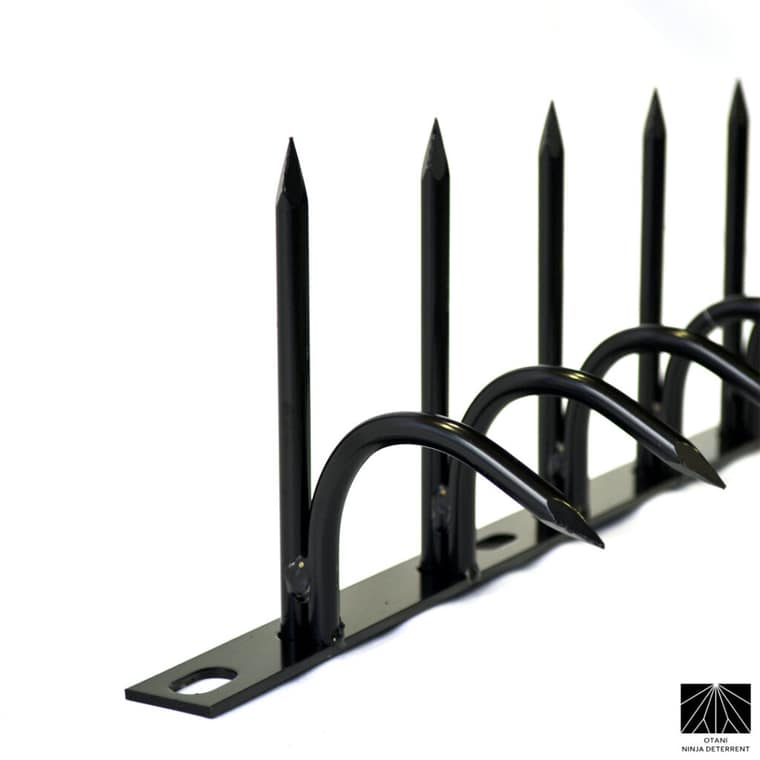
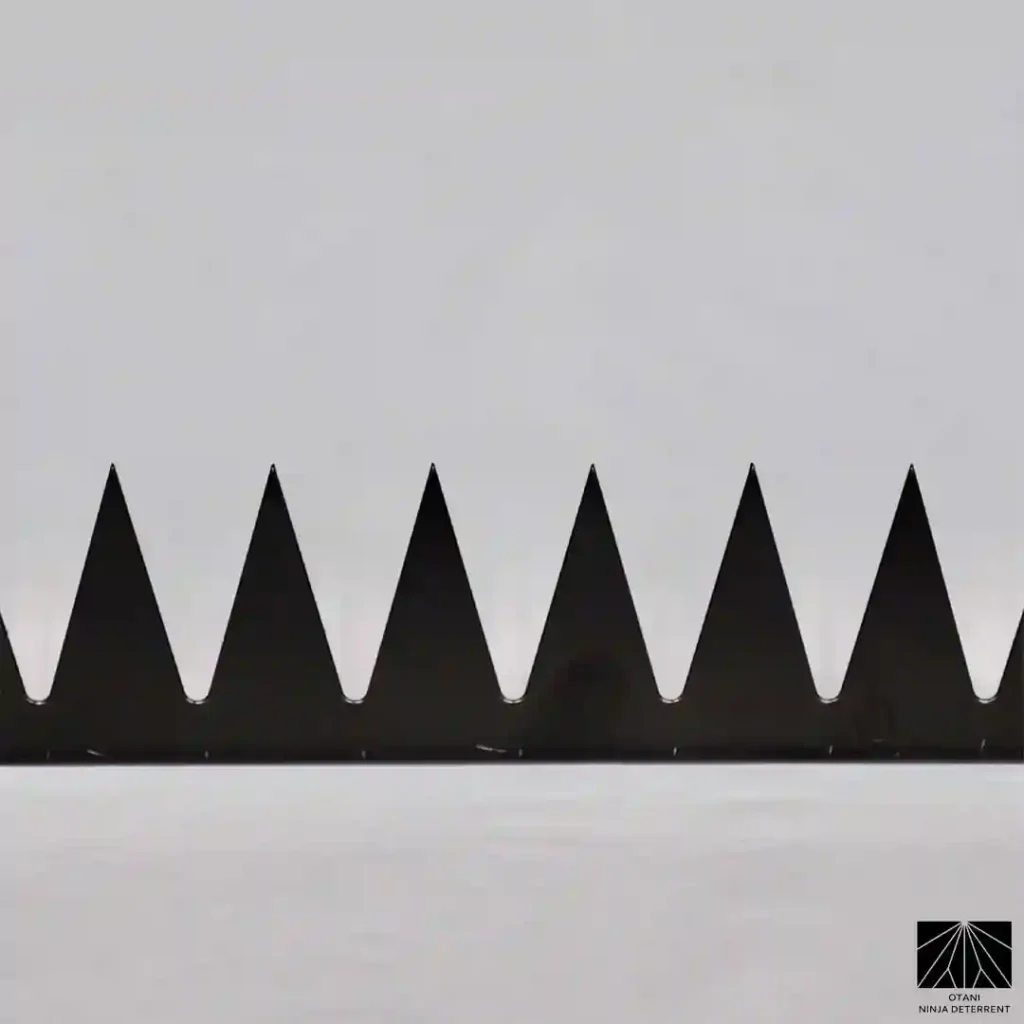
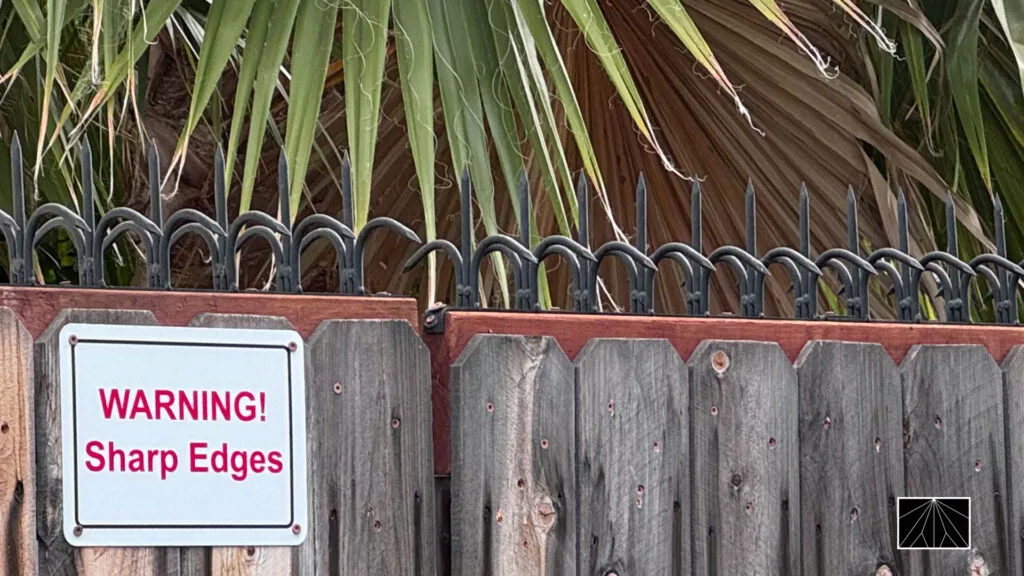
The fix is to make the top edge unusable. Boundary height sets the baseline: roughly 6 ft (about 1.8 m) deters a casual climber, around 8 ft is genuinely effective, and 12 ft or more belongs to high-security sites. Crucially, an outward-leaning deterrent of 30-45 mm projecting at 10-15° defeats the pull-over even on a wall you cannot make taller. That is how shinobi gaeshi work — not by "preventing climbing" but by ensuring that even if you climb, you cannot get over. An inward-facing Classic row keeps the street view clean, while a two-sided Modern profile blocks the top from either side. For the mechanism, see do anti-climb spikes actually work and our guide to wall and fence security spikes.
Because it is the least-watched, least-locked surface on the house — the upper level that ninja targeted with jonin no iri, bypassing a guarded ground floor to enter from above. The modern balcony repeats the mistake: its windows often carry weaker locks than ground-floor openings, on the assumption nobody can reach them.
But they can, easily. Air-conditioning units make convenient stepping stones; a carport roof offers a flat staging platform a stride from the balcony rail; a neighbouring wall can be jumped across. None of this requires ninja training — just an unprotected line of footholds leading upward. Treat the first-floor roof-to-wall junction, the carport edge and the top of any AC unit as critical points, and cap them. A discreet Forest or Iris profile around a carport edge removes the staging platform without making the house look like a fortress.
Any sturdy vertical fixture bolted to a wall is a ladder in disguise — the modern echo of the ninja's use of drainage channels as covered routes into a castle. Downspouts are the worst offender: often thick and firmly mounted enough to take full body weight straight to the eaves. Gas pipes are rigid; external roof-access ladders are an open invitation.
The countermeasure is to break the climb partway up. Fit anti-climb collars to the pipe, or position spikes around the fixture so hands and feet have nowhere safe to grip above a certain point. Downspouts respond especially well to a combined approach — a collar on the pipe and a capped wall top behind it. Where a fitting sits awkwardly, a bespoke custom order lets you match the spike line to the exact obstruction rather than forcing a stock part to fit.
They remove the two things every intruder fears most — being seen and being uncertain — which is why the ninja's shichiho-de, the "seven disguises", remains the deadliest technique of all. Posing as a delivery driver, a contractor or a prospective viewer to map a home is reconnaissance, and it still works.
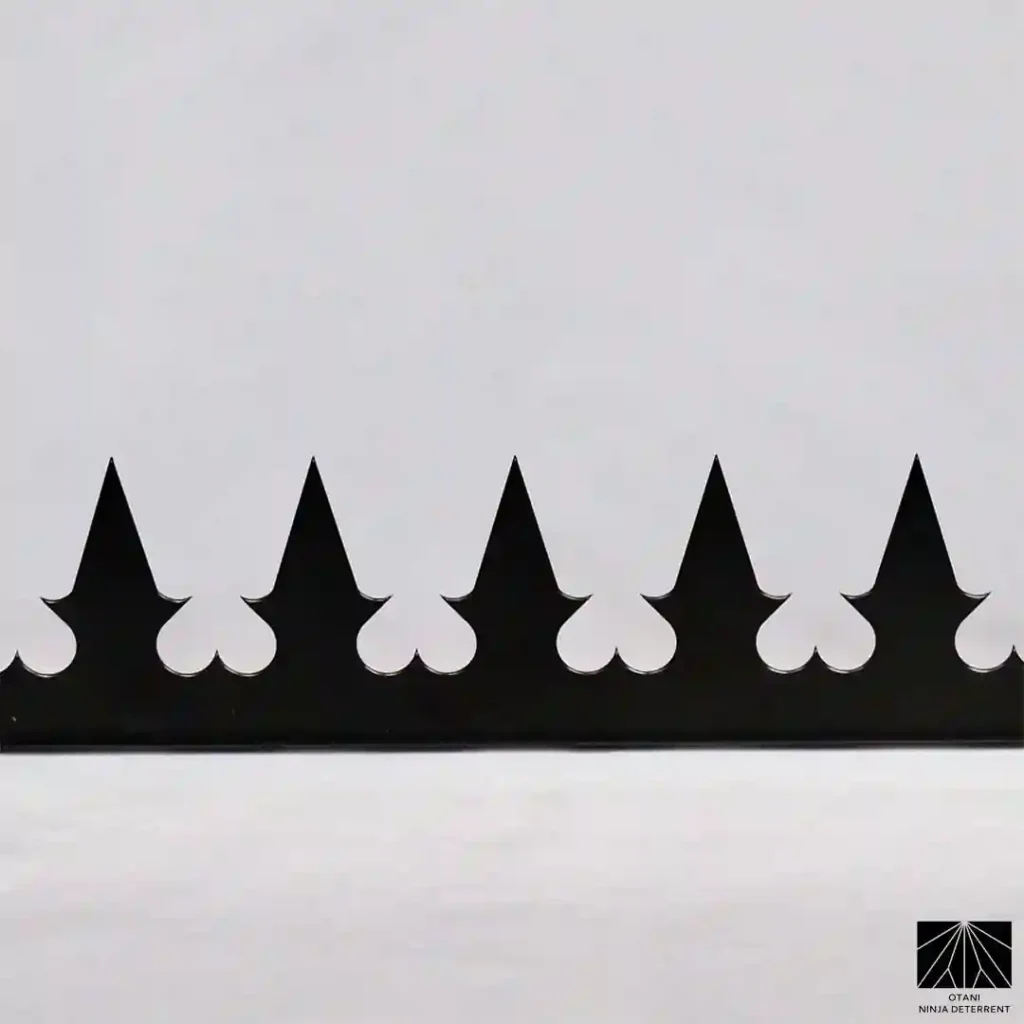
Three modern conditions feed it. Darkness hides the approach, so light your blind spots — the side return, the rear corner, the carport — with motion-triggered lighting. Cover from overgrown planting and high solid panels lets a climber work unseen, so trim sightlines and avoid creating a private workspace at your boundary. Predictable absence is the planner's gift: identical departure times, an unlit house every Tuesday, an overflowing letterbox. Vary your routine, use timers and keep the property looking occupied. A Gothic capping handles the physical line while these habits close the human one.
A boundary deters when its height plus its top geometry together make the pull-over impossible at speed. Use roughly 6 ft as a casual deterrent, around 8 ft as genuinely effective, and 12 ft or more for high-security needs — but where you cannot build higher, geometry does the heavy lifting. An outward overhang of 30-45 mm angled at 10-15° defeats the final move every climb depends on.
This is the engineering behind the folklore. The intruder economy runs on seconds — entry in under a minute, 8-12 minutes inside (FBI) — so a top edge that forces a slow, exposed manoeuvre redirects a target-shopping opportunist toward an easier house. You are not building a wall nobody can climb; you are building one nobody bothers to climb.
Security weaknesses live in unintended functions the designer never anticipated. A decorative block pattern is "beauty" to its designer and "climbing holds" to an intruder; a flat coping is "quality finishing" and also "a handhold". Shinobi gaeshi seal these accidental weaknesses at the one place that matters — the top of the boundary — so that whatever footholds exist below, the climb still fails at the crest.
It is no coincidence that the device ninja feared 500 years ago remains one of the most rational security measures today. Read your boundary the way an intruder would, find the cheapest route over, and close it. If you would like help mapping the weak points on your own wall, our team can match a profile to your boundary — browse the Classic, Modern, Gothic, Forest and Iris ranges, or start a custom order.
Yes, because most burglars are opportunists looking for the easiest route, not climbers seeking a challenge. Research from UNC Charlotte (Kuhns et al. 2012) found that more than 75% of burglaries are opportunistic and around 60% of intruders move to a different target when a deterrent is present. A capped boundary that cannot be climbed over quickly removes your home from the easy-target list.
As a guide, roughly 6 ft deters a casual climber, around 8 ft is genuinely effective, and 12 ft or more is reserved for high-security sites. Where you cannot build higher, the geometry of the top edge matters more than raw height. An outward-leaning spike profile of 30-45 mm at 10-15° defeats the pull-over even on a modest wall.
Balcony windows often have weaker locks than ground-floor openings because owners assume nobody can reach them. In practice, air-conditioning units, carport roofs and neighbouring walls create easy climbing routes to that level. Protecting those approaches, rather than the balcony alone, closes the gap.
Yes. Downspouts are frequently thick enough and mounted firmly enough to support a person's full weight, and rigid gas pipes and external ladders offer the same vertical route. Fitting anti-climb collars or spikes partway up breaks the climb before it reaches the roofline.
No — profile and placement let you balance security with looks. An inward-facing row keeps the street view clean, while decorative series such as Gothic, Forest and Iris are designed to read as architectural detail rather than industrial deterrent. A custom order can match the line and finish to your specific boundary.
Not on its own — disguise and diversion target people, not walls. Physical spikes act as a second line of defence by blocking the intrusion route even if someone talks their way onto the grounds. Pair them with simple habits: vary your routine, light your blind spots and keep the property looking occupied.

Written by
Kojiro OtaniFounder of Saitani-Ya Co., Ltd. and creator of the Ninja Deterrent® brand. Drawing on Japan's tradition of shinobi-gaeshi, he designs and manufactures anti-climb security spikes that pair real deterrence with architectural beauty — writing from first-hand experience in their engineering, production, and real-world installation.
Jul 22, 2026
See anti-climb fencing installed across Los Angeles — Venice alleys, Laurel Canyon hillsides, Hollywood stucco coping, Santa Monica glass. Real LA jobs.
Jul 12, 2026
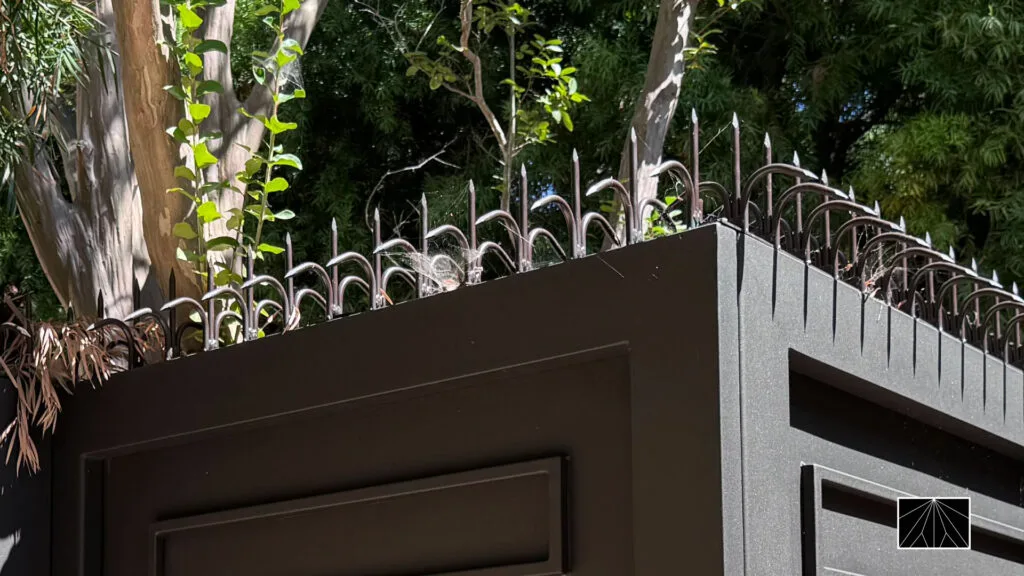
Explore anti-climb spikes for walls and fences. Compare types, materials, and aesthetics to find the best security solution, featuring premium options like Ninja Deterrent.
Jul 11, 2026
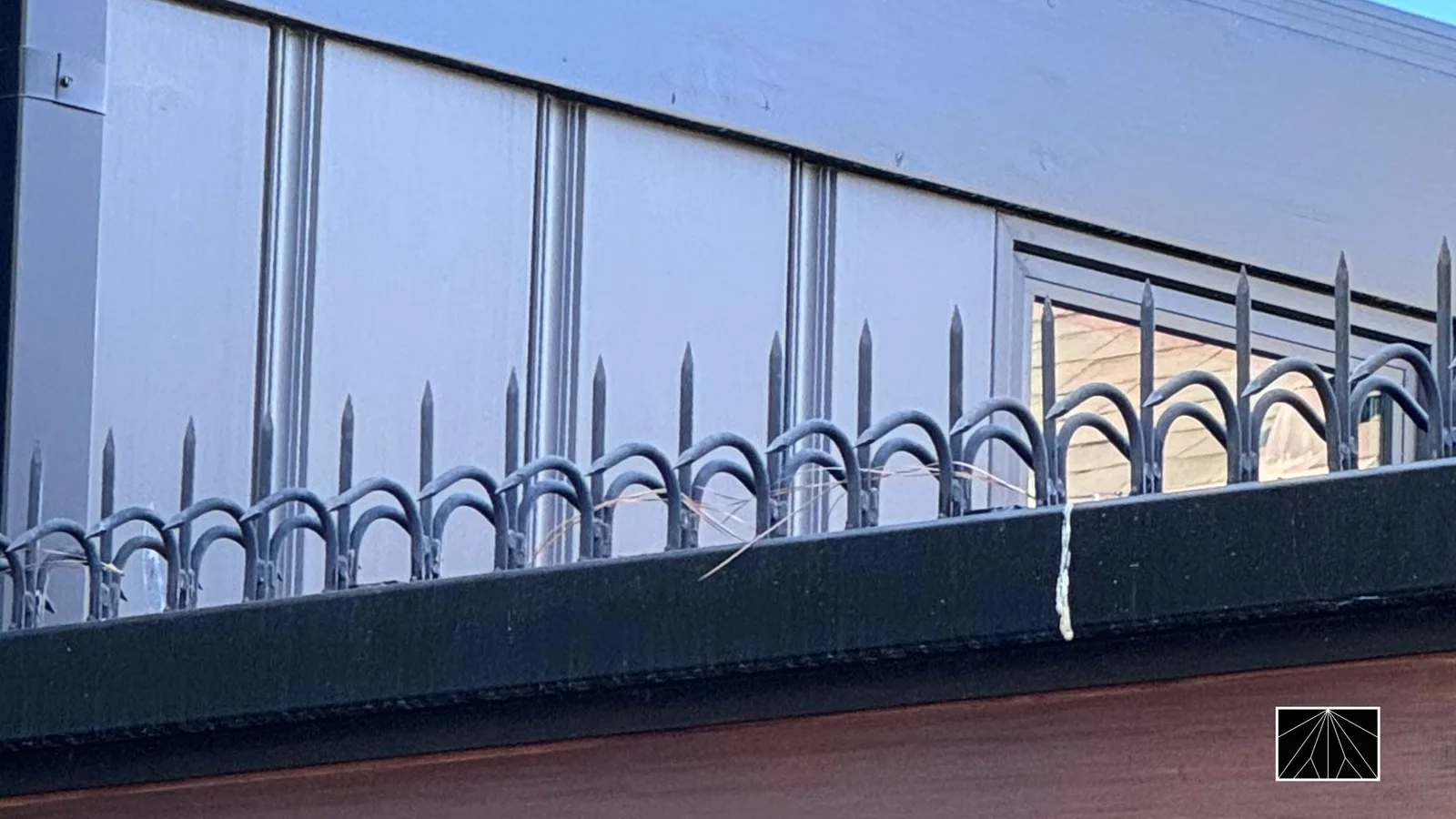
Discover how visible anti-climb deterrents, like Ninja Deterrent's architectural spikes, enhance home security beyond alarms. Learn their role in preventing burglaries.
Choose a series and a wall, then place it life-size in your own space with AR — before you order.

Choose a series and a wall, then place it life-size in your own space with AR — before you order.
Our standard series not quite right? We design and manufacture fully custom anti-climb systems tailored to your exact specifications — unique profiles, dimensions, materials, and finishes.
For general inquiries about our products or consultation regarding installation, please contact us.
Schedule a free online consultation with our team. Pick a time that works for you — available slots are shown in your local time zone.