Jul 22, 2026
Anti-Climb Fencing in Los Angeles: Installed Case Studies
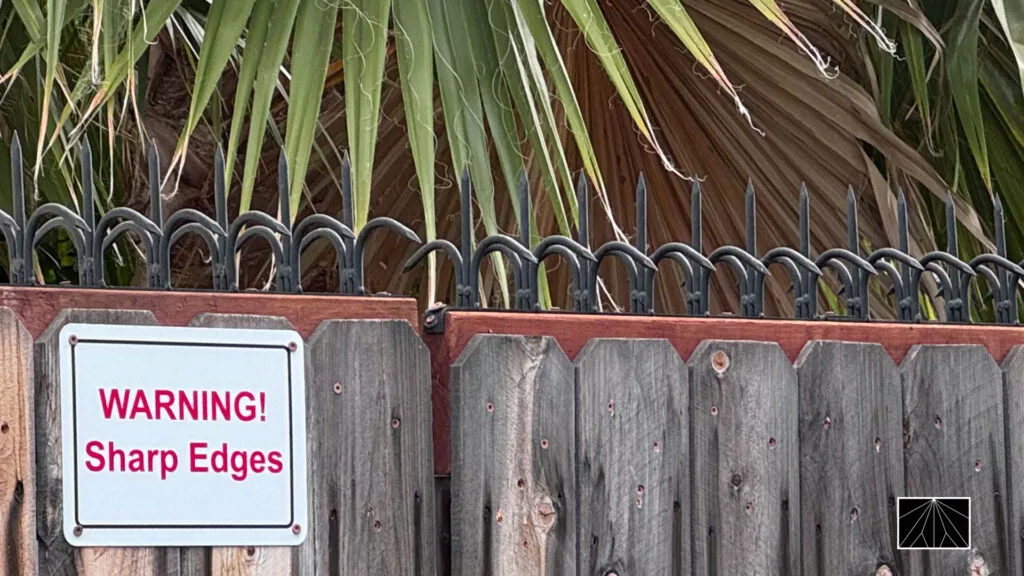
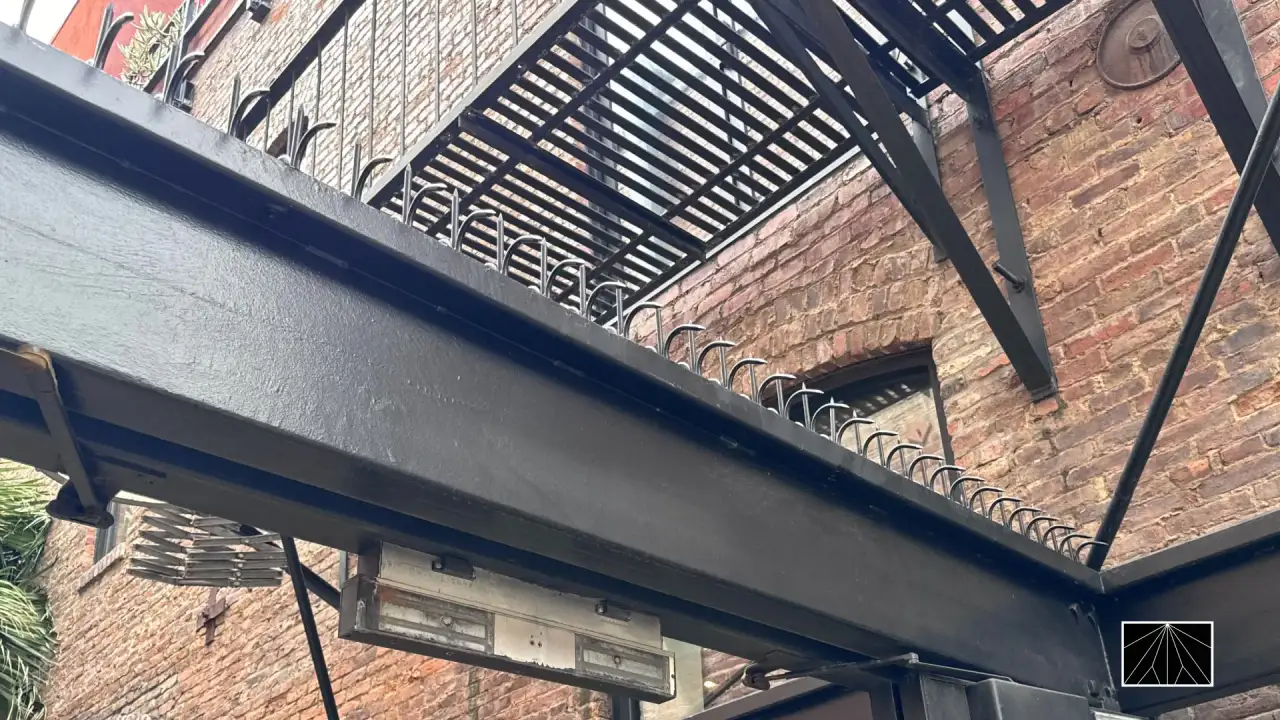
See anti-climb fencing installed across Los Angeles — Venice alleys, Laurel Canyon hillsides, Hollywood stucco coping, Santa Monica glass. Real LA jobs.
Column
TL;DR
- Criminology's Routine Activity Theory (Cohen & Felson, 1979) says a crime needs three things at once: a motivated offender, a suitable target, and the absence of a capable guardian.
- Shinobi gaeshi attack two of those three elements simultaneously — they strip a home of its "suitable target" status and act as a silent "capable guardian".
- Burglars are overwhelmingly opportunistic (over 75%), and roughly 60% move on when they detect a deterrent (UNC Charlotte, Kuhns et al. 2012).
- The Warring States castle builders who invented shinobi gaeshi were practising "target hardening" four centuries before the term existed.
During Japan's Warring States period (Sengoku), castles were not merely living spaces but the last bastion protecting lives. One of the defensive devices most feared by the ninja who infiltrated them was the shinobi gaeshi — a line of sharpened metal spikes set along the top of a stone wall. Centuries later, modern criminology arrived at the same logic those castle builders understood intuitively. This article reinterprets the shinobi gaeshi through Routine Activity Theory and Rational Choice Theory, and shows why a 500-year-old idea remains the most direct way to make a home one that is never targeted.
Routine Activity Theory, proposed by Lawrence Cohen and Marcus Felson in 1979, holds that a crime occurs only when three elements converge in the same time and place: a motivated offender, a suitable target, and the absence of a capable guardian. Remove any single element and the crime does not happen. This is the framework beneath almost all modern crime prevention.
The power of the theory lies in what it ignores. It does not ask you to reform the offender or to predict who they are — a near-impossible task for a homeowner. Instead it identifies two elements you can actually control on your own property: how suitable your home looks as a target, and whether a capable guardian is present. A "guardian" need not be a person. Cohen and Felson defined it broadly as any presence — human or physical — that raises the likelihood the offence is interrupted or punished. A locked gate, a camera, a barking dog, and a wall of spikes all qualify.
| Routine Activity element | Sengoku-era castle | Modern detached home |
|---|---|---|
| Motivated offender | Ninja / infiltrator | Opportunistic burglar |
| Suitable target | An unguarded, climbable stone wall | A low wall or fence, no visible defences |
| Capable guardian | Watchtowers, loopholes, shinobi gaeshi | Cameras, lighting, anti-climb spikes |
| Removing the opportunity | Spikes raise time, noise and injury risk | Spikes raise effort, detection and risk |
Rational Choice Theory — the companion to Crime Opportunity Theory — models the offender as a decision-maker who weighs anticipated effort, risk and reward before acting. Burglars are not reckless gamblers; they are economisers of effort. When a target raises the cost or lowers the payoff, the rational choice is simply to go elsewhere, and most do.
The data bears this out. Research from the University of North Carolina at Charlotte (Kuhns et al., 2012), which surveyed convicted burglars directly, found that the great majority of break-ins are opportunistic rather than meticulously planned — over 75% by the offenders' own accounts — and that around 60% would choose a different target on discovering a deterrent such as an alarm. The offender's mental arithmetic is brutally simple: a visible obstacle on the boundary signals a hardened, watchful home, and the expected effort spikes before they have touched the wall. This is why a deterrent works even when no one is home — it changes the calculation, not the moment of the crime. For a fuller treatment of how that calculus plays out at the boundary line, see Do anti-climb spikes really work?.
"Target hardening" is the modern term for making a target physically harder to attack. Warring States castle designers practised it empirically, four centuries before criminologists named it. Spikes set atop a stone wall were target hardening in its purest form — a final, near-vertical barrier placed exactly where an intruder was most exposed and most committed.
Ninja possessed the technique of ishigaki-nobori, scaling a castle's stone base by wedging fingers and toes into the mortar joints between stones. A wall alone was a suitable target. But sharpened metal lining the parapet transformed the final, decisive moment of the climb into the most dangerous one. The shinobi gaeshi imposed three distinct costs on the infiltrator, each mapping cleanly onto Rational Choice Theory:
The same three costs apply on a suburban fence today. The FBI's records on residential burglary show how thin the intruder's time budget is: entry is typically achieved in under a minute, and the entire offence lasts only 8 to 12 minutes. Anything that adds friction at the boundary — exactly what shinobi gaeshi do — consumes a disproportionate share of that budget and tips the rational decision towards retreat.
A shinobi gaeshi attacks two of Routine Activity Theory's three elements at once. It strips away "suitable target" status by making the boundary genuinely hard to cross, and it supplies a "capable guardian" by broadcasting risk and detection. The offender does not need to test the spikes; their visible presence alone re-prices the target.
Analyse a typical detached home through the theory and its weak points are the same two elements: an empty house has no human guardian, and a low wall or fence is an inviting target. Shinobi gaeshi address both. As a physical deterrent, spikes along the top of a wall stop the climb. As a psychological deterrent, their visible profile announces this home has countermeasures in place — converting, in the language of the theory, a suitable target into an unsuitable one. The result is that a home most likely to be passed over is the one that already looks defended, a point explored in What makes a home an easy target?. For the practical question of how spikes perform on different boundary types, see Wall and fence security spikes.
Yes. Cohen and Felson never required the guardian to be a living person — only a presence that raises the chance the crime is interrupted, detected or punished. A fixed line of spikes does precisely that: it delays entry, generates noise on contact, threatens injury and signals vigilance, all without anyone being home. In effect it stands guard permanently.
This is what makes physical hardening so efficient relative to its cost. Cameras and alarms perform the guardian role only while powered, monitored or connected; a barking dog must be present and awake. Shinobi gaeshi are a guardian that never sleeps, never goes off duty and never needs a network. They are the layer that holds when every digital system fails. This mirrors the castle, where shinobi gaeshi never worked alone — moats provided natural access control, stone walls gave vertical hardening, loopholes enabled surveillance, and watchtowers supplied human guardians. That layered logic is the historical ancestor of CPTED (Crime Prevention Through Environmental Design), the modern discipline of designing space so that crime opportunities are minimised by default.
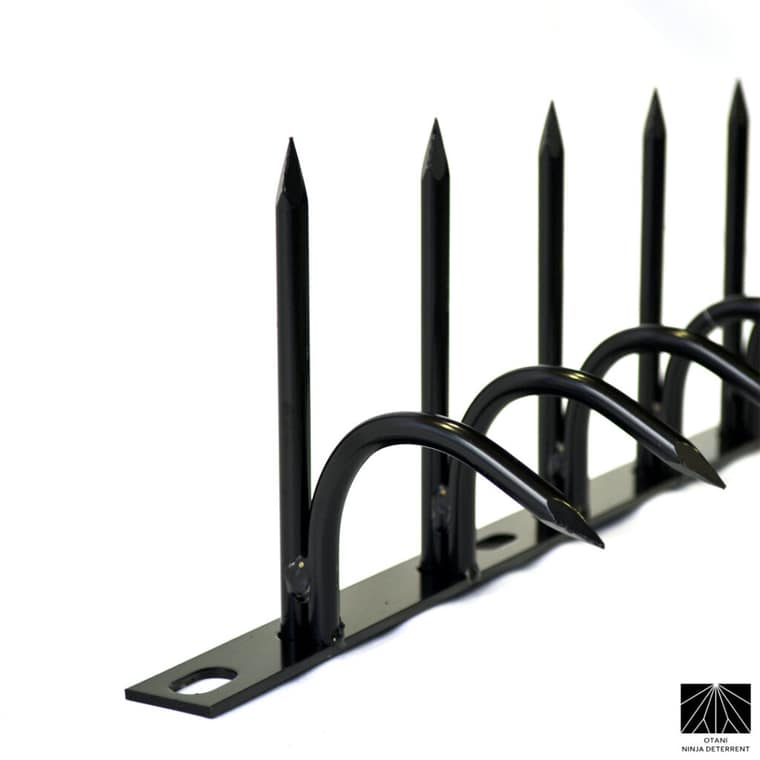
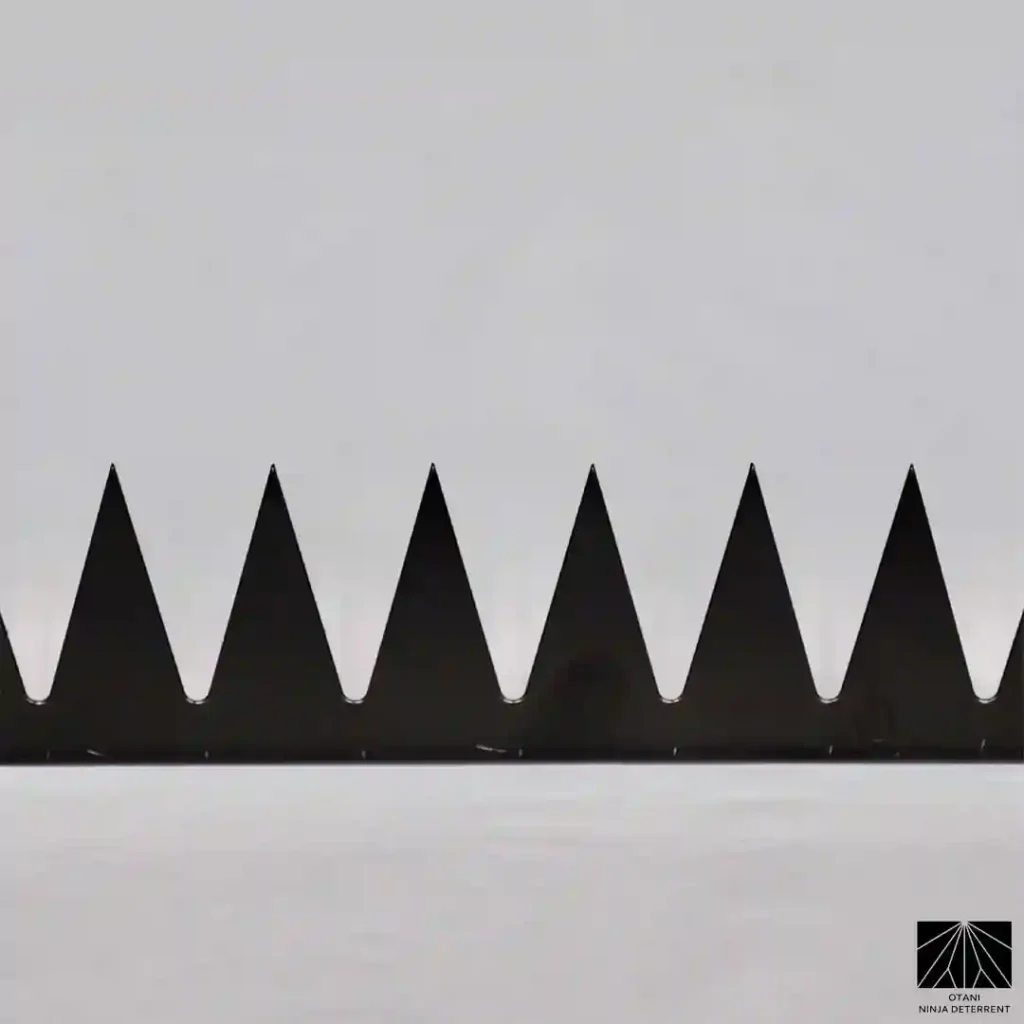
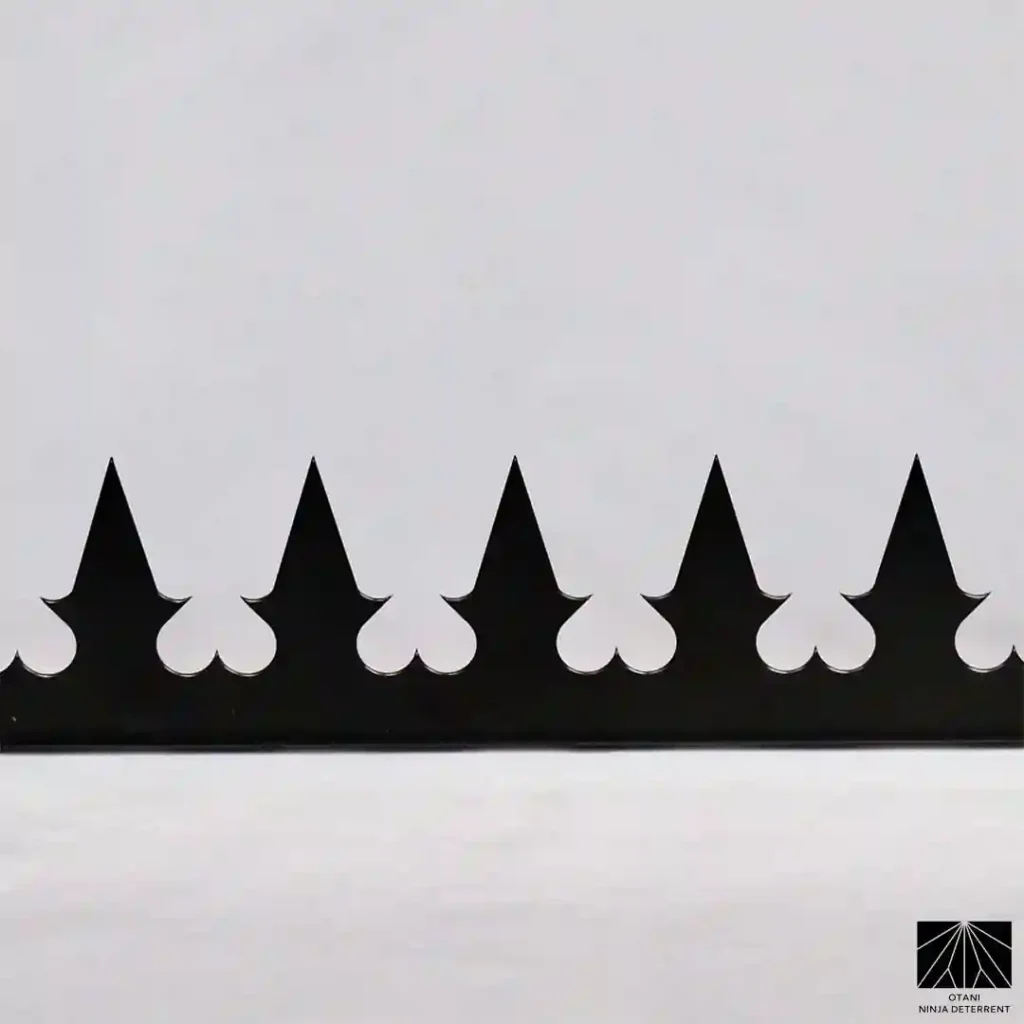
Choose by the architectural language of your boundary, then let the spike do the criminological work. Every Ninja Deterrent series performs the same RAT function — removing target suitability and adding a guardian — while matching a different aesthetic, so hardening never means an ugly fence.
The traditional Classic Series suits established walls and period properties; the clean lines of the Modern Series sit naturally on contemporary render and metal fences; the Gothic Series brings a decorative, wrought-iron character; the Forest Series blends with greenery and timber boundaries; and the ornamental Iris Series reads almost as garden detailing while still imposing every cost an intruder fears. For a boundary that does not fit a standard profile, a custom order lets you harden it precisely.
The lesson of the long contest between Warring States ninja and castle fortifications is clear, and modern criminology has only formalised it. Offenders choose the lowest-cost target available. Even the ninja — elite, trained, motivated — avoided walls fitted with shinobi gaeshi when an easier approach existed. The modern opportunistic burglar behaves identically, bypassing a defended home for the undefended neighbour. Security, in the end, means eliminating the opportunity, not defeating the offender. The shinobi gaeshi, with its 500-year heritage, remains the most direct way to do exactly that.
If you are ready to remove your home's "suitable target" status, explore the series above or start a custom order — and turn a wall into a guardian that never sleeps.
Routine Activity Theory, introduced by Cohen and Felson in 1979, states that a crime needs three things in the same place at the same time: a motivated offender, a suitable target, and the absence of a capable guardian. If any one is missing, the crime does not occur. For homeowners the lesson is that you cannot remove the offender, but you can remove your home's suitability as a target and add a guardian.
Shinobi gaeshi act on two of the theory's three elements at once. They make the boundary genuinely hard to cross, which removes "suitable target" status, and their visible presence raises the perceived risk of detection and injury, which supplies a "capable guardian". An offender weighing effort against reward sees the cost rise sharply and is far more likely to move on.
Yes. The deterrent works by changing the offender's calculation before they ever touch the wall, so it does not depend on anyone being present. Research with convicted burglars found the majority are opportunistic and around 60% will choose a different target once they detect a deterrent. A fixed spike line signals a hardened, watchful home around the clock.
Warring States castle builders were practising "target hardening" centuries before criminology named it. They understood that a sharpened barrier at the most exposed point of a climb imposes time, noise and injury costs on an intruder. Those same costs apply on a modern fence, which is why the device remains effective. The history and the theory describe the same underlying logic.
Effectiveness comes from the physical and psychological costs the spike imposes, not from how plain it looks. A decorative profile delivers the same delay, noise and injury risk while suiting the architecture of the home. Because deterrence depends on visible presence and raised effort, an ornamental design that is clearly seen on the boundary performs the deterrent role just as well.
According to FBI figures on residential burglary, an intruder typically gains entry in under a minute and is inside for only about 8 to 12 minutes. That tight time budget is exactly why friction at the boundary matters so much. Anything that adds delay at the point of entry consumes a large share of the offender's available time and pushes the rational decision towards abandoning the attempt.
Written by
Kojiro OtaniFounder of Saitani-Ya Co., Ltd. and creator of the Ninja Deterrent® brand. Drawing on Japan's tradition of shinobi-gaeshi, he designs and manufactures anti-climb security spikes that pair real deterrence with architectural beauty — writing from first-hand experience in their engineering, production, and real-world installation.
Jul 22, 2026
See anti-climb fencing installed across Los Angeles — Venice alleys, Laurel Canyon hillsides, Hollywood stucco coping, Santa Monica glass. Real LA jobs.
Jul 12, 2026
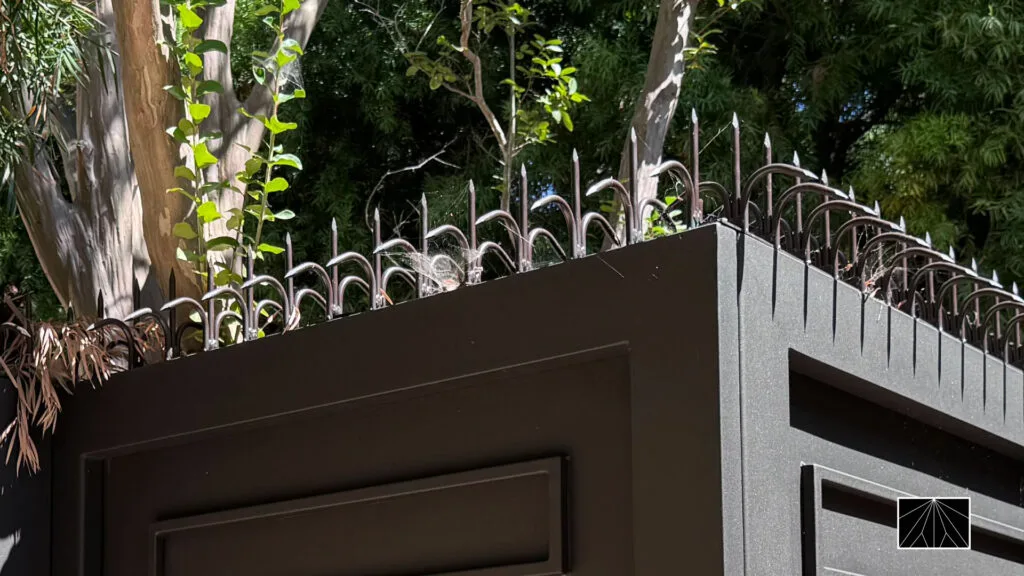
Explore anti-climb spikes for walls and fences. Compare types, materials, and aesthetics to find the best security solution, featuring premium options like Ninja Deterrent.
Jul 11, 2026
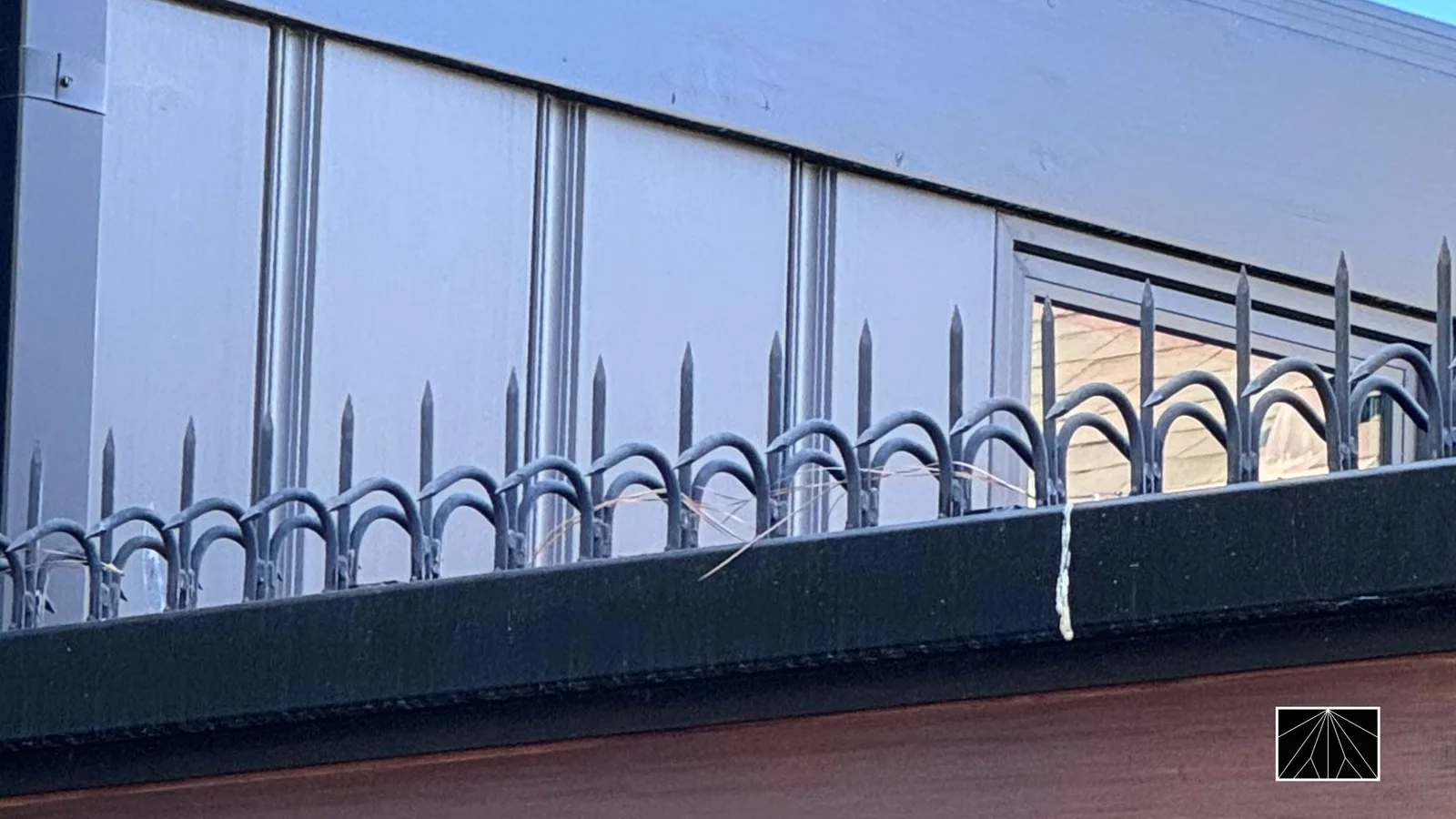
Discover how visible anti-climb deterrents, like Ninja Deterrent's architectural spikes, enhance home security beyond alarms. Learn their role in preventing burglaries.
Choose a series and a wall, then place it life-size in your own space with AR — before you order.

Choose a series and a wall, then place it life-size in your own space with AR — before you order.
Our standard series not quite right? We design and manufacture fully custom anti-climb systems tailored to your exact specifications — unique profiles, dimensions, materials, and finishes.
For general inquiries about our products or consultation regarding installation, please contact us.
Schedule a free online consultation with our team. Pick a time that works for you — available slots are shown in your local time zone.